




An international expert on toll roads is urging Illinois not to abolish its tollway system.
Peter Samuel, an economist and publisher of the monthly Toll Roads Newsletter, says that getting rid of tolls, by itself, would make conditions worse for motorists, not better.
In October, Illinois Gov. George Ryan ordered the five-member Illinois State Toll Highway Authority to make recommendations for making the tollway system more efficient. He has said his long-term goal is to reduce or phase out tolls entirely.
In a study released by The Heartland Institute, an independent nonprofit public policy research group headquartered in Chicago, Samuel recommends several reforms: fast-track the I-PASS electronic tolling system; implement peak-time pricing; end double taxation by giving rebates on toll bills for gasoline taxes; and privatize the tollways.
Samuel notes that privately owned and operated tollways already exist in Virginia, California and Alabama, and are under construction in Utah, Florida and Texas.
In northern Illinois, the tollways represent about a third of the expressway lane-mileage, with four major toll roads, the majority built in the 1950s.
The current chairman of the Illinois Toll Authority, when he was appointed in July, said tolls would have to be increased to maintain, modernize and expand the roads. The last systemwide toll increases were in 1983.
Expert Says Illinois Should Not Abolish Tollway
An international expert on toll roads is urging Illinois not to abolish its tollway system
More Drivers

New Trojan Driver Cargo Theft Scam Bypasses Carrier Vetting Systems
Cargo theft rings plant operatives as drivers inside legitimate, fully vetted carriers, then execute coordinated thefts that look like a traditional straight theft from the outside.
Read More →
WIM, Trucker Path Name Top 3 Women-Friendly Truck Stops
ATA’s Women In Motion Council and Trucker Path highlight three truck stops that meet all seven safety-focused criteria and rank highest among female drivers.
Read More →
FMCSA Extends Paper Medical Card Exemption … Again
Five states still aren't ready to accept commercial driver medical exam information directly from the medical examiner's registry.
Read More →
Mack Launches Digital Driver Guide for Chassis-Specific Truck Info
Mack’s new, virtual owner’s manual delivers VIN-based, on-demand guidance for vehicle systems via web, app, and soon in-cab displays.
Read More →
Western Star Showcases Truckers' Pride and Skill
Western Star is expanding its Star Nation Experience in 2026, adding new competitions and dealer participation to highlight operator skills and promote careers in trucking.
Read More →
Best Fleets to Drive For: Two Carriers Earn Overall Award for First Time
CarriersEdge announced the 2026 Best Fleets to Drive For overall winners, with Crawford Trucking, Fortigo Freight Services, and FTC Transportation receiving top awards.
Read More →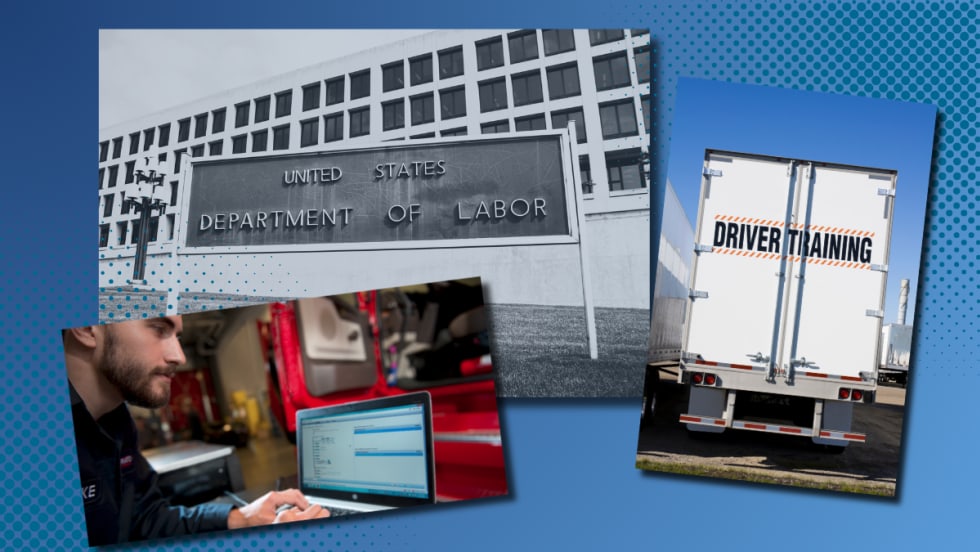
Federal Proposal Would Allow Pell Grants for Shorter-Term Job Training
The Department of Labor plans to expand Pell Grant eligibility to some shorter workforce training programs, a move the American Trucking Associations said will help strengthen commercial driver training schools and diesel technician training programs.
Read More →
Owner-Operator Model Gets Boost as DOL Proposes 2024 Independent Contractor Definition Reversal
For an industry that has watched this issue go back and forth for years, the independent contractor proposal marks the latest swing in the regulatory pendulum.
Read More →
FMCSA Reinstates Field Warrior ELD to Registered Device List
One electronic logging device has been reinstated to the FMCSA's list of registered ELDs.
Read More →
How One Company is Using Smart Suspension Technology to Reduce Driver Injuries and Improve Retention
America’s Service Line adopted Link’s SmartValve and ROI Cabmate systems to address whole-body vibration, repetitive strain, and driver turnover. The trucking fleet is already seeing measurable results.
Read More →