




Ergonomics Standard "Unworkable" Says ATA
A new ergonomics standard proposed by the Occupational Safety and Health Administration is “completely unworkable” because it is not based on sound science and it is too costly and not necessary, says the American Trucking Assns
A new ergonomics standard proposed by the Occupational Safety and Health Administration is “completely unworkable” because it is not based on sound science and it is too costly and not necessary, says the American Trucking Assns.
The standard, now being debated at meetings around the country, would require employers to develop programs aimed at reducing work-related musculoskeletal disorders. It would apply to manufacturing and manual handling operations which would likely include mechanics, dock workers and drivers.
Testifying at a hearing held recently in Washington, D.C., ATA Occupational Safety and Health Director Stuart Flatow emphasized that ATA supports methods to prevent injuries and advance workplace safety if they are “well-grounded in established scientific, technological and economic measures that do not dramatically impede production.” But employers attempting to comply with this standard “would be subjected to an endless circle of experimental measures” with no assurances that the programs would be effective.
OSHA estimates the cost for all covered industries at $4.23 billion but critics say it’s probably 15 times greater. ATA, said Flatow, strongly disputes OSHA’s $200 million estimate for trucking. The true figure is probably closer to a $6.5 billion estimate for a similar proposal drafted in 1995.
Flatow also questioned the need for an ergonomics standard since U.S. Department of Labor statistics show that the incidence of repetitive stress injuries, such as carpal tunnel syndrome, dropped 24% from 1994 to 1998. Labor Department studies also show that repetitive stress injuries account for less than 1% of workplace injuries and illnesses that keep workers off the job.
Workplace injuries and illnesses in trucking-related industries have declined significantly over the last few years which shows that they’re taking proactive measures and spending significant resources to improve worker safety, Flatow noted. OSHA’s ergonomics standard would likely impede this positive trend by requiring motor carriers, as well as other employers, to shift limited resources away from proven safety measures to costly and unproven technologies.
If the standard is adopted, trucking should be exempted, he said. In its preliminary recommendations OSHA excluded agriculture, construction and the maritime industry.
Stated reasons included the lack of case studies to provide meaningful guidance and the fact that working conditions in those industries are quite different than general industry.
Working conditions in the trucking industry are also unique, Flatow argued. And OSHA has limited experience with ergonomics issues in trucking and warehousing. “Excluding trucking operations will help ensure that OSHA’s action does not threaten the competitive structure of the freight transportation industry, which consists of trucking operations, rail operations and maritime operations,” he said. “With the exclusion of trucking operations, OSHA would also give equal treatment to similarly situated industries.”
More information about the proposed standard can be found at the OSHA web site.
More Drivers

Competition Heating Up for Truck Drivers
New report reveals rising driver hiring costs, the return of sign-on bonuses, growing AI advantages, and the operational factors shaping driver retention.
Read More →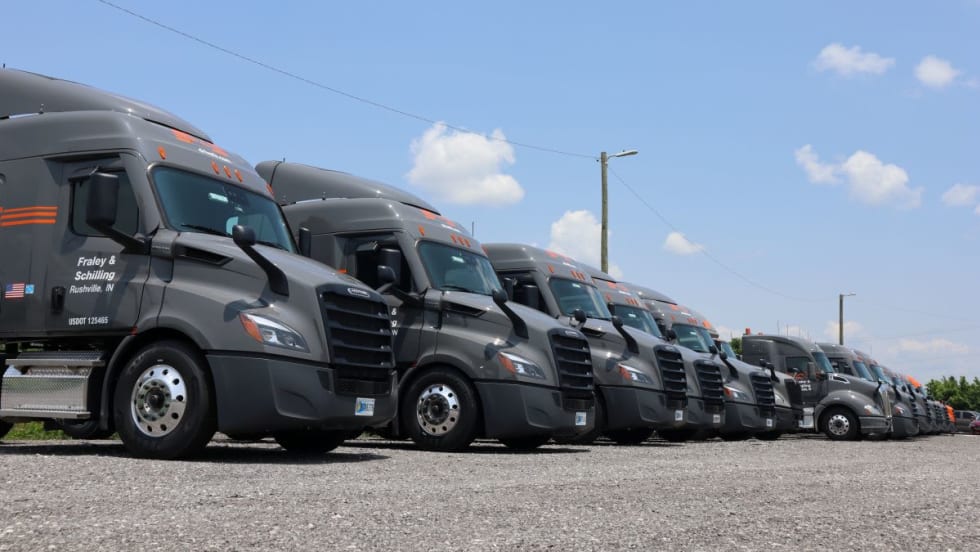
How Fraley & Schilling Improved Logbook Compliance by Over 50%
Fraley & Schilling needed a way to close a compliance workflow gap in its ELD system without adding more work from driver training, reminders, and back-office follow-ups. It found the answer in a custom driver app.
Read More →
Volvo Goes Gaming
Volvo has roared into American Truck Simulator with two new flagship trucks.
Read More →
What the Best Fleets to Drive For Teach About Driver Retention
Survey fatigue, AI-powered routing, owner-operator expectations, and the decline of social media all emerged as themes from this year's Best Fleets to Drive For program.
Read More →
Driver Retention Lessons From the Best Fleets to Drive For
What separates trucking's best workplaces from the rest? Jane Jazrawy shares the biggest lessons from this year's Best Fleets to Drive For program on driver retention, communication, AI, and workforce trends on the HDT Talks Trucking podcast.
Read More →
Farewell, CDL: Why I'm Giving Up My Commercial Driver's License
After more than 20 years as a CDL holder, HDT Executive Editor Jack Roberts is letting his commercial license expire. Not because he wants to — but because trucking's nuclear verdict crisis has made the risks of public-road test drives too great for editors, manufacturers, and everyone involved.
Read More →
How Top Trucking Fleets Improve Driver Retention [Video]
What do healthy snacks, optimized routing, and just picking up the phone have in common? They're all strategies the Best Fleets to Drive For are using to retain truck drivers.
Read More →
Trucker Path Adds Verisk CargoNet Theft Data to Navigation Platform
Trucker Path’s new cargo theft risk overlays give drivers and fleets visibility into high-risk areas, stolen commodity trends, and theft hotspots.
Read More →
Netradyne Intelligence Uses New AI Agents to Automate Response to In-Cab Camera Data
The company called the next-generation in-cab camera safety platform "a fundamental shift from systems that report on what happened to systems that actively drive what should happen next."
Read More →
Why Truck Detention Keeps Costing Fleets Time and Money
A 2024 ATRI study found detention affects nearly 40% of truckload stops and costs the industry more than $15 billion annually. Despite the toll on drivers, fleets, and supply chains, the problem remains stubbornly persistent.
Read More →