




Ergonomics Debate Resumes Following Scuttling of Rule
The decade-old debate over protecting workers from motion-related injuries entered a new phase yesterday as the Bush administration convened a series of public conferences on how best to write ergonomics rules

The decade-old debate over protecting workers from motion-related injuries entered a new phase yesterday as the Bush administration convened a series of public conferences on how best to write ergonomics rules.
In an attempt to lower the tension surrounding this issue – tension that has been running high since Congress pulled the plug on a controversial ergonomics regulation in March – Labor Secretary Elaine Chao called on all sides to take another look with an open mind.
“Let’s get to the task of finding ways to effectively cut workplace injuries,” she told business interests, labor leaders and medical specialists at a conference in Arlington, Va.
Chao said she wants three questions answered: how should an ergonomics injury be defined; how can you tell if an ergonomics injury is work-related; and what are the most effective ways of reducing ergonomics injuries.
Despite years of debate and near-imposition of a comprehensive rule, the answers to these questions still are obscured by emotion and differences in scientific opinion.
For example, in the midst of his testimony yesterday, William D. Zollars, president of Yellow Corp., was disrupted by a demonstration of activists who mocked Zollars’ expression of concern for the well-being of Yellow’s employees.
And Zollars himself said he finds it “perplexing” that some scientists see little connection between motion-related injuries and workplace occupation.
One doctor, for example, Jane Derebery of Concentra Health Services, said that other medical factors and psycho-social factors are more important than workplace conditions. “There is no good way to determine if an injury is workplace related,” she said.
Yet, as a practical matter, Yellow Freight has been able to make significant improvements in its workplace injury performance, Zollars told the conference. He cited a 26 percent reduction in lost-time injuries over three years, with a training and education program.
This apparent contradiction illustrates the difficulty of the problem: The issue is complex and deeply interwoven with peoples’ perceptions of how they live their lives.
Nortin Hadler, a rheumatologist at the University of North Carolina Medical School, said that society’s entire approach to the ergonomic issue is built on two incorrect ideas. The first is that the activity that gives pain is the activity that causes the pain. And the second is that if a musculoskeletal disorder interferes with work, then it’s the work that causes the disorder.
The way Hadler and others see it, occasional pain is part of the human condition – and some people are better equipped to handle it than others. What makes the difference, Hadler and others said, is a person’s outlook on his life and his job.
“People don’t need better seats. They need better jobs,” he said.
This view does not fly with the labor unions, however. At yesterday’s conference, Richard Trumka, secretary treasurer of the AFL-CIO, recounted labor’s bitter disappointment at the scuttling of the ergonomics rule.
“Secretary Chao, President Bush, the Chamber of Commerce, the (National Assn. of Manufacturers), UPS and all the others who killed these protections are responsible for (the continuing) pain, suffering and devastation (to workers),” Trumka said.
Speaking on behalf of general business interests as well as Yellow, Zollars said he supports ergonomic regulations – provided they are based on science. “But if the science is inconclusive, we will do more harm than good.”
Another trucking spokesman, Kevin Williams, president of the Distribution & LTL Carriers Assn., gave Chao specific answers to her three questions:
An ergonomics injury is a medically identifiable injury to the musculoskeletal system which is primarily work-related and caused by frequent or repetitive core job tasks that can be cost-effectively modified to reduce the risk of injury.
Use cooperation, common sense and a preponderance of the evidence to determine if work-related activity is the predominant cause of the injury.
The most useful, cost-effective remedy involves four steps. First, re-analyze injury data based on specific industries and specific jobs. Second, identify cost-effective practices to remedy repetitive stress injuries. Third, start with voluntary, incentive-based programs. And fourth, focus regulatory attention first on where ergonomics has been used most – at fixed work stations or assembly lines.
The conference continues today in Arlington, and then moves to Chicago on July 20 and Stanford, Calif., July 24.
Labor Secretary Chao intends to take what she learns from the conferences, plus other information, and come up with a plan by September.
More Drivers
How Top Trucking Fleets Improve Driver Retention [Video]
What do healthy snacks, optimized routing, and just picking up the phone have in common? They're all strategies the Best Fleets to Drive For are using to retain truck drivers.
Read More →
Trucker Path Adds Verisk CargoNet Theft Data to Navigation Platform
Trucker Path’s new cargo theft risk overlays give drivers and fleets visibility into high-risk areas, stolen commodity trends, and theft hotspots.
Read More →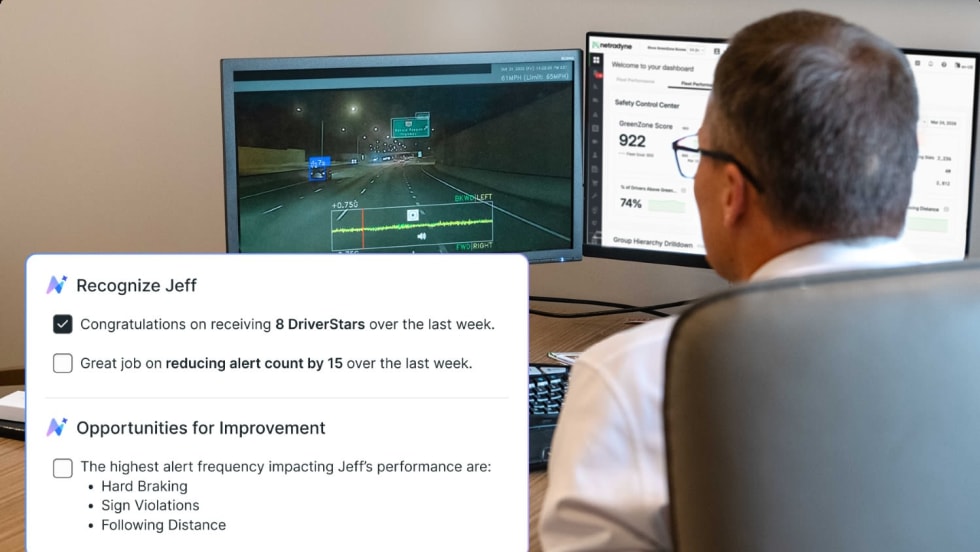
Netradyne Intelligence Uses New AI Agents to Automate Response to In-Cab Camera Data
The company called the next-generation in-cab camera safety platform "a fundamental shift from systems that report on what happened to systems that actively drive what should happen next."
Read More →
Why Truck Detention Keeps Costing Fleets Time and Money
A 2024 ATRI study found detention affects nearly 40% of truckload stops and costs the industry more than $15 billion annually. Despite the toll on drivers, fleets, and supply chains, the problem remains stubbornly persistent.
Read More →
Prime Inc. to Open $7.9M Flagship Used-Truck Dealership
A new driver-focused facility to sell Prime Inc's used trucks and trailers will be the first purpose-built location in the company's history.
Read More →
Short Takes: Inside K&B’s Truck Safety Tech
Listen to learn how K&B Transportation uses cellphone-blocking technology, speed management systems, weather geofencing, bridge avoidance tools, and more to improve driver safety.
Read More →
Nussbaum Expands Driver Compensation with Pay Raises, Profit Sharing
Nussbaum Transportation said its latest compensation package could push first-year driver earnings above $90,000 in key hiring markets.
Read More →
Listen: Inside Modern Fleet Safety: AI, Cameras & Speed Control at K&B Transportation
Fleet safety is evolving fast—and technology is at the center of it. Learn how a former commercial vehicle enforcement officer turned director of safety at K&B Transportation is embracing real-world safety technology.
Read More →
Maverick Announces 2026 Driver Pay Raises
New raises for Maverick Transportation drivers will take effect on May 31, 2026.
Read More →
Illinois Trucker Indicted for Nearly $22,000 in Ohio Turnpike Toll Evasion
Authorities say an Illinois trucker avoided paying tolls for two years, and now faces felony charges, possible prison time, and forfeiture of his Freightliner tractor.
Read More →