




EPA Green-Lights Audit of Controversial Glider Kit Emissions Study
Four Republican lawmakers are spearheading an effort to audit a 2017 EPA study that found that glider kits emit substantially more harmful pollutants than newer truck models.

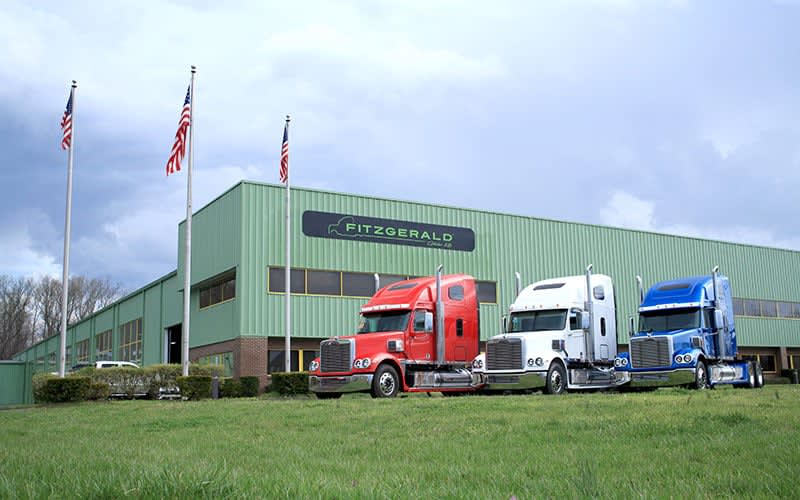
An Obama-era law that limits production of glider kits to 300 units a year for each manufacturer has been under reconsideration by the EPA.
Photo courtesy Fitzgerald Glider Kits
A 2017 study by the U.S. Environmental Protection Agency that found glider trucks emit more greenhouse gases than newer trucks is getting another look.
At the request of four Republican congressmen, the Office of Inspector General for the Environmental Protection Agency announced plans to conduct an audit of the agency’s 2017 study of glider kit trucks. Glider kits are a long-standing option for truck buyers that allows a new truck frame and body to be fitted with an older, refurbished powertrain – which has not been required to meet current EPA emissions standards.
While glider kits originally were designed to allow truck owners to refurbish wrecked vehicles, in recent years they gained popularity as a way for truck owners to avoid early-generation low-emissions engines that were plagued with maintenance problems and got poorer fuel economy. Opponents of glider kits saw this as a loophole that needed to be closed, and the GHG Phase 2 emissions/fuel economy regulations curtailed their use. Some glider kit makers, including Fitzgerald, challenged the Obama-era rules. Currently the EPA is still evaluating a proposal that would remove the glider kit provisions from the rules.
Two different studies have been cited by those on both sides of the issue, and both have come under fire for different reasons.
In a Sept. 4 letter to EPA’s Office of Air and Radiation, the Inspector General’s office said it will “examine the selection, acquisition and testing of glider vehicles at EPA’s National Vehicle and Fuel Emissions Laboratory as well as EPA’s planning for this testing.”
The audit is in response to questions raised in June by Rep. Greg Gianforte of Montana, chairman of the House Subcommittee on the Interior, Energy and Environment, who questioned the integrity of the EPA glider truck study. Gianforte was joined by three other Republican congressmen, including Reps. Bill Posey of Florida, Steve King of Iowa, and Brian Babin of Texas, who also wrote to the Inspector General requesting an audit of the EPA study.
The EPA study has been controversial since it was released last November, just days after the EPA’s administrator at the time, Scott Pruitt, proposed repealing a rule from the Obama Administration that limited the number of nonemission compliant gliders built by a manufacturer to 300 units per year. The rule was included in the EPA’s 2016 Phase 2 greenhouse gas emissions standards for heavy trucks. Pruitt was forced to resign from the EPA in the wake of scandals earlier this year, although the agency is still considering repealing the Obama-era rule limiting the number of annual glider kit production.
Adding to the furor is the fact that the Republican lawmakers requesting the audit seem to be suggesting Volvo North America rigged the study to produce an outcome in support of newer, emissions-compliant truck models.
The matter is further clouded by a competing study conducted by Tennessee Tech University and funded by Tennessee-based glider manufacturer Fitzgerald Gliders, which found that newer trucks “in some instances” emitted more harmful emissions into the air than glider kits. The Trump-era EPA has cited this study as a reason for rolling back the Obama-era standards limiting glider kit production. However, Tennessee Tech’s own faculty senate has condemned the study as biased. The school’s president, Phil Oldham, said last February that the school would launch an investigation into how the Fitzgerald-funded study was conducted to ensure that proper scientific and educational standards were followed.
While the EPA currently has no plans to audit the Tennessee Tech glider study’s findings, agency spokesperson Jennifer Kaplan stressed that this audit is not an investigation into allegations of misconduct.
In his letter to the EPA Inspector General, Gianforte claimed that EPA employees reached out to Volvo — which opposes repealing the glider rule — about obtaining glider kit test vehicles. Volvo agreed to work through its dealer network to obtain at least one glider kit for evaluation purposes.
John Mies, manager of corporate communications for Volvo Group North America, said in a statement, “Like most of the trucking industry, the Volvo Group for several years now has argued that the improper use of glider kits is bad for the environment and unfair to manufacturers who have invested in the latest environmental controls. All our communication and cooperation with the EPA on this issue has been an entirely appropriate part of a broad trucking industry advocacy effort. We did nothing improper.”
More Fuel Smarts

How Volvo Updated Its D13 for EPA 2027 [Watch]
Volvo’s updated D13 promises lower emissions without sacrificing performance or fuel economy. Take a closer look at what changed inside the engine in this HDT Spotlight video.
Read More →
Diesel Price Spike Shortens Payback for Natural Gas Trucks, Report Says
Energy Vision estimates fleets could recover the higher purchase price of an RNG-fueled Class 8 tractor in 1.3 to 2.8 years under current fuel-price scenarios.
Read More →
Calstart Becomes Catalyst Mobility, Reflecting Broader Focus
Calstart is now Catalyst Mobility, reflecting the nonprofit’s growing national role in clean transportation, including zero-emission trucks, infrastructure and incentive programs.
Read More →

Record Diesel Prices Squeeze Trucking Fleets
Average U.S. diesel prices have climbed to nearly $6 a gallon, surpassing the 2022 record as tight refinery capacity and Middle East disruptions keep fuel costs elevated.
Read More →
How Fuel Delivery Shapes Engine Performance
Fuel delivery depends on more than what happens at the injector. For fleet, maintenance and technical professionals, looking at the full path from pump to injector can provide useful context for understanding engine performance.
Read More →
East Coast Port Launches $45M Electric Truck Push
The Port Authority of New York and New Jersey announced millions in incentives for zero-emission drayage trucks, yard tractors, and new charging hubs near the port.
Read More →
California Bill Could Shed Light on Electric Truck Prices
Why do battery-electric Class 8 trucks remain so expensive? A California bill headed to Gov. Gavin Newsom would give fleets and state agencies more visibility into what manufacturers charge.
Read More →
Detroit Opens Orders for EPA 2027 Engines
Detroit isn’t starting from scratch to meet EPA 2027 diesel emissions standards. Its Gen 6 DD13 and DD15 engines keep much of today’s platform while updating the fuel and aftertreatment systems.
Read More →
Zero-Emission Truck Corridor Planned for West Coast
California, Oregon, Washington, British Columbia and Baja California are coordinating plans for truck charging and hydrogen fueling from Canada to Mexico.
Read More →
A Closer Look at Kenworth’s Electric T880E Vocational Truck [Video]
Learn more about Kenworth's T880E battery-electric vocational truck at the Paccar Technical Center, including its range, applications, upfitting considerations, and PTO options, in this HDT Spotlight video.
Read More →