




Engine Builders Vow to Meet EPA’s Nonroad Rules
The Engine Manufacturers Assn. (EMA) responded positively to the announcement of the nonroad diesel engine and fuel regulation finalized Tuesday by the United States Environmental Protection Agency (EPA)
The Engine Manufacturers Assn. (EMA) responded positively to the announcement of the nonroad diesel engine and fuel regulation finalized Tuesday by the United States Environmental Protection Agency (EPA).
The new requirements will significantly reduce emissions from new, nonroad diesel engines used in farm, construction and industrial equipment, portable generators and other nonroad applications. The new rule, designated as one of EPA's Clean Air Rules of 2004, also requires the use of cleaner burning, ultra low sulfur diesel fuel.
Engine manufacturers will focus on developing the improved engine technology and pollution control systems needed to meet the new, more stringent emission standards. The new rules come on the heels of three previous sets of regulations that already have significantly reduced the emissions from nonroad engines. When fully implemented, the new controls and improved diesel fuel will reduce particulate matter (PM) emissions by more than 95% to nearly undetectable levels and lower nitrogen oxide (NOx) emissions by 90% compared to emissions from only a decade ago.
"Engine manufacturers are committed to meeting these new standards and doing their part to improve the nation's air quality," said Jed Mandel, EMA president. "We are embarking on a cooperative effort with EPA and other industries to develop and implement technology that will essentially eliminate most emissions from nonroad diesel engines and equipment.
"Engine manufacturers already have achieved significantly lower emissions from energy-efficient diesel engines. Now, we're working to reduce emissions another 90 percent and make near-zero emissions diesel technology a common reality. That will be a significant accomplishment that will help the states achieve attainment with the nation's clean air goals, and something we can all take pride in."
Meeting this goal will challenge the resources and technology development efforts of engine manufacturers over the next decade.
Mandel said, "Many manufacturers are currently introducing innovative solutions and retooling factories to meet EPA's 2007 heavy-duty on-highway diesel regulations. They also are implementing emissions reductions for nonroad equipment from previously issued regulations. The new nonroad standards announced today add another key milestone along the engine industry's path to maximize performance for customers and minimize environmental impacts for our future."
Meeting EPA's new emissions standards will be no simple task, he added, requiring a large development effort on the part of engine and emissions control equipment manufacturers.
"However, given time to adapt the technologies and lessons learned from the on-highway engine market to nonroad engines, we are confident that manufacturers will be able to provide the emissions reductions called for in the regulation. As long as the ultra low sulfur diesel fuel is available and development of control technology proceeds on the expected pace, our customers and the public can expect the difficult challenge to be met," Mandel said.
Engine manufacturers expect to meet the new nonroad standards using a systems approach to emission reductions. This includes further improvements to base engine technology, the addition of aftertreatment control devices, and the use of reformulated, ultra low sulfur diesel fuel required by the regulation. Given their success in on-highway applications, catalyzed particulate filters will be used to reduce PM emissions. Some form of aftertreatment technology will be required to reduce NOx.
More Drivers
Platform Science Adds Dispatch and Safety Tools
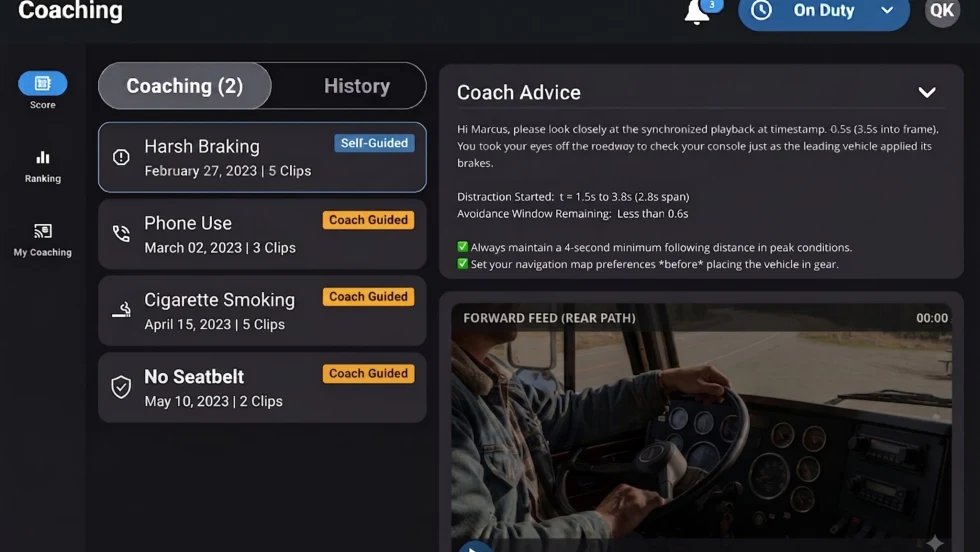
Four additions to PS Fleet help fleets monitor loads, manage driver coaching, share truck locations and adjust video system settings.
Read More →
When Language Stops the Truck: The Return of ELP Out-of-Service Orders
English language proficiency rules for commercial drivers aren’t new, but renewed out-of-service enforcement has raised the stakes. Here’s what carriers need to know before a driver reaches a roadside inspection.
Read More →
Samsara Launches Custom AI Agent Builder
Agent Studio lets fleets create AI tools for hours-of-service monitoring, reporting and driver support, including agents that communicate by phone.
Read More →
Trucker Path Expands Reserved Parking Network
Trucker Path has added close to 6,000 more truck parking spaces to its Trucker Path Reserved Parking Network with the addition of Safe Truck Parking.
Read More →
EEOC Sues Texas Trucking Company Over Driver Age Limits
The agency says Trancasa USA rejected applicants over 65 and applied tougher driving-record standards to those over 60.
Read More →
Nussbaum, Roehl Announce Second Driver Pay Increase This Year
This year has seen a swath of major truck driver pay increases as freight capacity has tightened.
Read More →
From One Generation to the Next: How Mentorship Builds Safer Truck Drivers
After three decades in trucking, Harold Perry shares what he's learned about driver safety, mentorship, and helping the next generation build confidence behind the wheel.
Read More →
Truck Drivers Need More Than Another Alert
Fleets have more visibility into truck health, safety events, and driver activity than ever. The next challenge is turning all that information into useful guidance for the person who has to decide what to do next.
Read More →
FMCSA Removes 110 Truck Driver Training Schools from Certified ELDT List
Federal regulators also are targeting more than 160 additional training providers and launching a nationwide audit of third-party CDL skills testers as part of a broader crackdown on trucking fraud.
Read More →
Hours of Service Pilot Programs: FMCSA Readies for 2027 Rollout
Two pilot programs could eventually reshape hours-of-service rules, giving truck drivers options to pause their 14-hour clock or use longer split sleeper rest periods.
Read More →