




Enforcement Community Applauds CSA 2010
Government and law enforcement agencies at the state and local levels are continuing to be fiscally challenged with respect to resources being made available for highway safety activities. The public - and rightly so - has an expectation that a basic responsibility of government is to keep our citizens traveling the roadways safe and secure. The challenge unfortunately is all too often public safety is one of the first areas of government to be cut

Government and law enforcement agencies at the state and local levels are continuing to be fiscally challenged with respect to resources being made available for highway safety activities. The public - and rightly so - has an expectation that a basic responsibility of government is to keep our citizens traveling the roadways safe and secure. The challenge unfortunately is all too often public safety is one of the first areas of government to be cut
when budgets are tight.
Using performance data to reveal which motor carriers and drivers are not complying with safety rules allows inspectors and other law enforcement personnel to more effectively focus on and remove the most unsafe drivers, vehicles and carriers from the nation's roadways, saving countless lives in the process.
The Commercial Vehicle Safety Alliance is a strong advocate of the Federal Motor Carrier Safety Administration's Compliance, Safety and Accountability program, and particularly CSA's use of performance data to identify the nation's most high-risk carriers. There is clear evidence that links the CSA Behavior Analysis and Safety Improvement Categories and its associated Safety Measurement System with increased crash risk. Providing enforcement the ability to use this data is common sense and allows them to keep an eagle eye on those that do not comply.
CSA helps to prioritize carrier interventions through the use of additional metrics more so than in the past, including all safety-based roadside inspection violations, enforcement actions, crash data and violation histories and will update these data more frequently. This is good news as it will allow interventions on high-risk operators to occur sooner than what had been the case in the past, ultimately saving more lives in the process.
On August 16, 2010, FMCSA began providing carriers with information about where they stand with the new CSA SMS based on roadside inspection data and investigation findings. To date, only 5 percent of the motor carrier population has viewed their data (access can be gained online at http://csa2010.fmcsa.dot.gov).
While SafeStat has been an effective safety tool for public and private stakeholders alike - and the data has been publicly available for more than a decade - CSA goes even farther at helping to identify those carriers with the most severe compliance and performance problems and in need of further attention. The CSA effectiveness study has revealed that the SMS high-risk carrier list has identified 25 percent more high-risk carriers who have been involved in 56 percent more crashes than what was the case with the SafeStat high-risk list.
By implementing CSA, federal and state inspectors and investigators are improving on their ability to proactively address the issues that are most likely to contribute to crashes and cause injuries and deaths related to large truck and bus crashes. The pilot program experience in the states has shown that we can effectively "reach" more carriers, which is a good thing and is an improvement over what has been the case in the past. The experience in the pilot states by both enforcement and industry has by and large been very positive.
We wholeheartedly applaud FMCSA for their leadership and for being as transparent as they have with CSA and appreciate the level of engagement throughout the development of CSA. They have brought everyone into the tent to create an environment to help promote government, law enforcement and industry's common goal of saving lives - it has been and will continue to make a difference.
Editor's Note: Keppler said he wrote this editorial before the recent suit by a group of small trucking companies to block public access to CSA 2010 data.
"Our concern continues to be that people are quick to criticize without a full understanding of where we started from, what the experience has been to date and how this is linked to impact on saving lives," he said. "That is the goal. Most of peoples' concerns and issues are not new ones. We are not changing the basic compliance and enforcement programs or activities or the underlying regulations. FINALLY people are starting to wake up and take safety more seriously, and that is a good thing."
More Drivers

Truck Drivers Need More Than Another Alert
Fleets have more visibility into truck health, safety events, and driver activity than ever. The next challenge is turning all that information into useful guidance for the person who has to decide what to do next.
Read More →
FMCSA Removes 110 Truck Driver Training Schools from Certified ELDT List
Federal regulators also are targeting more than 160 additional training providers and launching a nationwide audit of third-party CDL skills testers as part of a broader crackdown on trucking fraud.
Read More →
Hours of Service Pilot Programs: FMCSA Readies for 2027 Rollout
Two pilot programs could eventually reshape hours-of-service rules, giving truck drivers options to pause their 14-hour clock or use longer split sleeper rest periods.
Read More →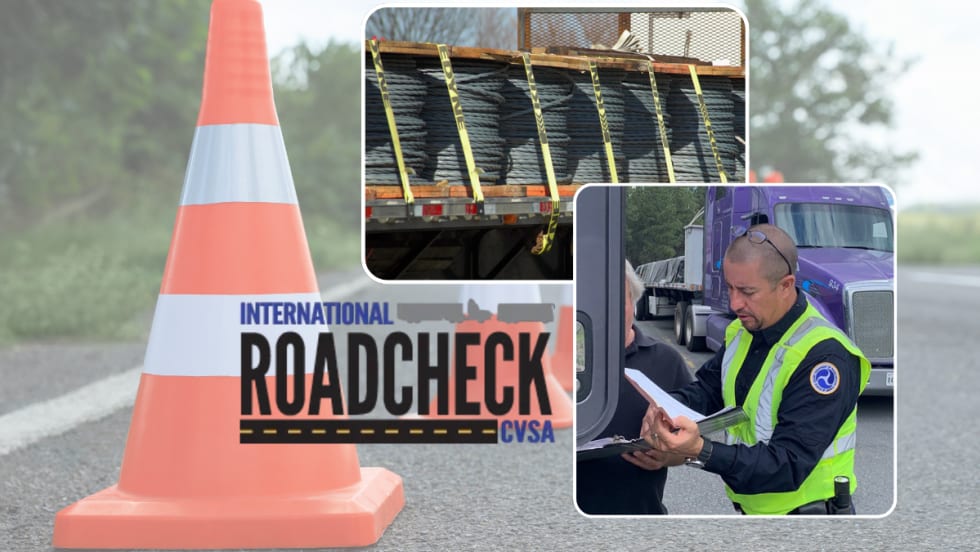
Medical Cards, English Proficiency Reshape Roadcheck Violations
Medical-card violations jumped to the top of the driver out-of-service list during CVSA’s 2026 International Roadcheck, while English-language proficiency violations appeared among the leading violations for the first time.
Read More →
Driver Trust Can Make or Break the Success of Fleet Safety Technology
New Teletrac Navman research suggests that onboarding, transparency about driver data, and positive feedback can play a significant role in how commercial drivers respond to safety and coaching technology.
Read More →
EEOC Sues KLLM Over Alleged Sex Discrimination in Driver Training
KLLM is facing a federal sex-discrimination lawsuit over policies the EEOC alleges put female truck driver trainees at a disadvantage.
Read More →
FMCSA Moves to Codify English Language Requirements for Commercial Drivers
By changing regulations on English-language proficiency requirements for commercial drivers, rather than relying on a guidance memo, the FMCSA said future administrations won't be able to walk back the Trump administration's stricter enforcement with just a memo.
Read More →
Drivers Put Western Star Trucks to the Test at Star Nation Experience
Watch to get an inside look at the Western Star trucks, technology, and community behind the Star Nation Experience 2026!
Read More →
Trump Administration Looks to Put More Veterans Behind the Wheel
The Freedom Haulers program pulls together existing and expanded programs at several federal agencies to recruit veterans to drive commercial heavy-duty trucks and cut the red tape for them to get a CDL, training, and employment.
Read More →
Putting Mack’s Command Steer to the Test
A test drive of Mack’s Command Steer active steering system evaluates how it can make truck driving easier and less tiring.
Read More →