





Dig Deeper: California's New Low-NOx Rules Concern Truck, Engine Makers
EMA Withdraws CARB Emissions Challenge
The Truck and Engine Manufacturers Association has withdrawn a lawsuit against the California Air Resources Board challenging the timing of emissions regulations.
August 11, 2022
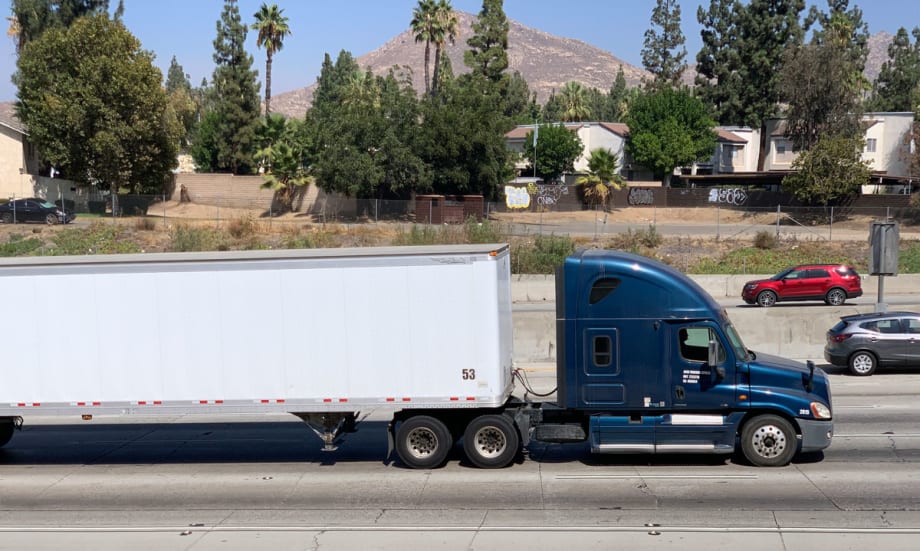
EMA was concerned that only having a two-year lead time to meet CARB regs would make a smooth rollout less likely.
Photo: Deborah Lockridge
3 min to read
The Truck and Engine Manufacturers Association has withdrawn a lawsuit against the California Air Resources Board challenging the timing of its emissions regulations.
In late May, EMA filed a lawsuit against the California Air Resources Board, saying the agency has not provided enough lead time for truck and engine makers to meet its latest emission standards due to go into effect in 2024.
On Dec. 22, 2021, CARB adopted the Heavy-Duty Engine and Vehicle Omnibus Regulation, a package of stringent emission standards, test procedures, and other emission-related requirements applicable to new heavy-duty on-highway engines and vehicles sold in California. The Omnibus Regulation requires heavy-duty engine and vehicle manufacturers to comply with the new standards on Jan. 1, 2024, giving manufacturers only two years of lead time.
While the lawsuit was intended to address the short lead time, not the contents of the regulation itself, it drew the ire of environmental groups and saw some EMA members distancing themselves from it. Several of the association’s members — including Honda, GM, Cummins and Ford — had stated publicly that they did not support the litigation.
The Truck and Engine Manufacturers Association says it “represents the world’s leading manufacturers of medium- and heavy-duty commercial vehicles, internal combustion engines, and zero-emission powertrains.”
Complicating the issue was concern that EMA’s lawsuit and its lobbying efforts could impact agency decision-makers to partially deny a Clean Air Act waiver to implement the standards. Standard. More than 20 groups were signers on a June 28 letter to EMA members.
The letter called the lawsuit “the latest in a series of actions by EMA to oppose and delay critical regulations that will improve health and quality of life for the millions of people living in and around ports, warehouses and freeways. EMA has spent years vigorously fighting the adoption of important clean zero-emission truck standards. Diesel-powered trucks are a dirty fixture in many neighborhoods, spewing pollution near our homes, schools, and places of recreation. We need strong clean truck standards to help deliver vital relief that the most highly impacted communities demand and deserve. EMA's efforts to fight these life-saving policies are a direct attack on these communities’ right to a clean air future.”
Time Needed for Smooth Transition
In an Aug. 11 statement about withdrawing the litigation, EMA explained that the lawsuit was intended to confirm that CARB is required to provide manufacturers at least four full model years of lead time before implementing new heavy-duty engine emission standards.
“Congress unambiguously mandated the minimum four full model year lead time requirement in the Clean Air Act for both the U.S. Environmental Protection Agency (EPA) and CARB,” the statement said. “EPA has now commenced its review of CARB’s preemption waiver request and held a hearing that included discussion of the lead time issue. As a result, EMA has chosen to withdraw its lawsuit without prejudice."
EMA President Jed R. Mandel said, “EMA filed the lawsuit to achieve clarity and prompt resolution on the lead time issue — something all stakeholders should want. EMA was never challenging CARB’s independent right to regulate. At the time we filed, EPA had not yet initiated its review of CARB’s request for a waiver. We are pleased that EPA has now solicited public comment and the review process is under way. We encourage EPA to act promptly and confirm EPA’s own longstanding and explicit analysis finding in 1994 that the Clean Air Act’s four-year lead time requirement applies to CARB.”
EMA said its members support the nationwide implementation of more stringent tailpipe standards and are committed to transitioning the commercial vehicle market to zero-emission technologies. “EMA and its members support cleaner air and better health for all communities. We believe that EPA-led national emission standards are the most effective way to achieve clean air goals, reduce harmful emissions from heavy-duty engines, and promote the deployment of affordable, cleaner, and customer acceptable commercial vehicles,” Mandel said.
More Equipment

How Volvo Updated Its D13 for EPA 2027 [Watch]
Volvo’s updated D13 promises lower emissions without sacrificing performance or fuel economy. Take a closer look at what changed inside the engine in this HDT Spotlight video.
Read More →
Michelin Tire Improves Efficiency and Durability for Regional Fleets
The Michelin X Multi Energy D2 is a regional haul drive tire engineered to help fleets improve fuel efficiency, durability and traction in demanding stop-and-go operations.
Read More →
ZF Expands Commercial Vehicle Push in North America
ZF is expanding its North American commercial-vehicle presence with new transmission applications, electrification, trailer technology and autonomous-driving systems.
Read More →
Tesla Wants a Self-Driving Semi. Are Cameras Enough?
Could Tesla’s camera-only autonomous driving technology work on an 80,000-pound Semi? In this commentary, HDT's Deborah Lockridge takes a look at Tesla, Cybercab, and how autonomous trucks see the road.
Read More →
Kodiak: Driverless Long-Haul Truck Launch on Track for 2026
Kodiak AI says its driverless long-haul safety case is 93% complete and it remains on track to begin commercial operations by year-end 2026.
Read More →
What DOT’s Automated Vehicle Strategy Means for Trucking
The U.S. Department of Transportation issued a new automated-vehicle strategy that outlines plans for driverless-truck regulations, cross-state freight corridors, and federal safety standards.
Read More →
East Coast Port Launches $45M Electric Truck Push
The Port Authority of New York and New Jersey announced millions in incentives for zero-emission drayage trucks, yard tractors, and new charging hubs near the port.
Read More →
PlusAI Going Public to Fund Autonomous Truck Launch
A SPAC deal could provide PlusAI with up to $300 million as it works toward a 2027 commercial launch of factory-built autonomous trucks.
Read More →
NHTSA Moves to Rewrite Truck Fuel-Economy Rules
The National Highway Traffic Safety Administration says it lacks authority to regulate medium- and heavy-duty truck engines separately from complete vehicles, but the existing standards have not yet been eliminated.
Read More →
Detroit Opens Orders for EPA 2027 Engines
Detroit isn’t starting from scratch to meet EPA 2027 diesel emissions standards. Its Gen 6 DD13 and DD15 engines keep much of today’s platform while updating the fuel and aftertreatment systems.
Read More →