





August 11, 2022 Update: EMA Withdraws CARB Emissions Challenge
EMA Lawsuit: CARB Emissions Rule Violates Clean Air Act
The Truck and Engine Manufacturers Association said the California Air Resources Board's new emissions regulations don't give manufacturers enough time to comply.
May 31, 2022
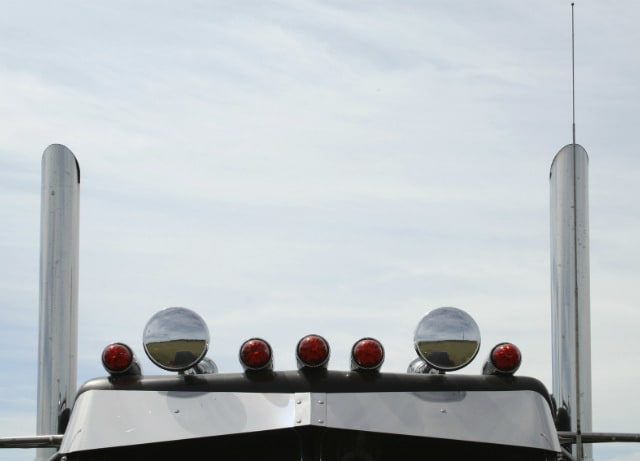
More than half of the commercial vehicles on the road in the U.S. are advanced clean-diesel technology models, according to the Diesel Technology Forum.
Photo: Diesel Technology Forum
3 min to read
The Truck and Engine Manufacturers Association has sued the California Air Resources Board, saying the agency has not provided enough lead time for truck and engine makers to meet its latest emission standards due to go into effect in 2024.
On Dec. 22, 2021, CARB adopted the Heavy-Duty Engine and Vehicle Omnibus Regulation, a package of stringent emission standards, test procedures, and other emission-related requirements applicable to new heavy-duty on-highway engines and vehicles sold in California.
The Omnibus Regulation requires heavy-duty engine and vehicle manufacturers to comply with the new standards on Jan. 1, 2024, giving manufacturers only two years of lead time.
The federal Clean Air Act allows California to establish its own emissions standards, EMA said, provided California meets certain requirements — including providing heavy-duty on-highway engine and vehicle manufacturers four full model years of lead time.
In its filing, EMA said the Omnibus Regulations would require, among other things, that heavy-duty engine manufacturers:
Develop and deploy new technology to reduce nitrogen oxide (NOx) emissions initially by 75% and particulate emissions by 50%.
Demonstrate emissions compliance on entirely new test cycles.
Ensure emissions compliance for certain “Class 3” heavy-duty engines using new durability test procedures out to an extended “useful life” range of 150,000 miles instead of 120,000 miles.
It would require engine manufacturers to redesign, test and build their engines to comply with all of those new requirements starting with Model Year 2024, which begins, at the latest, on Jan. 1, 2024.
“Truck and engine manufacturers are proud that today’s modern engines reduce harmful emissions to near zero levels, and we are committed to building still cleaner products,” said EMA President Jed Mandel in a news release.
“But CARB must provide manufacturers the minimum four years of lead time mandated by Congress…. This lawsuit is simply to ensure that CARB follows all of the prescribed rules — one of which is intended to maximize the likelihood of the smooth and successful implementation of new emission standards.”
Environmental Groups: ‘A New Low’
Environmental groups were quick to criticize the suit. They claim that truck and engine makers that are part of EMA are being hypocrites, as several prominent executives have publicly called for faster action to meet global emissions targets.
A blog post on the website of the Natural Resources Defense Council characterized the action in a headline, “Truck Manufacturers Sue to Continue Polluting,” accompanied by a photo of an old rig belching black smoke in 2014.
“EMA’s lawsuit is a direct attack on our communities, lungs, and the environment,” wrote Patricio Portillo, senior advocate for NRDC’s Climate & Clean Energy Program. “It’s also a new low for EMA, a trade association comprised of vehicle and engine manufacturers who have made public statements about their desire to clean up vehicle pollution….
"This lawsuit is evidence that no matter the public statements, truck manufacturers will never clean up their act unless forced to by vehicle emission standards.”
In an email, a spokesperson representing a group environmental organizations, including NRDC, said, “These standards will literally save lives. American Lung Association's latest State of the Air report finds that California cities continue to top the country's list of most polluted. Diesel death zones situated arounds ports and warehouses are some of the clearest examples of environmental racism in the state thanks to decades of redlining. These communities are desperate for relief.
“Adding insult to injury, California gives EMA members — e.g. Volvo, Daimler, Cummins — hundreds of millions of dollars to support clean truck R&D.”
Other groups represented by this email in addition to NRDC include the Center for Community Action and Environmental Justice, the People's Collective for Environmental Justice, East Yard Communities for Environmental Justice, Central California Asthma Collaborative, BlueGreen Alliance, and Earthjustice’s Right to Zero campaign.
For more on diesel emissions:
More Equipment

How Volvo Updated Its D13 for EPA 2027 [Watch]
Volvo’s updated D13 promises lower emissions without sacrificing performance or fuel economy. Take a closer look at what changed inside the engine in this HDT Spotlight video.
Read More →
Michelin Tire Improves Efficiency and Durability for Regional Fleets
The Michelin X Multi Energy D2 is a regional haul drive tire engineered to help fleets improve fuel efficiency, durability and traction in demanding stop-and-go operations.
Read More →
ZF Expands Commercial Vehicle Push in North America
ZF is expanding its North American commercial-vehicle presence with new transmission applications, electrification, trailer technology and autonomous-driving systems.
Read More →
Tesla Wants a Self-Driving Semi. Are Cameras Enough?
Could Tesla’s camera-only autonomous driving technology work on an 80,000-pound Semi? In this commentary, HDT's Deborah Lockridge takes a look at Tesla, Cybercab, and how autonomous trucks see the road.
Read More →
Kodiak: Driverless Long-Haul Truck Launch on Track for 2026
Kodiak AI says its driverless long-haul safety case is 93% complete and it remains on track to begin commercial operations by year-end 2026.
Read More →
What DOT’s Automated Vehicle Strategy Means for Trucking
The U.S. Department of Transportation issued a new automated-vehicle strategy that outlines plans for driverless-truck regulations, cross-state freight corridors, and federal safety standards.
Read More →
East Coast Port Launches $45M Electric Truck Push
The Port Authority of New York and New Jersey announced millions in incentives for zero-emission drayage trucks, yard tractors, and new charging hubs near the port.
Read More →
PlusAI Going Public to Fund Autonomous Truck Launch
A SPAC deal could provide PlusAI with up to $300 million as it works toward a 2027 commercial launch of factory-built autonomous trucks.
Read More →
NHTSA Moves to Rewrite Truck Fuel-Economy Rules
The National Highway Traffic Safety Administration says it lacks authority to regulate medium- and heavy-duty truck engines separately from complete vehicles, but the existing standards have not yet been eliminated.
Read More →
Detroit Opens Orders for EPA 2027 Engines
Detroit isn’t starting from scratch to meet EPA 2027 diesel emissions standards. Its Gen 6 DD13 and DD15 engines keep much of today’s platform while updating the fuel and aftertreatment systems.
Read More →