Heavy Duty Trucking Logo
MenuMENU
SearchSEARCH

ELD Providers Prep for Upcoming HoS Changes

With revised federal hours of service scheduled to take effect Sept. 29, ELD providers have also been planning how best to assist fleets with the changes.

Stephane Babcock
Stephane BabcockFormer Managing Editor
Read Stephane's Posts
August 21, 2020
ELD Providers Prep for Upcoming HoS Changes


Photo: Gino Crescoli via Pixabay

3 min to read


With revised federal hours of service scheduled to take effect Sept. 29, ELD providers have also been planning how best to assist fleets with the changes.

The revisions make four key changes to the existing HOS rules, dealing with the 30-minute break rule, the split sleeper berth options, the adverse driving conditions exception and the short-haul exception.

Ad Loading...

The change that has probably resulted in the most interest is the change in rules requiring a 30-minute break after no more than eight hours of consecutive driving. This can now be satisfied by the on-duty/not driving status, rather than off-duty status. That means a driver’s “break” could be satisfied by stopping to fuel the truck, for instance.

“To assist our customers with compliance with the changes in the federal hours of service regulations, we are updating code on our various HOS compliance tools to allow drivers using Omnitracs ELDs to take advantage of this change in the rest break requirement,” said Mike Ahart, vice president of regulatory affairs at Omnitracs.

The ELD provider also conducted a webinar in June that covered the changes and their potential impact on local, regional, and long-haul drivers. During the webinar, Omnitracs discussed the changes in the rule, the proposed benefits to the industry, and the unique role the ELD plays in the regulatory environment.

“We are planning several other webinars to be held prior to and after the effective date of the HOS change,” added Ahart. “Fleets should be vigilant in watching communications from trade publications, their state trucking associations and their ELD providers for educational webinars relating to the HOS changes.”

Trimble Transportation plans to send updates for the rule change via over-the-air programming and has been working to answers all of its customers’ questions, as it has done since the final rule was published in May.

Ad Loading...

"Trimble is … working with customers to update their electronic logging device software to help ensure their continued compliance," said Glenn Williams, Trimble vice president of product management.

Changes to J.J. Keller’s mobile application and Encompass ELD system will be deployed starting two weeks prior to the Sept. 29 deadline. The company has been hosting webinars to review the impact of the changes on fleets, and its regulatory experts have been answering questions regarding specific situations that pertain to its customers.

“We’re deploying prior to the effective date and educating to ensure all fleets have a chance to prepare. Starting Sept. 29, the new hours of service rules will be used on both the mobile and web applications, to audit logs,” said Tom Reader, senior director of marketing at J.J. Keller & Associates.

Eroad, which began researching the change when it was first proposed by FMCSA in September 2018, has approached the update in stages, first researching the attitudes and impacts of the changes with customers and the market, then designing and implementing changes, and finally communicating the changes and enabling customers to make the switch.

“We conduct rigorous testing on behalf of our customers so that on Sept. 29, drivers aren't facing bugs and issues, and carrier compliance managers aren’t looking at data they don’t understand,” said Soona Lee, Eroad’s director of regulatory compliance. “We test complex scenarios in a driver's day to trigger violations, check HOS counters and make sure that driver log data before the switchover is correct as much as it will be after that date.”

Ad Loading...

Konexial has been studying the proposed rules and listening to its My20 Fleet Management system fleet customers for ideas on how to successfully implement the changes.

“We are implementing several adjustments to our system in order to meet the new guidelines,” said Ken Evans, CEO, Konexial, adding, “by listening to our My20 customer’s feedback and compliance agencies, we effectively gathered all HOS requirements, as well as industry features that improve the drivers’ workflow.”


The New Hours of Service Changes

FMCSA’s final rule on hours of service makes four key revisions to the existing HOS rules:

  1. The 30-minute break rule, which requires a break after no more than eight hours of consecutive driving, can now be satisfied by the on-duty/not driving status, rather than off-duty status.

  2. The sleeper berth rules will now allow drivers to split their required 10 hours off duty into two periods: an 8/2 split, or a 7/3 split — with neither period counting against the driver’s 14 hour driving window.

  3. The new rule changes the adverse driving conditions exception by extending by two hours the maximum window during which driving is permitted. The previous rule allows for an extra two hours of driving time, but it still had to be within the maximum 14-hour workday.

  4. The agency will change the short-haul exception available to certain commercial drivers by lengthening the drivers’ maximum on duty period from 12 to 14 hours and extending the distance limit within which the driver may operate from 100 air miles to 150 air miles.

More Electronic Logging Devices (ELDs)

SponsoredFebruary 1, 2026

Stop Watching Footage, Start Driving Results

6 intelligent dashcam tactics to improve safety and boost ROI

Read More →
SponsoredJanuary 19, 2026

3 New Ways Fleet Software Pays: ROI opportunities for modern fleet managers

Safety, uptime, and insurance costs directly impact profitability. This eBook looks at how fleet software is evolving to deliver real ROI through proactive maintenance, AI-powered video telematics, and real-time driver coaching. Learn how fleets are reducing crashes, defending claims, and using integrated data to make smarter operational decisions.

Read More →
SponsoredJanuary 19, 2026

Basic Tracking vs Next Generation Fleet Technology

Fleet software is getting more sophisticated and effective than ever, tying big data models together to transform maintenance, safety, and the value of your existing tech stack. Fleet technology upgrades are undoubtedly an investment, but updated technology can offer a much higher return. Read how upgrading your fleet technology can increase the return on your investment.

Read More →
Ad Loading...
SponsoredNovember 7, 2025

eBook: Is Driver Resistance to Dash Cams Shifting?

Learn how dash cams are becoming a driver’s best friend, explore innovative use cases and talking points for dash cam skeptics, and see how to get drivers, supervisors, and executives on board with video telematics.

Read More →

The ELD Hacking Threat: Q&A with Serjon's Urban Jonson

Electronic logging devices are easy prey for hackers looking to gain access to your fleet's data and IT systems. Urban Jonson with Serjon tells HDT what bad actors hope to achieve by hacking into ELDs and how fleets can protect themselves.

Read More →

How Trucking Fleets Can Get Control of False Driver Logs [Video]

Truck driver log falsification violations can lead to out-of-service orders, fines, bad federal safety scores, failed DOT audits, civil penalties, even nuclear verdicts. What can motor carriers do?

Read More →
Ad Loading...

FMCSA Revokes 10 ELDs

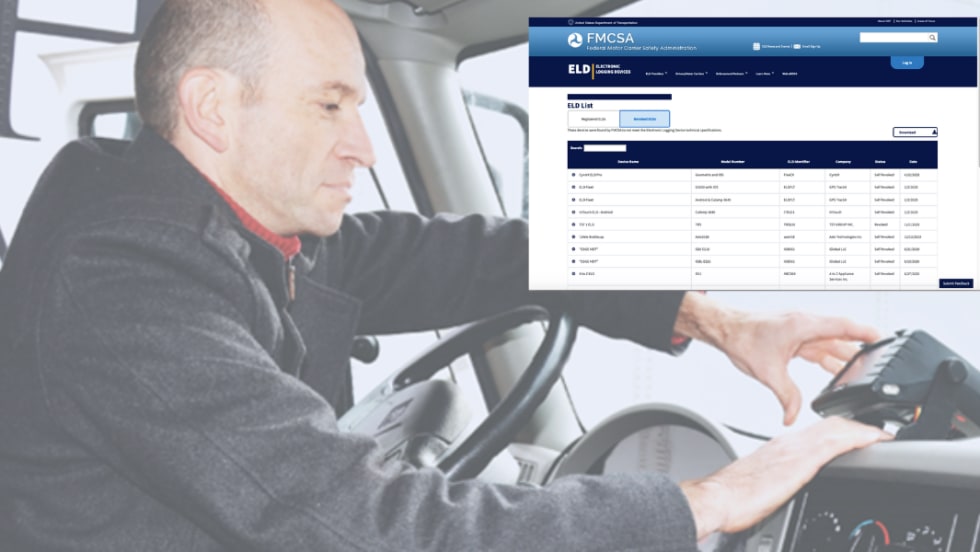
Ten more electronic logging devices have been removed from the Federal Motor Carrier Safety Administration's list of registered ELDs fleets and drivers can use to meet the mandatory ELD regulations.

Read More →
Safety & Complianceby News/Media ReleaseSeptember 14, 2023

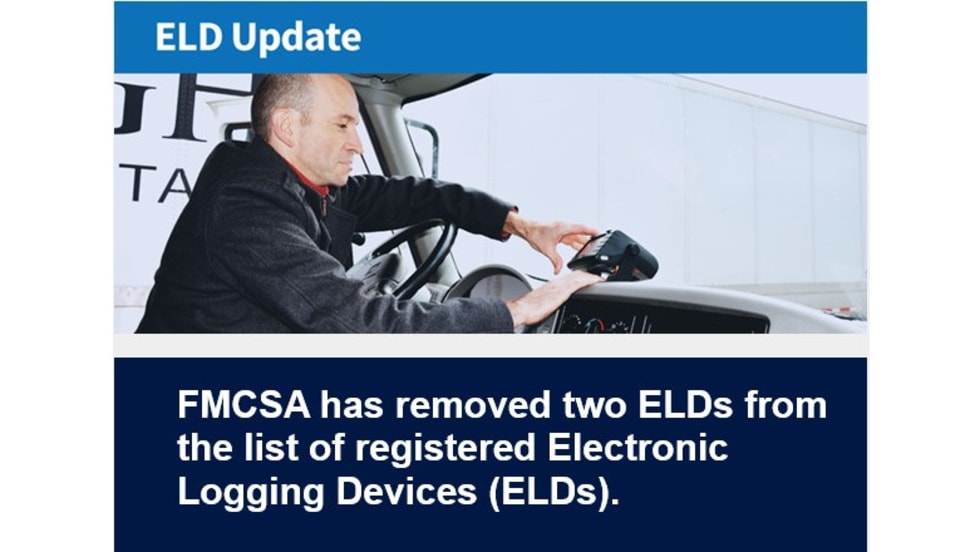
FMCSA Removes 2 ELDs from List of Registered Devices

The Federal Motor Carrier Safety Administration has removed Falcon ELD and KSK ELD from its list of registered, self-certified electronic logging devices.

Read More →
Driversby StaffAugust 24, 2023

FMCSA Outlines Plans for Driver Detention Study

The Federal Motor Carrier Safety Administration plans to study driver detention, expecting approximately 80 carriers and 2,500 drivers to provide data.

Read More →
Ad Loading...

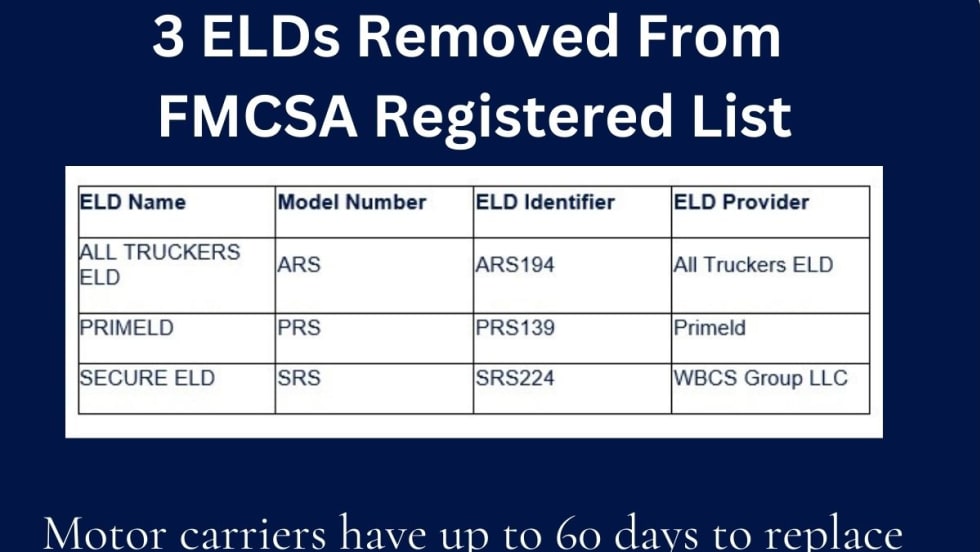
FMCSA Removes 3 ELDs from Approved List

The Federal Motor Carrier Safety Administration has placed three more electronic logging devices on the Revoked Devices list after they failed to meet the minimum requirements.

Read More →