




FMCSA Outlines Plans for Driver Detention Study
The Federal Motor Carrier Safety Administration plans to study driver detention, expecting approximately 80 carriers and 2,500 drivers to provide data.

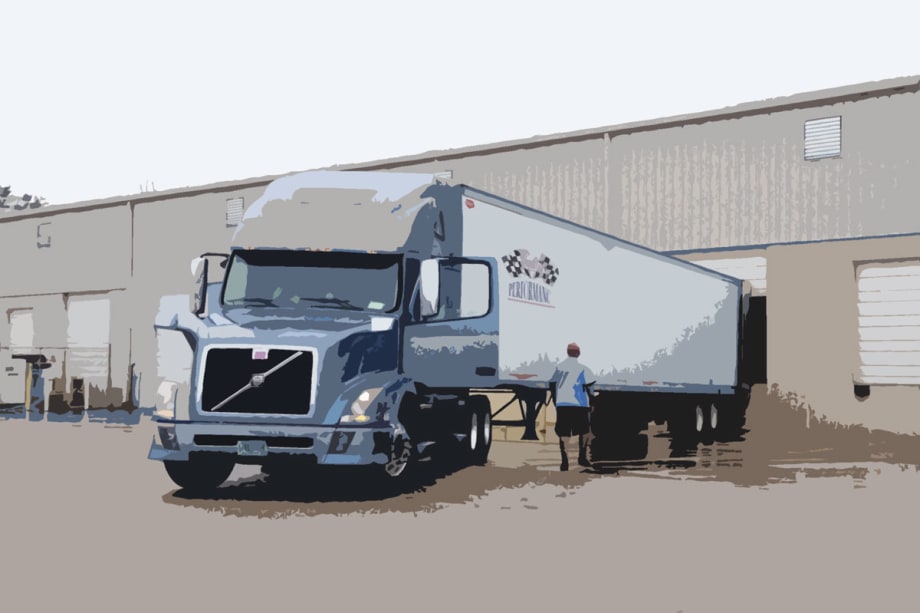
Just how much time waiting to load and unload is too much?
Photo: Deborah Lockridge
The Federal Motor Carrier Safety Administration has outlined its plan for a study of how driver detention time affects trucking operations and safety and asked for comments.
This research study will collect data on commercial motor vehicle driver detention time, analyze that data to see how bad the detention problem is, and look at the ability of existing intelligent transportation system technology to measure detention time.
The results then can be used in developing strategies to mitigate driver detention time.
The Problem With Detention
In a Federal Register notice, the agency explained that detention time refers to the extra time truck drivers have to wait at shipping and receiving facilities due to delays in loading and unloading cargo. Drivers are often not paid for this extra time.
“Although there is currently no standard definition of detention time, the CMV industry, the U.S. government, and academic detention research in the United States have typically used dwell time — the total amount of time spent at a facility — exceeding two hours to define when detention time occurs.”
Detention time consistently ranks as one of the top problems for a large portion of commercial motor vehicle operators. It often results in lost revenue for both drivers and carriers.
“Reducing detention time may reduce costs for carriers, increase pay for drivers, and improve CMV drivers' ability to make deliveries on time or arrive at a destination as planned without violating hours of service requirements,” FMCSA explained.
And, it said, drivers who experience less detention time may be more likely to drive safely to reach their destinations within the hours-of-service limits and less likely to violate those regulations in order to make deliveries on time.
Detention is a Top Trucking Industry Issue
In 2019, for the first time, detention/delay at customer facilities appeared on the American Transportation Research Institute’s annual Top 10 list of the Top Industry Issues, debuting at No. 4.
The same year, the Transportation Intermediaries Association released a report examining the detention issue, talking to players on all sides.
Detention is among the top research priorities this year for the American Transportation Research Institute, the research arm of the American Trucking Associations.
FMCSA completed a study in 2014 on the impact of detention time on safety. Although this study "provided valuable initial insights," the agency said, it had several limitations. The sample of motor carriers was small and consisted mostly of large fleets. It only used a "rudimentary estimation of detention time," and said it was hampered by the inability to identify time spent loading/unloading. In addition, the data did not cover an entire 12-month period. The agency said that’s why it needs more data from a broader sample of carriers.
Where Will the Detention Data Come From?
The FMCSA said in the notice that it expects approximately 80 carriers and 2,500 drivers to provide data.
The study as proposed will include data collection via electronic logging devices, transportation management systems, vehicle telematic systems, safety records, and answers to questions delivered through the carriers' dispatching systems.
The TMS, ELD, telematics, and safety data are already collected by carriers. The only additional data that will be collected will be the answers to questions submitted through the carriers' dispatching systems. After agreeing to participate in the study, carriers will collect and provide 12 months of data.
The carriers will be selected so that the sample is representative of the nation. Carriers will primarily be selected from the approximately 3,000 SpeedGauge clients in the Driven Data Clearinghouse, which is maintained by SpeedGauge and combines vehicle, telematics, ELD, and vehicle claims data.
However, the study may include other carriers that express interest in participating. The final sample from this source will include up to 80 carriers with up to 2,500 total vehicles. This sample will include a variety of carrier operations, including long haul/short haul, private/company fleets and for-hire fleets, port servicing (primarily chassis), owner-operators, hourly and mileage-based operators, truckload/less-than-truckload, and dedicated local delivery.
These carriers will range in size from single-vehicle owner-operators to carriers with hundreds of trucks, with a likely average fleet size of 31 vehicles.
What Will FMCSA do with the Detention Data?
Multiple analyses will be performed, including assessing the relationships between detention time and characteristics of carriers, facility locations, and driver schedules (appointment times, time of day, day of week, month, and season).
Measures of detention time will include the number of detained stops per shift and the duration of each detention.
Another analysis will examine the relationship between detention time and safety outcomes during the shifts following the detention time. Finally, the study will estimate the cost per year associated with detention time, including lost productivity, disruptions to the supply chain, and any increases in fatal, injury, and property-damage-only crashes.
Comments on this notice must be received on or before October 23, 2023. Comments can be submitted through the federal eRulemaking Portal, Docket Number FMCSA–2023–0172.
More Safety & Compliance

FMCSA Pauses Biennial-Update Enforcement Amid Motus Transition
Carriers whose updates were due on or after June 1 have more time, while FMCSA works to stabilize its new registration system and warns of phishing sites impersonating its new carrier registration system, Motus.
Read More →
ZF Expands Commercial Vehicle Push in North America
ZF is expanding its North American commercial-vehicle presence with new transmission applications, electrification, trailer technology and autonomous-driving systems.
Read More →
Truck Drivers Need More Than Another Alert
Fleets have more visibility into truck health, safety events, and driver activity than ever. The next challenge is turning all that information into useful guidance for the person who has to decide what to do next.
Read More →
Tesla Wants a Self-Driving Semi. Are Cameras Enough?
Could Tesla’s camera-only autonomous driving technology work on an 80,000-pound Semi? In this commentary, HDT's Deborah Lockridge takes a look at Tesla, Cybercab, and how autonomous trucks see the road.
Read More →
What DOT’s Automated Vehicle Strategy Means for Trucking
The U.S. Department of Transportation issued a new automated-vehicle strategy that outlines plans for driverless-truck regulations, cross-state freight corridors, and federal safety standards.
Read More →
NYC Expands Speed, Pedestrian Safety Tech Across Fleet
New York City is expanding intelligent speed assistance and pedestrian-alert systems across its municipal fleet, moving the technologies from pilot programs into vehicle procurement and retrofit requirements.
Read More →
FMCSA Removes 110 Truck Driver Training Schools from Certified ELDT List
Federal regulators also are targeting more than 160 additional training providers and launching a nationwide audit of third-party CDL skills testers as part of a broader crackdown on trucking fraud.
Read More →
Beyond DOT Compliance: What Makes a Trucking Fleet Truly Safe?
A trucking fleet can follow every rule and still make unsafe decisions. The real test comes when safety conflicts with freight, productivity, or cost.
Read More →
Hours of Service Pilot Programs: FMCSA Readies for 2027 Rollout
Two pilot programs could eventually reshape hours-of-service rules, giving truck drivers options to pause their 14-hour clock or use longer split sleeper rest periods.
Read More →
New Guide Offers Pet Safety Tips for Truck Drivers
Hundreds of thousands of pets travel in truck cabs. A new safety guide from Volvo Trucks and the Center for Pet Safety offers practical advice for truck drivers who bring dogs and cats along for the ride.
Read More →