




ELD Mandate Finally Arrives, to Growing Pains and Praise
The electronic logging device rule kicked in on Dec. 18 and enforcement has begun across the country.

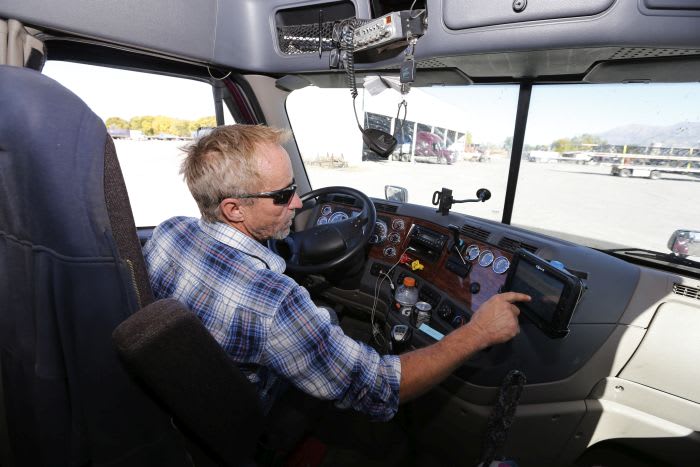
The electronic logging device rule kicked in on Dec. 18 and enforcement has begun across the country.
While there were some reports of certain ELD providers having temporary software and server troubles, no doubt due to a sudden increase in usage, the day seems to have gone off without much trouble. Based on what he had heard, CVSA Executive Director Collin Mooney characterized the day as quiet on the enforcement side.
"Today, jurisdictions around the country are implementing the ELD requirement," said Mooney in a CVSA news release. "Enforcement personnel have been trained in anticipation of the ELD rule and now that it is in effect, inspectors will be verifying hours-of-service compliance by reviewing records of duty status requirements electronically.”
While the rule is on the books, a phased-in approach is being taken by law enforcement. Any violations stemming from a lack of ELDs will not count against a CSA score or be cause for being placed out of service until April 1. Fleets using automatic onboard recording devices, a precursor to ELDs, will be allowed to use those devices until Dec. 16, 2019, thanks to a grandfather clause in the mandate.
The ELD rule does not change any of the underlying hours-of-service requirements, but simply enforces the use of an electronic device connected to the vehicle’s diagnostic port to track and record hours of service, which replaces paper log books.
The American Trucking Associations officially welcomed the effective date of the ELD mandate, hailing it as a step forward for the industry. The use of ELDs was first proposed in 2007 and was finalized in 2010. The rule that is went into effect today was the result of a bipartisan measure included in the MAP-21 highway bill, which was passed back in 2012.
“Electronic logging devices have been legislated, promulgated, and litigated – with Congress voting three times in the past five years in favor of this requirement and a federal court rejecting a challenge to the rule," said ATA President and CEO Chris Spear. "The time has finally come to retire decades-old, burdensome paper logs that consume countless hours and are susceptible to fraud and put the safety of all motorists first.
"The benefits of this rule exceed the costs by more than $1 billion, making it a rule the ATA can firmly support and easily adopt,” he continued. "Today marks the start of a new era of safety and efficiency for our industry and we thank the champions in the Department of Transportation and Congress who have gotten us to this point.”
ATA characterized the implementation as a step forward in the debate over hours of service. Bill Sullivan, the trucking lobby's group executive vice president for advocacy, stated that it will allow trucking to make a better case for corrections to HOS rules with regards to detention and the split sleeper berth provision.
“With the support of law enforcement groups and trucking industry groups like ATA that are concerned with the welfare of the motoring public, this requirement is now in the rearview mirror and we can turn our attention to other important safety matters surrounding the hours-of-service rules,” said Sullivan. “Simply put, with this requirement in place we can now move forward to a safer, better future for our industry.”
More Drivers

Truck Drivers Need More Than Another Alert
Fleets have more visibility into truck health, safety events, and driver activity than ever. The next challenge is turning all that information into useful guidance for the person who has to decide what to do next.
Read More →
FMCSA Removes 110 Truck Driver Training Schools from Certified ELDT List
Federal regulators also are targeting more than 160 additional training providers and launching a nationwide audit of third-party CDL skills testers as part of a broader crackdown on trucking fraud.
Read More →
Hours of Service Pilot Programs: FMCSA Readies for 2027 Rollout
Two pilot programs could eventually reshape hours-of-service rules, giving truck drivers options to pause their 14-hour clock or use longer split sleeper rest periods.
Read More →
Medical Cards, English Proficiency Reshape Roadcheck Violations
Medical-card violations jumped to the top of the driver out-of-service list during CVSA’s 2026 International Roadcheck, while English-language proficiency violations appeared among the leading violations for the first time.
Read More →
Driver Trust Can Make or Break the Success of Fleet Safety Technology
New Teletrac Navman research suggests that onboarding, transparency about driver data, and positive feedback can play a significant role in how commercial drivers respond to safety and coaching technology.
Read More →
EEOC Sues KLLM Over Alleged Sex Discrimination in Driver Training
KLLM is facing a federal sex-discrimination lawsuit over policies the EEOC alleges put female truck driver trainees at a disadvantage.
Read More →
FMCSA Moves to Codify English Language Requirements for Commercial Drivers
By changing regulations on English-language proficiency requirements for commercial drivers, rather than relying on a guidance memo, the FMCSA said future administrations won't be able to walk back the Trump administration's stricter enforcement with just a memo.
Read More →
Drivers Put Western Star Trucks to the Test at Star Nation Experience
Watch to get an inside look at the Western Star trucks, technology, and community behind the Star Nation Experience 2026!
Read More →
Trump Administration Looks to Put More Veterans Behind the Wheel
The Freedom Haulers program pulls together existing and expanded programs at several federal agencies to recruit veterans to drive commercial heavy-duty trucks and cut the red tape for them to get a CDL, training, and employment.
Read More →
Putting Mack’s Command Steer to the Test
A test drive of Mack’s Command Steer active steering system evaluates how it can make truck driving easier and less tiring.
Read More →