





Related: ELD Lessons Learned
ELD Adoption Fails to Reduce Truck Accidents, Study Says
ELDs were supposed to reduce driver fatigue and make roads safer, but a recent report suggests that any benefits may have been offset by an increase in unsafe driving behaviors.
February 4, 2019
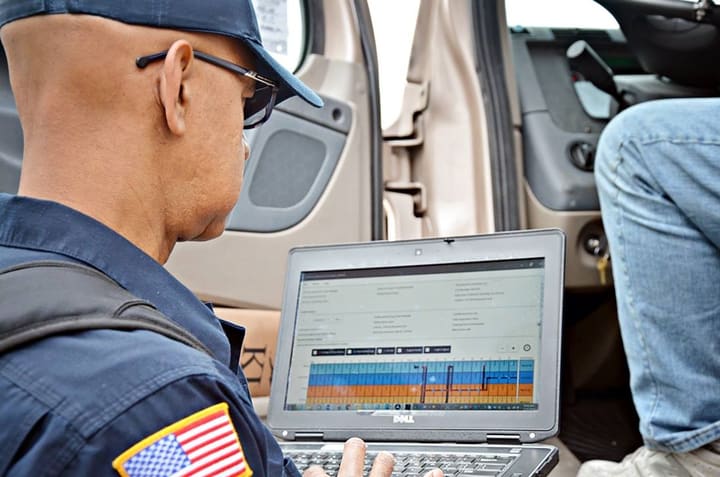
ELDs were supposed to reduce driver fatigue and make roads safer, but a recent report suggests that any benefits it might have had were offset by an increase in unsafe driving behaviors.
Photo via FMCSA
4 min to read
ELDs were supposed to reduce driver fatigue and make roads safer, but a recent report suggests that any benefits may have been offset by an increase in unsafe driving behaviors.
Alex Scott, assistant professor of supply chain management at the D’Amore-McKim School of Business at Northeastern University, led a team that evaluated inspection and crash data from the Federal Motor Carrier Safety Administration and found that widespread adoption of ELDs in the trucking industry has so far had no measurable impact on the number of accidents.
The report, “Did the Electronic Logging Device Mandate Reduce Accidents?”, looked at large and small fleets and compared accident rates before and after the ELD mandate. What it found was that, among small carriers, which are where ELD adoption saw the largest increase from 2017-2018, there was no significant difference in the number of accidents.
Among larger carriers there was an increase in accidents after the ELD mandate, but the paper noted that most large fleets were already running electronic logs prior to the mandate. ELDs offer more of a benefit to large fleet, according to the report, allowing them to better monitor their drivers and increase their ability to reduce the number of HOS violations.
But for small fleets, whose operations are less complex than large fleets, the monitoring and informational advantage of ELDs are not as compelling, says the report's author.
“We show the mandate clearly achieved its first-order effect: Drivers increased their compliance with HOS regulations, with drivers for small carriers most affected, because many large carriers had already adopted ELDs and violated HOS regulations infrequently prior to the mandate. However, there is no evidence to suggest that the number of accidents decreased,” the report states.
One thing that did change for the better? Hours of service compliance. HOS violations decreased by 36.7% in the initial light-enforcement phase after the ELD mandate went into effect in December 2017, and a further 51.7% when stricter enforcement set in starting April 1, 2018. Even among owner-operators, who in general were against the ELD mandate, HOS violations fell 43.9%.
While accident rates appear unchanged, the report says, unsafe driving behaviors such as speeding appear to have increased over the same period of time. These unsafe driving behaviors were found to be in response to productivity losses caused by the mandate.
“Our data suggests that unsafe driving infractions for small carriers and independent owner-operators increased relative to large asset-based carriers after the mandate was implemented, thus suggesting a potential mechanism for the lack of a decrease in accidents.”
According to the report, unsafe driving violations by owner-operators increased by as much as 33.3%, and speeding increased by as much as 31%
Researchers found that drivers often had to weigh the benefits of violating hours of service vs. potential productivity loss due to unexpected delays or simply reduced earning potential that stems from a hard limit on hours. This is something that has always been true and in the past drivers got around it by fudging their paper logs. However, ELDs have made it easier for inspectors to catch HOS violations and impossible for drivers to adjust logs. Since it’s harder to avoid the consequences of violating hours of service, there was an increase in driver speeding which could be counteracting the safety benefits ELDs may have gained in regards to driver fatigue.
While detractors of ELDs have been saying this for years, the research does suggest that instead of increasing highway safety by reducing fatigue, the primary goal of mandated ELDs, the unintended consequences may be offsetting the benefits.
“Our research also provides another example of how policy interventions are fraught with uncertainty in complex systems with many interconnections and possible feedbacks,” the report states.
These offsetting results, the researchers say, could have been predicted. The authors found that even before the ELD mandate, drivers were heavily incentivized to avoid accidents, and this didn’t change after the ELD mandate. The ELD mandate was designed to reduce driver fatigue, a cause of some accidents, but it failed to encourage other safe driving behaviors, and may have actually increased unsafe driving behaviors.
“Given the legal liabilities involved with being in a crash when outside hours-of-service limits, drivers are incentivized to be extra cautious when driving beyond limits. The ELD mandate has not done much to change the driver calculus in this respect, and so it is perhaps not surprising that we fail to uncover significant accident reductions,” the paper concludes.
The full report is available online.
More Electronic Logging Devices (ELDs)
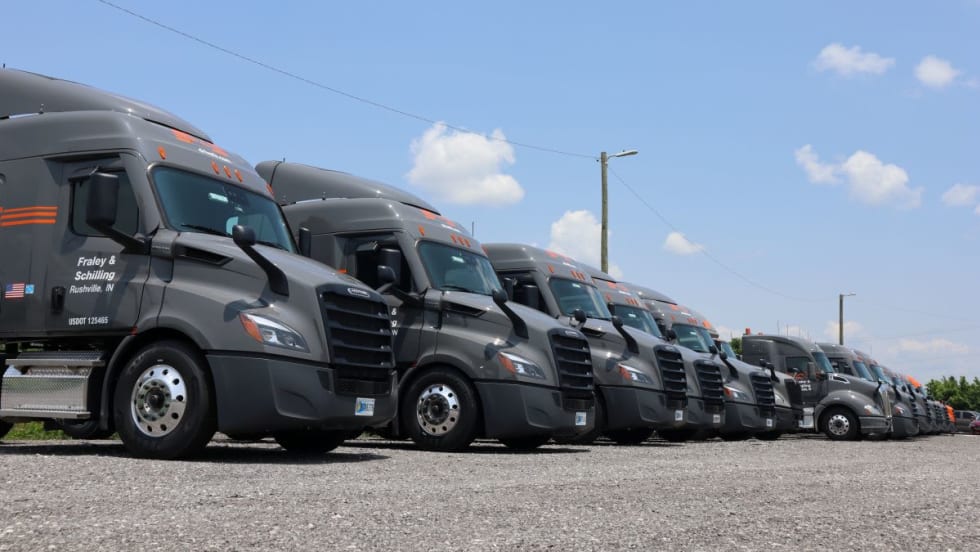
How Fraley & Schilling Improved Logbook Compliance by Over 50%
Fraley & Schilling needed a way to close a compliance workflow gap in its ELD system without adding more work from driver training, reminders, and back-office follow-ups. It found the answer in a custom driver app.
Read More →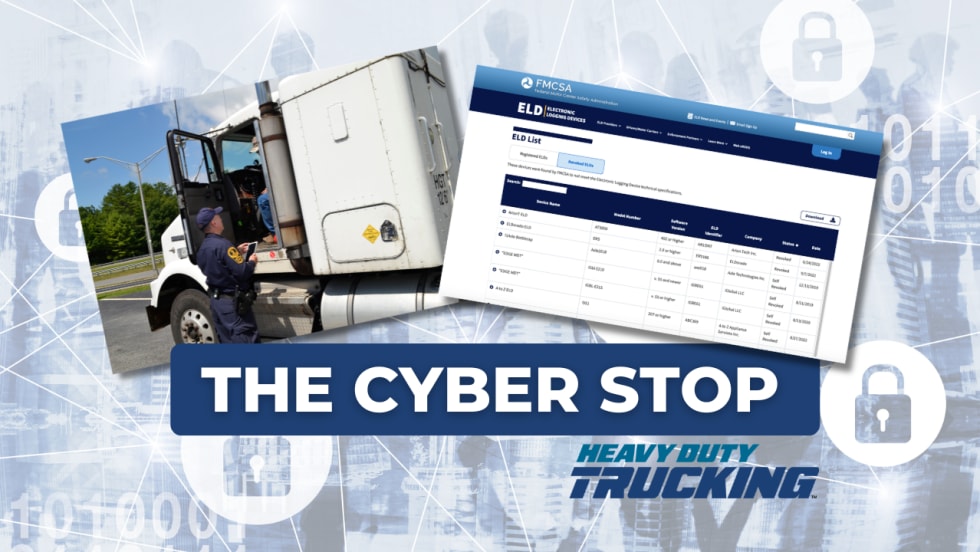
The Hidden Problem Behind FMCSA's ELD Revocations
NMFTA researchers say dozens of registered ELDs may be built on the same software platforms, allowing compliance and security concerns to persist even after individual devices are removed from the market.
Read More →
Sponsored•January 19, 2026
Basic Tracking vs Next Generation Fleet Technology
Fleet software is getting more sophisticated and effective than ever, tying big data models together to transform maintenance, safety, and the value of your existing tech stack. Fleet technology upgrades are undoubtedly an investment, but updated technology can offer a much higher return. Read how upgrading your fleet technology can increase the return on your investment.
Read More →
The ELD Hacking Threat: Q&A with Serjon's Urban Jonson
Electronic logging devices are easy prey for hackers looking to gain access to your fleet's data and IT systems. Urban Jonson with Serjon tells HDT what bad actors hope to achieve by hacking into ELDs and how fleets can protect themselves.
Read More →
How Trucking Fleets Can Get Control of False Driver Logs [Video]
Truck driver log falsification violations can lead to out-of-service orders, fines, bad federal safety scores, failed DOT audits, civil penalties, even nuclear verdicts. What can motor carriers do?
Read More →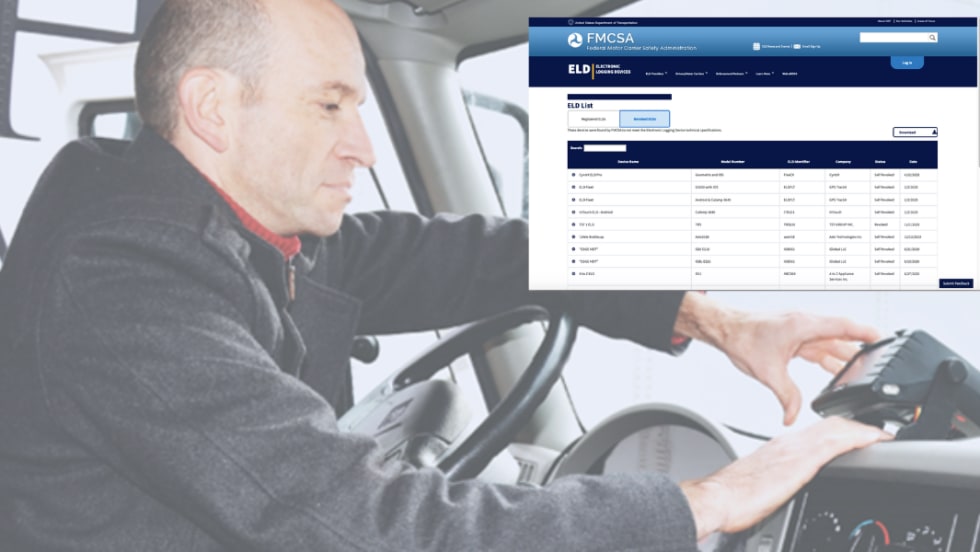
FMCSA Revokes 10 ELDs
Ten more electronic logging devices have been removed from the Federal Motor Carrier Safety Administration's list of registered ELDs fleets and drivers can use to meet the mandatory ELD regulations.
Read More →
FMCSA Removes 2 ELDs from List of Registered Devices
The Federal Motor Carrier Safety Administration has removed Falcon ELD and KSK ELD from its list of registered, self-certified electronic logging devices.
Read More →
FMCSA Outlines Plans for Driver Detention Study
The Federal Motor Carrier Safety Administration plans to study driver detention, expecting approximately 80 carriers and 2,500 drivers to provide data.
Read More →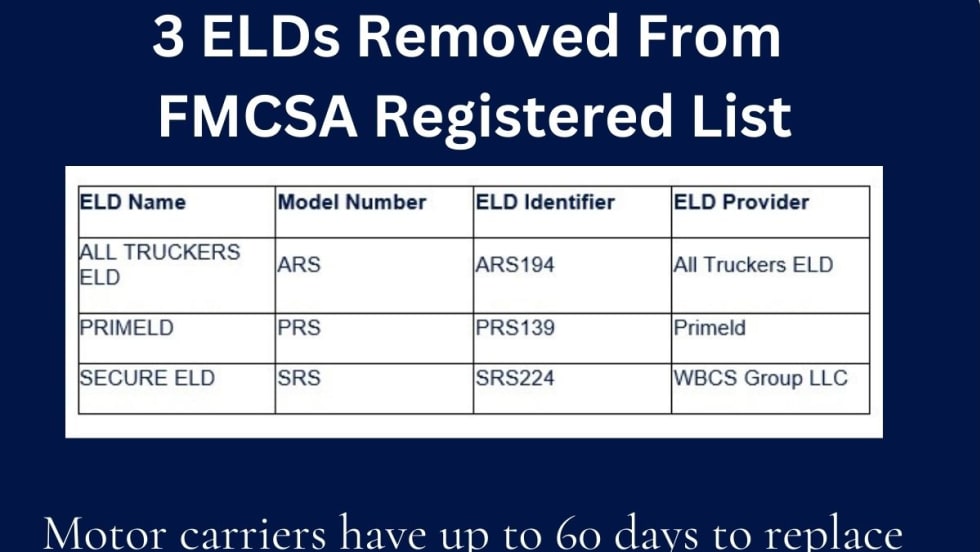
FMCSA Removes 3 ELDs from Approved List
The Federal Motor Carrier Safety Administration has placed three more electronic logging devices on the Revoked Devices list after they failed to meet the minimum requirements.
Read More →
New Transportation Management System for Small Fleets
T3 Tech launches TrueTMS, a transportation management system for small trucking fleets.
Read More →