




Economic Watch: New Home Sales Post Biggest Jump Since 1992
Sales of new single-family houses in May 2014 were at a seasonally adjusted annual rate of 504,000, according to a new U.S. Commerce Department report, its strongest pace in six years and the largest one month increase since 1992, while a separate report shows consumer confidence hit its highest level in more than six-years this month.
Sales of new single-family houses in May 2014 were at a seasonally adjusted annual rate of 504,000, according to a new U.S. Commerce Department report, its strongest pace in six years and the largest one month increase since 1992, while a separate report shows consumer confidence hit its highest level in more than six-years this month.
This is 18.6% above the revised April rate of 425,000 and is 16.9% above the May 2013 estimate of 431,000. When the first five months of 2014 are compared with the same time period the year before the increase is just 0.8%.
The median sales price of new houses sold in May 2014 was $282,000, up nearly 7% from a year ago, following a decline the month before.
Sales varied widely by region, increasing nearly 55% in the Northeast from April, 34% in the West, 14% in the South and 1.4% in the Midwest.
The report follows one from the National Association of Realtors on Monday showing existing home sales in May increased 4.9%, the biggest month-over-month increase since August 2011. http://www.truckinginfo.com/news/story/2014/06/economic-watch-manufacturing-existing-home-sales-post-strong-upturns.aspx
Despite the improvements home sales activity remains stunted amid an inability for new demand to afford home purchases, according to Sterne Agee Chief Economist Lindsey Piegza.
"Warmer weather has ushered in sidelined demand from the start of the year and helped boost monthly purchases particularly in the new home market, but as we saw in yesterday's existing home sales report, the improvement from the lows at the start of the year has not yet reinstated a healthy level of activity on the aggregate," she said. "Keep in mind that new construction accounts for less than 10% of the residential housing market."
She noted that against the backdrop of tepid income growth and lackluster high-wage, full-time job creation, demand remains restrained particularly for the youngest generations, as first-time homebuyers as a percent of activity continues to wane.
"Going forward, keeping all else constant, either prices will need to slow further and even decline to a more palatable level, adequately allowing ample first-time buyers to enter the market, or lending standards will need to ease in order to shoehorn in additional demand," Piegza said. "The latter, while the easiest and fastest solution, hints at the easy money policies that arguably led to the Great Recession."
Meantime, the Consumer Confidence Index, from the private research group The Conference Board, which increased in May, improved again in June, according to newly released figures.
The index now stands at 85.2, up from 82.2 in May. The Present Situation Index increased to 85.1 from 80.3, while the Expectations Index rose to 85.2 from 83.5 in May.
“Consumer confidence continues to advance and the index is now at its highest level since January 2008," said Lynn Franco, director of economic indicators at The Conference Board. "June’s increase was driven primarily by improving current conditions, particularly consumers’ assessment of business conditions. Expectations regarding the short-term outlook for the economy and jobs were moderately more favorable, while income expectations were a bit mixed. Still, the momentum going forward remains quite positive.”
Consumers’ appraisal of current conditions improved in June. Those claiming business conditions are “good” increased to 23% percent from 21.1%, while those stating business conditions are “bad” decreased to 22.8% from 24.6%. Consumers’ assessment of the job market was also more favorable.
Consumers’ expectations were generally more positive in June. The percentage of consumers expecting business conditions to improve over the next six months increased to 18.8% from 17.7%. However, those expecting business conditions to worsen increased to 11.4% from 10.7%.
More Fleet Management

Enhance Fleet Performance with High-Efficiency Auxiliary Power Units
Drive sustainable cost savings while increasing driver comfort during short- and long-haul logistics operations.
Read More →
Is Your Parts Procurement Process Reactive or Proactive?
Ready to revamp your parts procurement process? Learn how now with “Strategic Parts Purchasing: A Process Checklist”
Read More →
What Trucking Events are Happening in 2026?
Looking for trucking-related conventions, expos, and other events? Heavy Duty Trucking has developed this list of national and larger regional trucking shows and events.
Read More →
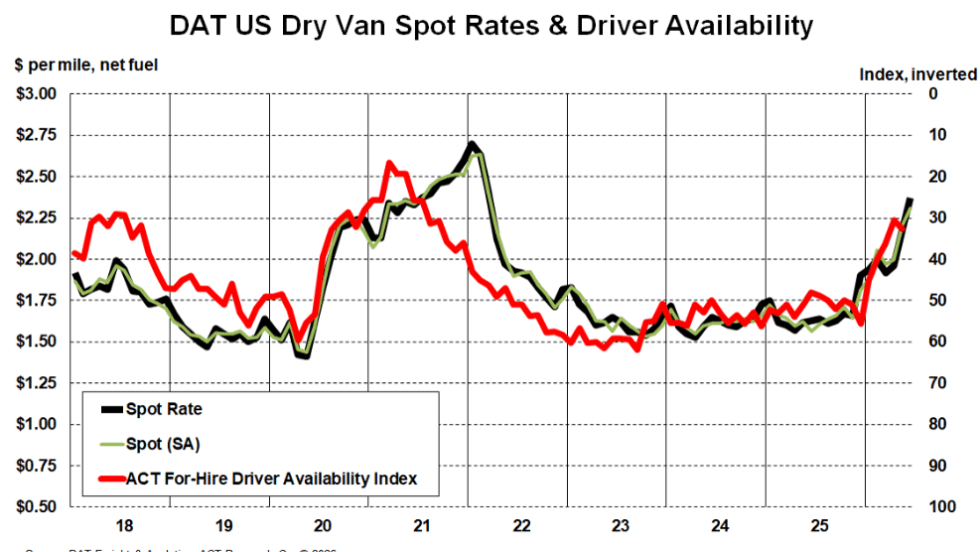
Truckload Rates Keep Rising as Tight Capacity Fuels Freight Market Recovery
Spot and contract rates continued climbing in May and June, not because freight demand is surging, but because fewer trucks and drivers are available.
Read More →
What Geotab's New AI Connector Means for Fleets
Fleets can now ask their usual AI assistants questions about maintenance, safety, fuel use, and vehicle performance, using their live Geotab data, and take action on the answers without leaving their preferred AI tool.
Read More →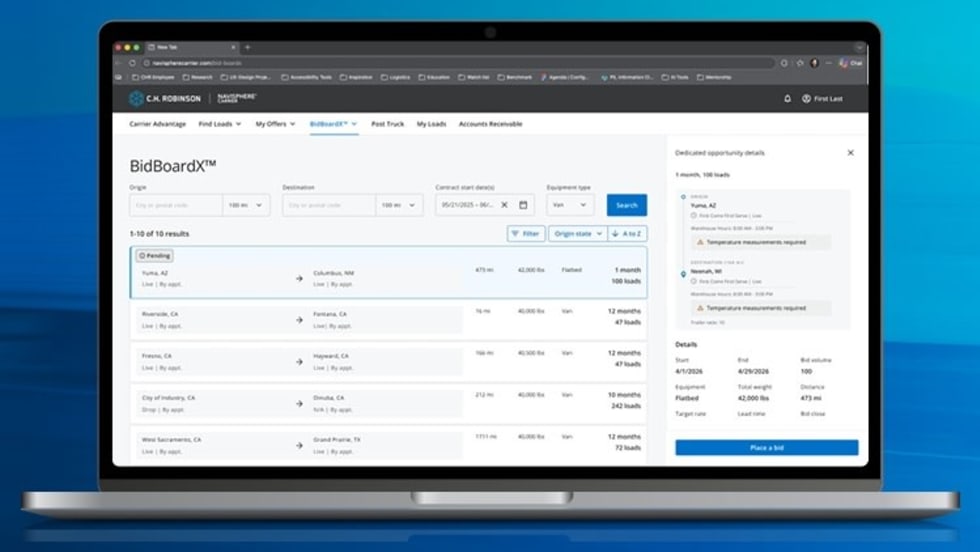
New C.H. Robinson Tool Opens Door to More Predictable Freight
BidBoardX lets carriers search, bid on, and secure committed freight opportunities through a single digital marketplace.
Read More →
New York City's Microhub Project is Delivering Results
Trucking, last-mile delivery companies, and environmental advocates like what they are seeing so far with New York's microhub program.
Read More →
Why Truck Detention Keeps Costing Fleets Time and Money
A 2024 ATRI study found detention affects nearly 40% of truckload stops and costs the industry more than $15 billion annually. Despite the toll on drivers, fleets, and supply chains, the problem remains stubbornly persistent.
Read More →
Time is Running Out to Apply for Exclusive HDT Event
Heavy Duty Trucking Exchange brings fleet managers and suppliers together for the deeper conversations that lead to ideas, partnerships, and solutions. Time is running out to apply for the September event.
Read More →
Amazon Launches Less-Than-Truckload Freight Offering for All Businesses
This launch is the latest addition to Amazon Supply Chain Services, a portfolio of supply chain capabilities from Amazon, including freight, distribution, fulfillment, and parcel shipping.
Read More →