




Economic Watch: Consumer Prices Post Largest Drop in 6 Years
Falling gasoline prices led to a sharp drop in U.S. consumer prices during November, the steepest rate in nearly six years, according to a U.S. Commerce Department released Wednesday morning.



Falling gasoline prices led to a sharp drop in U.S. consumer prices during November, the steepest rate in nearly six years, according to a U.S. Commerce Department released Wednesday morning.
Consumer prices declined 0.3% from the month before, the largest drop since December 2008, pushing the Consumer Price Index down to an annual rate of 1.3%, compared to a rate of 1.7% in October.
Excluding volatile food and energy prices, the inflation rate is up 1.7% over the past 12 months, a tenth of a percentage point lower than in October. These “core prices” rose just 0.1% in November from the month before.
Over the past year energy prices have declined 4.8% while food prices are up 3.2%.
The overall annual rate is below the Federal Reserve’s annual target of a 2% annual inflation rate and will be looked at by officials before increasing interest rates. Further clues on how the Fed will proceed are expected Wednesday afternoon.
“Ahead of today's Federal Open Market Committee statement release, it is clear the U.S. economy continues to face significant headwinds,” said Lindsey Piegza, chief economist at the investment firm Sterne Agee. “Not only is the U.S. labor market far from robust, continuing to send mixed messages, but significant price declines, initially led by a retreat in energy prices, have now resulted in a clear disinflationary environment, pulling headline inflation further below the Fed's longer-run target of 2%.”
Despite lower overall inflation, U.S. consumers face increasingly higher prices in key areas such as housing, up 3% over the past year, and medical costs, up 2.5%.
More Fleet Management

How Telematics Improves Visibility, Control, and Performance in Refrigerated Fleets
Explore how telematics help refrigerated fleets improve visibility, uptime, efficiency, compliance, and cargo protection across connected cold chain operations.
Read More →
What the U.S.-Canada Trade War Means for Trucking
Escalating U.S.-Canada tariffs could disrupt cross-border freight, reduce truck volumes, raise costs, and create new uncertainty for carriers on both sides of the border.
Read More →
What Are Trucking’s Top Concerns for 2026?
The American Transportation Research Institute wants to know what's worrying trucking fleet managers, drivers, and other stakeholders in its annual Industry Issues survey.
Read More →

American Trucking Associations Looks for a New Leader
ATA President and CEO Chris Spear abruptly left his job at the association on August 21, at a pivotal time for the trucking industry.
Read More →
Public Wi-Fi Cybersecurity Risks: How Truck Drivers and Fleets Can Protect Their Data
Public Wi-Fi can expose truck drivers and fleets to credential theft, malware, and other cyber threats. Here’s how to reduce the risk on the road.
Read More →
For Nicky Cupp, Fleet Innovation Starts With Frustration
HDT Truck Fleet Innovator Nicky Cupp turns everyday pain points at Fraley & Schilling into opportunities for better technology and smarter processes.
Read More →
Adam Buttgenbach’s Approach to Electric Trucks: Start With Where They Fit
HDT Truck Fleet Innovator Adam Buttgenbach helped PepsiCo build one of North America’s largest EV fleets by focusing on where electric trucks make operational sense.
Read More →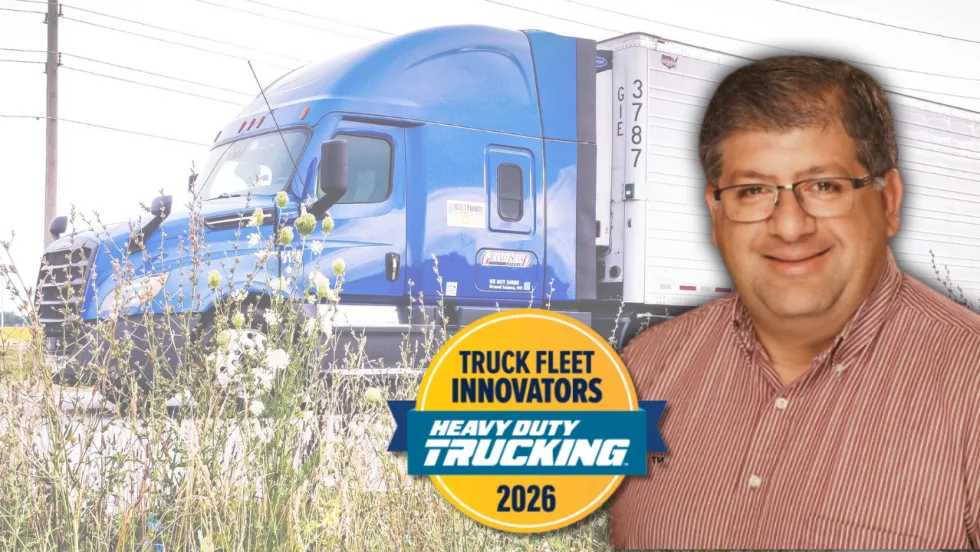
Deen Albert: Let Automation Do the Math, People Make the Decisions
HDT Truck Fleet Innovator Deen Albert makes sure people are still at the heart of operations at Grand Island Express, even while adopting artificial intelligence tools. AI-assisted dispatch helped boost revenue 25% with the same number of trucks.
Read More →
Trimble’s New AI Agent Takes Aim at Fleet Back-Office Busywork
Arc Agent works across Trimble TMS products to automate repetitive tasks such as freight orders, maintenance, invoices, fuel costs and more.
Read More →
How HDT’s 2026 Truck Fleet Innovators Are Rethinking Fleet Operations
Meet five trucking leaders who are challenging assumptions, solving operational problems, and putting innovative ideas to work.
Read More →