




Earnings Watch: Lower Truck Sales Hit Dana, Rush Enterprises' Profits
A truck component manufacturer and one of the nation’s largest truck dealer networks continue the trend of many businesses reporting lower first quarter earnings as truck sales are down from a year ago.



A truck component manufacturer and one of the nation’s largest truck dealer networks continue the trend of many businesses reporting lower first quarter earnings as truck sales are down from a year ago.
Dana Holding Corp. (NYSE: DAN) saw its profit decline by 25.6% to $45 million from a year earlier. Earnings per share moved lower from 38 cents to 30 cents, missing a consensus estimate from Zacks Investment Research by 9 cents.
Revenue fell 9.9% from a year earlier to $1.45 billion, with foreign currency exchange rates lowering this by figure by $72 million.
The Ohio-based maker of Spicer brand truck drivetrain components also saw its light vehicle business sales drop from $637 million a year earlier to $613 in the most recent quarter, also negatively affected by foreign currency rates.
Sales in Dana's commercial vehicle driveline business fell by 23.1% to $333 million.
“Lower volumes reduced [commercial] sales by $79 million, primarily due to higher share with a key customer in the first half of last year, weaker Class 8 production in North America this year, and weaker demand in Brazil, where medium- and heavy-truck production was down 35% from first-quarter 2015,” Dana said in a statement. “Foreign currency, principally a weaker Brazilian real, lowered sales by an additional $20 million.”
Company sales were also lower in the quarter for Dana’s off-highway and power technologies businesses. However, its light vehicle driveline and power technologies business units posted combined currency-adjusted sales growth of $28 million, 3% higher than a year ago, driven by higher light-vehicle end-market demand in North America and Europe, as well as new business gains, according to the company.
Rush Enterprises Net Income Falls 85.7%
The truck mega-dealer network Rush Enterprises Inc. (NASDAQ:RUSHA) (NASDAQ:RUSHB) reported its first quarter profit plummeted to $2.4 million from $16.8 million a year ago but says it has already started cost-cutting measures, including closing some locations.
Earnings per share fell to 6 cents from 41 cents as revenue fell 10.3% to $1.07 billion. Adjusted earnings per share came in at 18 cents, 2 cents better than expectations by Zacks Investment Research.
"As we expected, increased capacity from near-record Class 8 truck sales in 2015 significantly reduced used truck residual values, and continued softness in the energy sector had a negative impact on our new Class 8 truck sales, aftermarket revenues and profitability this quarter," said W.M. "Rusty" Rush, chairman, CEO and president. "Our Class 4-7 new truck sales, however, remained strong, slightly outpacing the U.S. medium-duty truck retail sales.”
Part of Rush Enterprises’ expense reduction plan is the consolidation of 12 Navistar locations in Georgia, Illinois, Indiana, North Carolina, Ohio, Oregon and Utah in the first half of the year. The company has already consolidated its Alice, Texas, location into a newly constructed dealership in Corpus Christi.
“This was not an easy decision to make,” said Rusty Rush. “However, with changes in technology and, in certain cases, the local markets, we were no longer able to justify operating these locations in such close proximity to our other dealerships."
He said the company does not expect to realize the full benefit of these changes until mid-year, and it caused the company to incur an $8.1 million restructuring charge, reducing earnings per share by 12 cents in the first quarter.
According to Rush Enterprises, while U.S. Class 8 retail sales were 53,203 units in the first quarter, down 6% over the same time period last year, the company’s Class 8 sales decreased 34%.
ACT Research has forecast U.S. retail sales for Class 8 trucks to be 207,000 units in 2016, an 18% decrease compared to 2015, but Rush said he believes sales this year could be less, as excess truck capacity and low used truck valuations may prompt many fleets to delay new Class 8 truck purchases.
Rush's Class 4-7 medium-duty sales increased 22% over the first quarter of 2015, accounting for 5.7% of the total U.S. market and also outpacing U.S. Class 4-7 truck sales in the first quarter, which increased by approximately 20% over the first quarter of 2015. ACT Research forecasts U.S. retail sales for Class 4-7 vehicles to reach 220,850 units in 2016, a 1% increase over 2015.
"Our medium-duty business remained strong this quarter, primarily due to stable demand across the country from a range of market segments," said Rusty Rush. "Our solid sales performance was also the result of several large fleet deliveries into the lease and rental and recycling markets. We continue to see strong sales of our ‘Ready-to-Roll' work-ready inventory particularly in Florida and California.
"With the forecast for Class 4-7 new truck sales relatively flat over 2015, we expect our solid sales performance to continue throughout the year, keeping pace with the U.S. Class 4-7 retail market.”
Rush’s aftermarket business accounted for approximately 67% of the company's total gross profit in the first quarter of 2016, with parts, service and body shop revenue up 1.5% as compared to the first quarter of 2015, according to the company
"Energy sector activity continued to decrease and adversely impact our parts and service business, but we were able to help offset some lost aftermarket revenues with general maintenance and repair of vehicles, particularly in the western and southeastern parts of the country, largely driven by increased construction activity and improved economic conditions in these regions," said Rush.
Many analysts have been expecting overall corporate earnings in the first quarter to be down from a year ago for a variety of reasons, including a U.S. dollar being strong against foreign currencies, reduced manufacturing output the past several months, lower oil prices causing some energy operations to cut back, and generally anticipated sluggish overall economic growth.
So far, such conditions have contributed to three major fleets – Knight Transportation, Landstar Systems and Werner Enterprises – reporting lower first quarter earnings earlier this week.
More Fleet Management
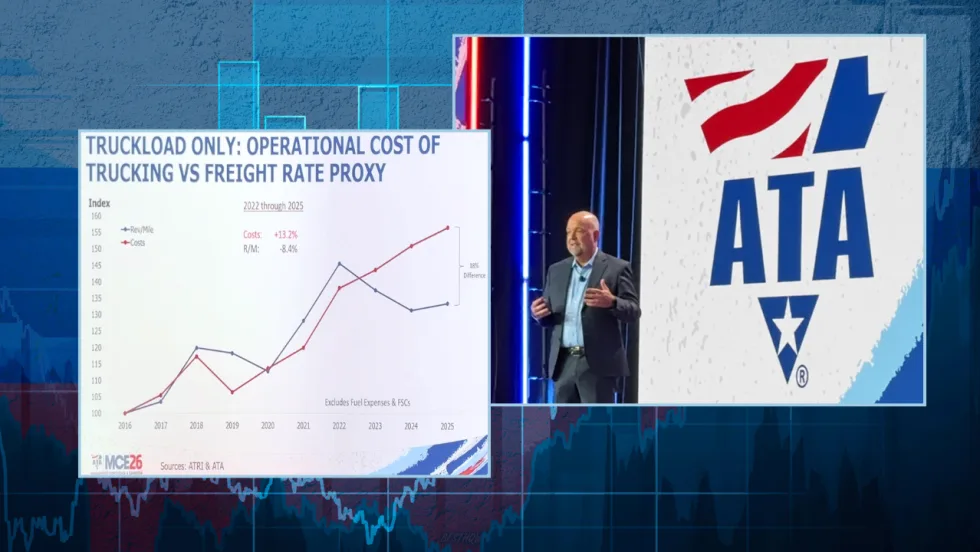
Why This Trucking Recovery Is Different
Freight demand remains sluggish, but rising costs and tougher enforcement have taken enough capacity out of the market to change the outlook for motor carriers.
Read More →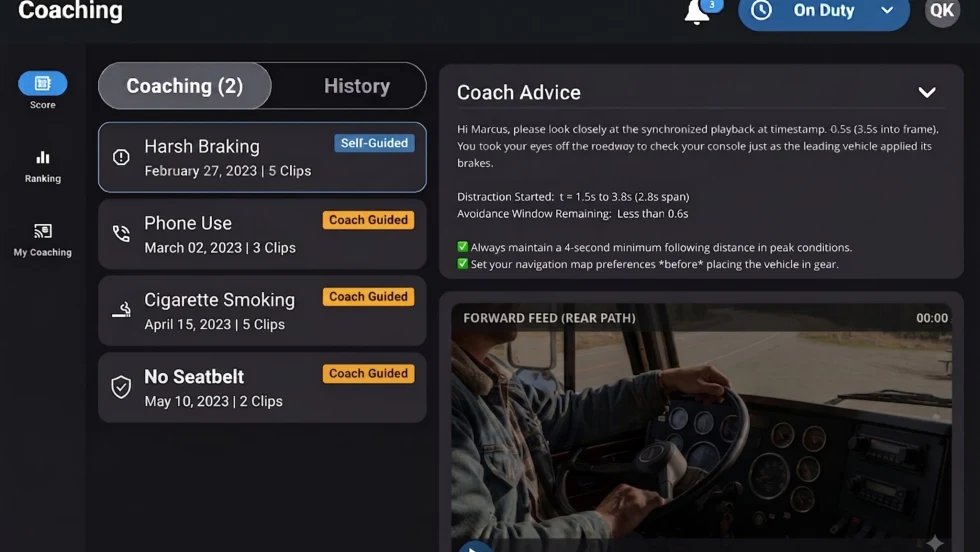
Platform Science Adds Dispatch and Safety Tools
Four additions to PS Fleet help fleets monitor loads, manage driver coaching, share truck locations and adjust video system settings.
Read More →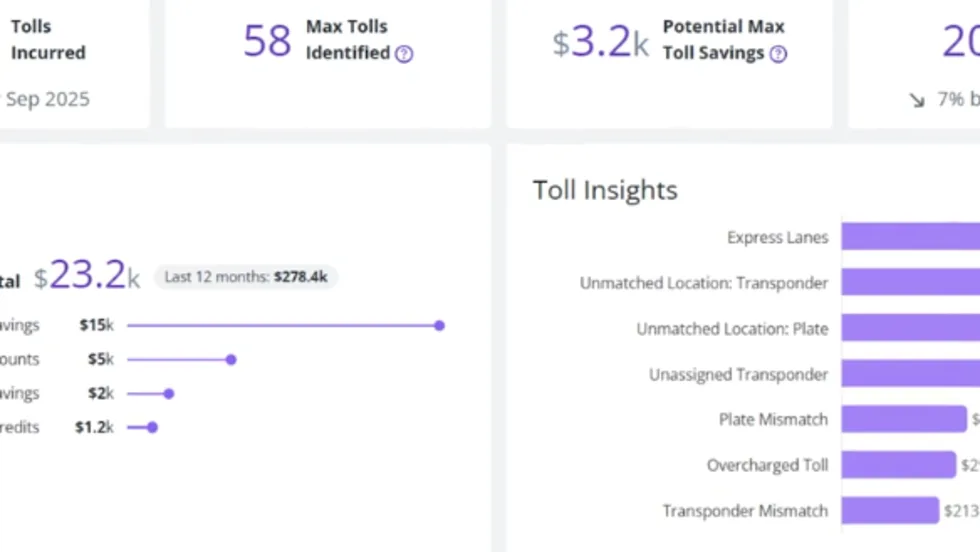
PrePass Intelligence Mines Fleet Bypass, Toll and Safety Data
PrePass Intelligence helps fleets measure bypass savings, flag potential toll overcharges, and spot suspicious transactions by combining data from separate systems.
Read More →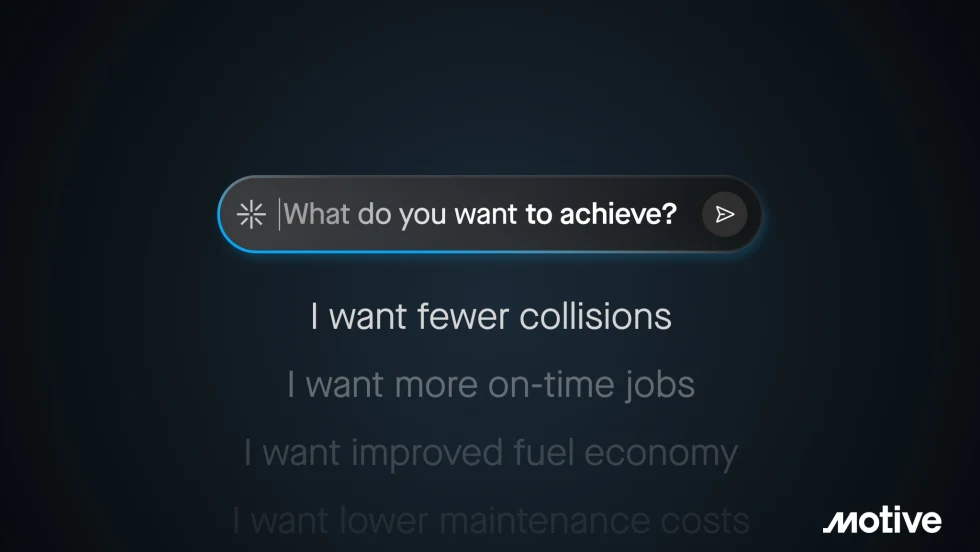
Motive Adds AI Agents for Fleet Operations
New tools automate follow-up on fleet data, from maintenance work orders to driver alerts, with two-way voice conversations planned for later this year.
Read More →
Can You Beat Our Trucking Trivia Challenge?
Test your truck knowledge with 19 trivia questions from Heavy Duty Trucking Exchange. Can you keep up with the fleet pros?
Read More →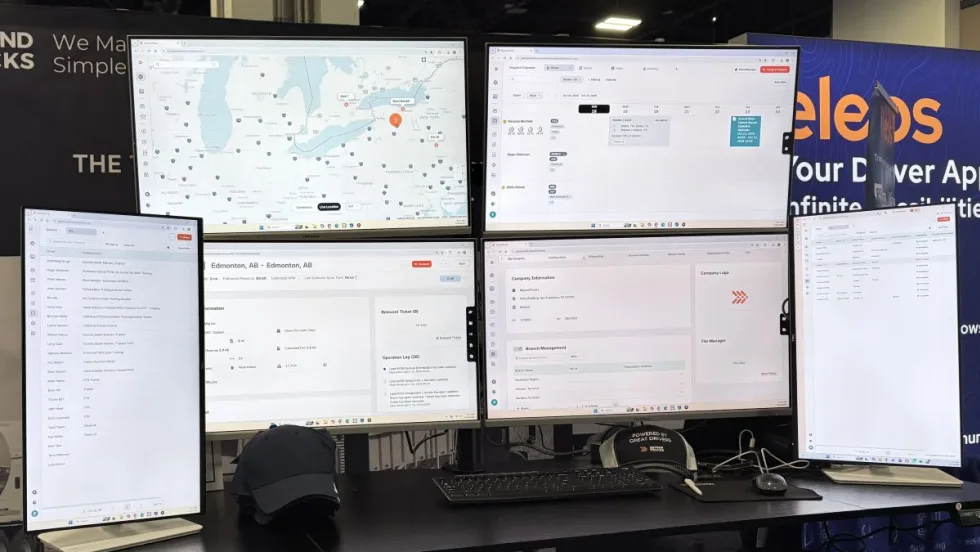
BeyondTrucks Adds Rules Checks to Dispatch
New Compatibility Engine checks driver qualifications, equipment requirements and fleet policies before loads are dispatched.
Read More →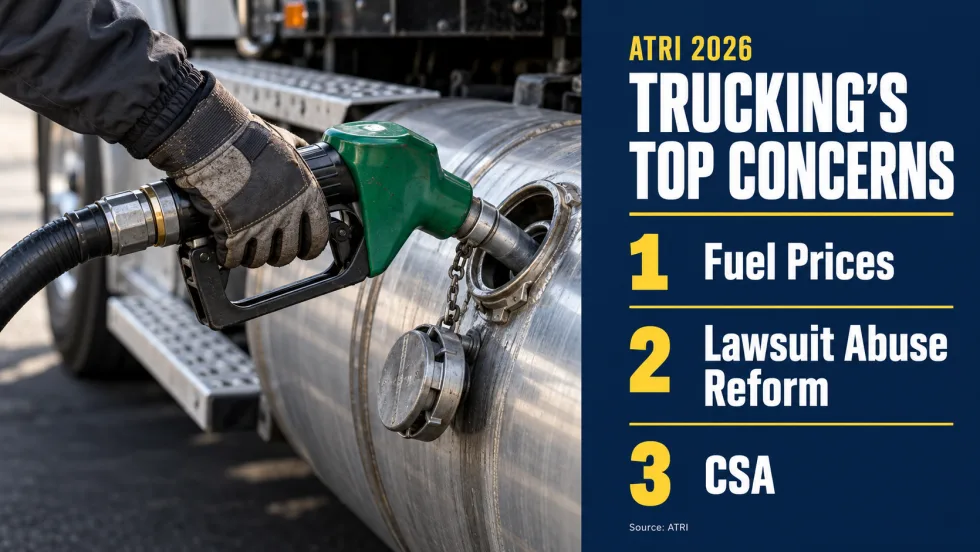
Diesel Prices Hijack Trucking’s Worry List
ATRI’s annual survey finds cautious optimism about freight, but diesel costs, litigation, and insurance continue to squeeze fleets. Drivers have different priorities on several issues.
Read More →
Nomination Deadline Extended for HDT Emerging Leaders
Just a few more days to nominate accomplished trucking fleet professionals under 40 who are making an impact and helping lead the industry forward for the HDT Emerging Leaders award. Deadline extended to October 20!
Read More →
What Will ATA’s New Leader Bring to Trucking's Table?
Incoming President and CEO Mark Colson’s record in Alabama offers clues about his priorities and approach following Chris Spear’s abrupt departure as the head of the American Trucking Associations.
Read More →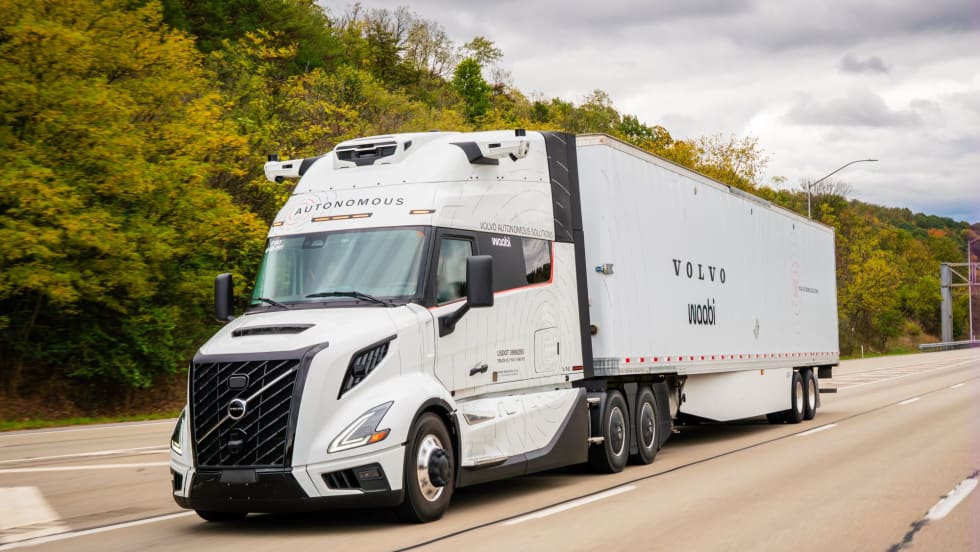
Volvo, Waabi Start Commercial Autonomous Operations in Texas
Volvo VNL Autonomous trucks, powered by the Waabi Driver, are hauling freight directly to third-party facilities for a customer in Texas.
Read More →