




Early Indications: Truckers Returning to the Ohio Turnpike
The Blade of Toledo, Ohio, reported in its Sunday edition that commercial traffic on the Ohio Turnpike increased by about 17 percent in February
The Blade of Toledo, Ohio, reported in its Sunday edition that commercial traffic on the Ohio Turnpike increased by about 17 percent in February.
Ohio Gov. Bob Taft has made it a priority to entice truck traffic on parallel routes back to the toll road.
At the governor’s initiative, truck speed limits on the toll road were raised to 65 mph in September. Truck tolls were reduced by about 25 percent in January. The measures were intended to draw trucks away from parallel routes such as U.S. 20, State Rt. 2, and U.S. 6.
"It seems to be very successful so far," said Joe Rutherford, an Ohio Department of Transportation spokesman.
The Blade said that off-turnpike truck traffic increased by a cumulative 82 percent after massive toll increases during the mid-1990s. More recently, Ohio DOT statistics showed a decline of more than 20 percent in truck traffic at virtually all of its counting stations on State Rt. 2, U.S. 6, U.S. 20, U.S. 20A, and U.S. 24 in northwest Ohio. Truck volume was down by more than 35 percent on U.S. 6 west of Fremont and Route 2 west of Port Clinton, and by nearly 30 percent on U.S. 20A east and west of Wauseon and on U.S. 20 west of Pioneer, Ohio.
The temporary toll decrease will end on July 1, 2006, when officials will review its effectiveness.
Meanwhile, according to the Blade, the Ohio Highway Patrol has stepped up enforcement on parallel routes. During January and February, Bucyrus district troopers issued more than 1,800 tickets to truckers, roughly quadruple and triple the respective numbers from a year earlier
To offset lost revenue from lower tolls, the state legislature approved payment of $23 million from the state’s DOT budget to the toll road. Officials likened the payment to "buying capacity" on the turnpike rather than having to spend the money to repair or expand the parallel roads.
More Drivers

When Language Stops the Truck: The Return of ELP Out-of-Service Orders
English language proficiency rules for commercial drivers aren’t new, but renewed out-of-service enforcement has raised the stakes. Here’s what carriers need to know before a driver reaches a roadside inspection.
Read More →
Samsara Launches Custom AI Agent Builder
Agent Studio lets fleets create AI tools for hours-of-service monitoring, reporting and driver support, including agents that communicate by phone.
Read More →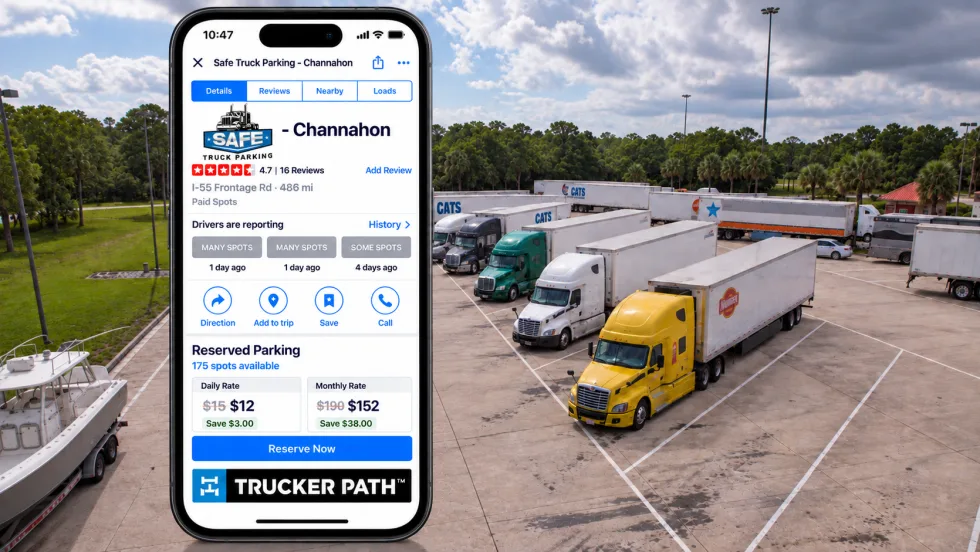
Trucker Path Expands Reserved Parking Network
Trucker Path has added close to 6,000 more truck parking spaces to its Trucker Path Reserved Parking Network with the addition of Safe Truck Parking.
Read More →
EEOC Sues Texas Trucking Company Over Driver Age Limits
The agency says Trancasa USA rejected applicants over 65 and applied tougher driving-record standards to those over 60.
Read More →
Nussbaum, Roehl Announce Second Driver Pay Increase This Year
This year has seen a swath of major truck driver pay increases as freight capacity has tightened.
Read More →
From One Generation to the Next: How Mentorship Builds Safer Truck Drivers
After three decades in trucking, Harold Perry shares what he's learned about driver safety, mentorship, and helping the next generation build confidence behind the wheel.
Read More →
Truck Drivers Need More Than Another Alert
Fleets have more visibility into truck health, safety events, and driver activity than ever. The next challenge is turning all that information into useful guidance for the person who has to decide what to do next.
Read More →
FMCSA Removes 110 Truck Driver Training Schools from Certified ELDT List
Federal regulators also are targeting more than 160 additional training providers and launching a nationwide audit of third-party CDL skills testers as part of a broader crackdown on trucking fraud.
Read More →
Hours of Service Pilot Programs: FMCSA Readies for 2027 Rollout
Two pilot programs could eventually reshape hours-of-service rules, giving truck drivers options to pause their 14-hour clock or use longer split sleeper rest periods.
Read More →
Medical Cards, English Proficiency Reshape Roadcheck Violations
Medical-card violations jumped to the top of the driver out-of-service list during CVSA’s 2026 International Roadcheck, while English-language proficiency violations appeared among the leading violations for the first time.
Read More →