




Drivers: CVSA Roadcheck Inspections Begin Next Wednesday
For 72 hours starting next Wednesday, June 6, more than 10,000 specially-trained and certified officers will blanket North America's roadways to prevent truck and bus crashes. For the past 20 years
For 72 hours starting next Wednesday, June 6, more than 10,000 specially-trained and certified officers will blanket North America's roadways to prevent truck and bus crashes. For the past 20 years,
the Commercial Vehicle Safety Alliance's (CVSA) annual Roadcheck event dispatches federal, state, provincial and local inspectors to conduct North American Standard Inspections around the clock for 72 hours from June 6-8.
These inspections involve a comprehensive 37-step procedure that includes items related to vehicle, driver and cargo safety. Inspectors also hand out educational materials to drivers on various aspects of commercial vehicle, driver and hazardous materials safety.
This year, CVSA is launching a new podcast focusing on educating the commercial vehicle driver on safety and security measures. The new podcast series, called Inside the Safety Lane with CVSA, will include discussions with FMCSA Administrator John Hill and Rick Holcomb, ATGA's general counsel and senior vice president for Law & Regulatory Affairs, among others.
"Placing emphasis on drivers is a key component to enhancing safety on our highways, and concentrated enforcement programs like Roadcheck give us the data we need to target our efforts," said Stephen Campbell, executive director of CVSA. "Enforcement sends a message that we will put you out of service if you are violating the law or driving an unsafe commercial vehicle."
Although the latest FMCSA statistics indicate an increase in use of safety belts from 48 to 59 percent, this number is still far too low. In comparison, the use rate among automobile drivers is 82 percent. During Roadcheck 2006, 1,223 safety belt violations were documented during the three-day event, versus 1,150 in 2005. In all of 2006, 63,846 safety belt violations were recorded against commercial drivers, up from 57,510 in 2005. More than three million North American Standard roadside inspections are conducted annually.
"Studies have shown that drivers - of both large trucks and passenger vehicles - are 10 times more likely to be the cause of a fatal crash involving a large truck than factors such as weather, road conditions and vehicle performance," FMCSA's Hill said. "Everyone can help save lives and make the roads safer by checking their vehicles, learning and obeying the laws and wearing their safety belts."
The Commercial Vehicle Safety Alliance is a not-for-profit association of local, state, provincial, and federal officials responsible for the administration and enforcement of truck and bus safety laws in the United States, Canada and Mexico. For more information on the event or CVSA visit www.cvsa.org.
More Safety & Compliance

Marijuana and Trucking’s Drug-Testing Dilemma
Marijuana is getting stronger, laws are changing, and drug tests still can’t reliably establish impairment. What does that mean for truck drivers and the fleets that employ them?
Read More →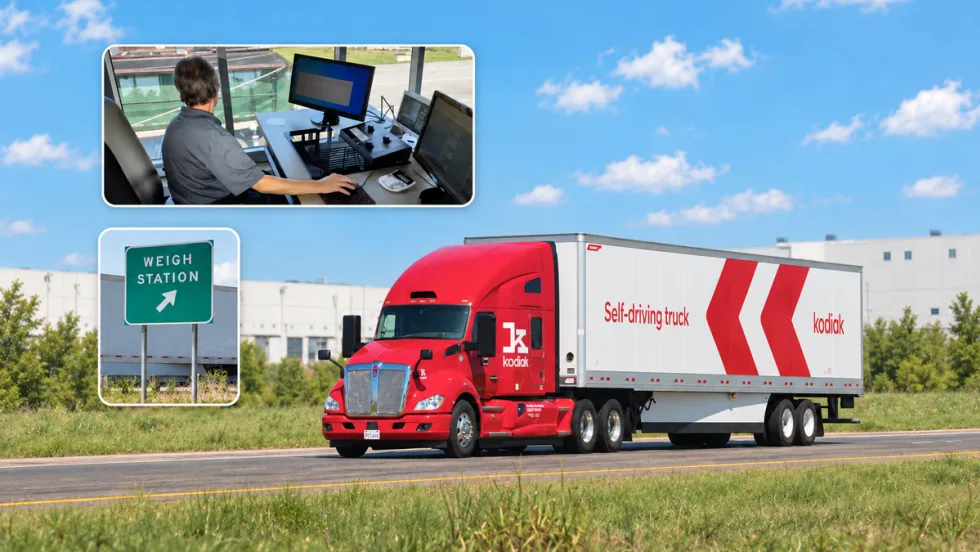
PrePass, Kodiak Connect Driverless Trucks to Roadside Enforcement
The system will allow enforcement agencies to verify Enhanced Inspection information and decide whether Kodiak’s autonomous trucks can bypass roadside screening sites.
Read More →
From One Generation to the Next: How Mentorship Builds Safer Truck Drivers
After three decades in trucking, Harold Perry shares what he's learned about driver safety, mentorship, and helping the next generation build confidence behind the wheel.
Read More →
FMCSA Pauses Biennial-Update Enforcement Amid Motus Transition
Carriers whose updates were due on or after June 1 have more time, while FMCSA works to stabilize its new registration system and warns of phishing sites impersonating its new carrier registration system, Motus.
Read More →
ZF Expands Commercial Vehicle Push in North America
ZF is expanding its North American commercial-vehicle presence with new transmission applications, electrification, trailer technology and autonomous-driving systems.
Read More →
Truck Drivers Need More Than Another Alert
Fleets have more visibility into truck health, safety events, and driver activity than ever. The next challenge is turning all that information into useful guidance for the person who has to decide what to do next.
Read More →
Tesla Wants a Self-Driving Semi. Are Cameras Enough?
Could Tesla’s camera-only autonomous driving technology work on an 80,000-pound Semi? In this commentary, HDT's Deborah Lockridge takes a look at Tesla, Cybercab, and how autonomous trucks see the road.
Read More →
What DOT’s Automated Vehicle Strategy Means for Trucking
The U.S. Department of Transportation issued a new automated-vehicle strategy that outlines plans for driverless-truck regulations, cross-state freight corridors, and federal safety standards.
Read More →
NYC Expands Speed, Pedestrian Safety Tech Across Fleet
New York City is expanding intelligent speed assistance and pedestrian-alert systems across its municipal fleet, moving the technologies from pilot programs into vehicle procurement and retrofit requirements.
Read More →
FMCSA Removes 110 Truck Driver Training Schools from Certified ELDT List
Federal regulators also are targeting more than 160 additional training providers and launching a nationwide audit of third-party CDL skills testers as part of a broader crackdown on trucking fraud.
Read More →