




Downturn in Retail Container Traffic Ending as Retailers Prepare for Holidays
Import cargo volume at the nation's major retail container ports is beginning to see cautious increases over last year again, ending a summer-long downturn as retailers prepare for the holiday season,
Import cargo volume at the nation's major retail container ports is beginning to see cautious increases over last year again, ending a summer-long downturn as retailers prepare for the holiday season,
according to the monthly Global Port Tracker report released Monday by the National Retail Federation and Hackett Associates.
"With the most crucial spending period of the year just weeks away, retailers have made careful decisions on the amount of merchandise they need to properly stock their stores during the holidays," NRF Vice President for Supply Chain and Customs Policy Jonathan Gold said. "This year, retailers have the luxury of importing holiday goods later than last year, which better ensures their inventory levels will accurately meet consumer demand."
U.S. ports followed by Global Port Tracker handled 1.32 million Twenty-foot Equivalent Units in July, the latest month for which numbers are available. That was up 6% from June but down 4% from July 2010.
July was the second month in a row to show a year-over-year decline, and August was flat compared with last year, at an estimated 1.42 million TEU. Rather than indicating an economic downturn, however, the numbers are a skewed comparison against higher-than-normal numbers last summer, when fears of shortages in shipping capacity caused many retailers to bring holiday merchandise into the country earlier than usual. (Global Port Tracker counts only the number of cargo containers imported, not the value of their contents, so cargo volume does not directly correlate with retail sales.)
Year-over-year growth is beginning to resume in September, which is forecast to be up 11.8% from September 2010 at 1.5 million TEU. October is forecast at 1.48 million TEU, up 9.5%; November at 1.33 million TEU, up 8%; and December at 1.2 million TEU, up 4.5%. January 2012 is forecast at 1.19 million TEU, down 1% from January 2011.
The total for 2011 is forecast at 15.4 million TEU, up 4.3% from 2010. Imports during 2010 totaled 14.7 million TEU, a 16% increase over unusually low numbers in 2009.
Given the seasonal nature of cargo volume and continuing uncertainties about the economy, Hackett Associates founder Ben Hackett was cautious about cargo volume in 2012.
"We should not be lulled into too much confidence by the relatively strong import volumes of August and September," Hackett said. "These are linked to the low levels of inventory that needed to be raised to meet the return-to-school and post-Thanksgiving sales. The third quarter will be positive for the ocean carriers and retailers, but that will turn into negative growth for the next two to three quarters thereafter."
Global Port Tracker, which is produced for NRF by the consulting firm Hackett Associates, covers the U.S. ports of Long Angeles/Long Beach, Oakland, Seattle and Tacoma on the West Coast; New York/New Jersey, Hampton Roads, Charleston and Savannah on the East Coast, and Houston on the Gulf Coast.
More Fleet Management

Motive Adds AI Agents for Fleet Operations
New tools automate follow-up on fleet data, from maintenance work orders to driver alerts, with two-way voice conversations planned for later this year.
Read More →
Can You Beat Our Trucking Trivia Challenge?
Test your truck knowledge with 19 trivia questions from Heavy Duty Trucking Exchange. Can you keep up with the fleet pros?
Read More →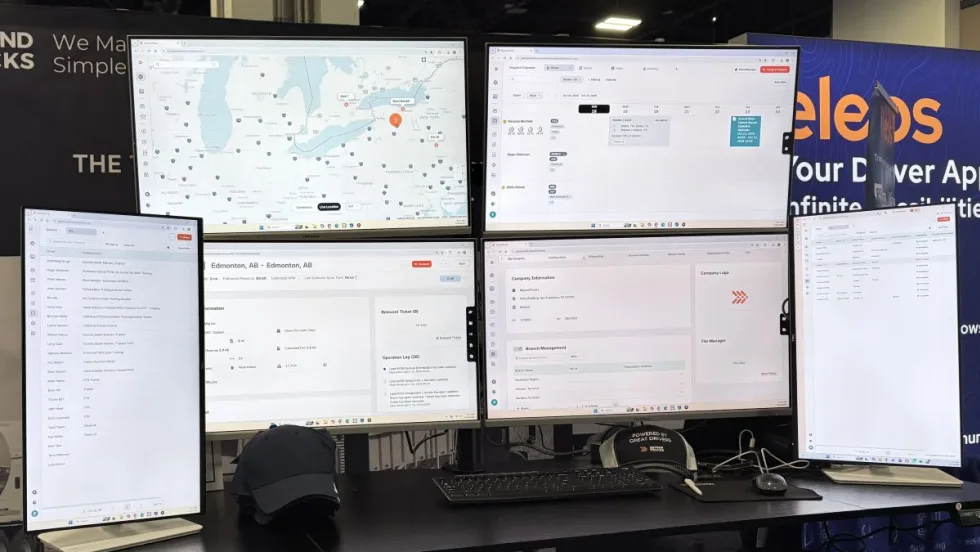
BeyondTrucks Adds Rules Checks to Dispatch
New Compatibility Engine checks driver qualifications, equipment requirements and fleet policies before loads are dispatched.
Read More →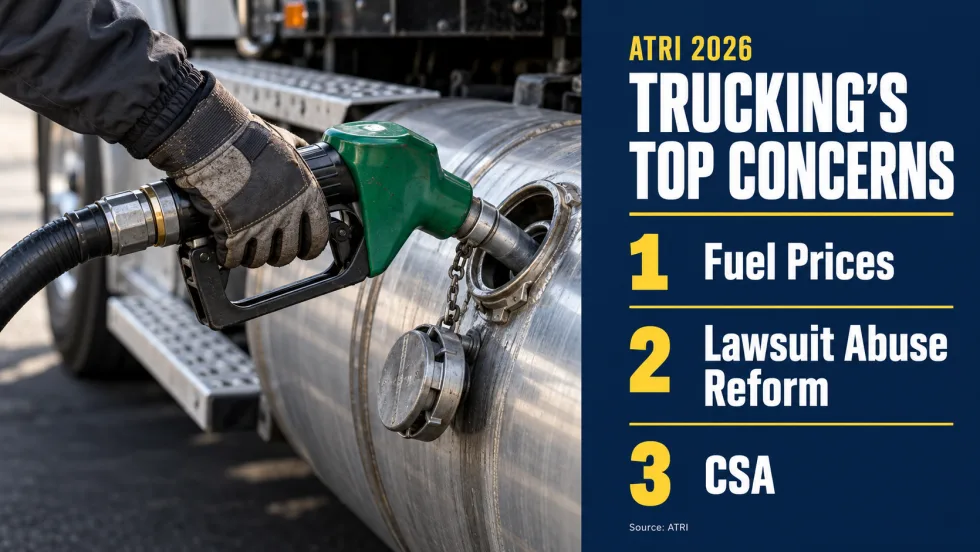
Diesel Prices Hijack Trucking’s Worry List
ATRI’s annual survey finds cautious optimism about freight, but diesel costs, litigation, and insurance continue to squeeze fleets. Drivers have different priorities on several issues.
Read More →
Nomination Deadline Extended for HDT Emerging Leaders
Just a few more days to nominate accomplished trucking fleet professionals under 40 who are making an impact and helping lead the industry forward for the HDT Emerging Leaders award. Deadline extended to October 20!
Read More →
What Will ATA’s New Leader Bring to Trucking's Table?
Incoming President and CEO Mark Colson’s record in Alabama offers clues about his priorities and approach following Chris Spear’s abrupt departure as the head of the American Trucking Associations.
Read More →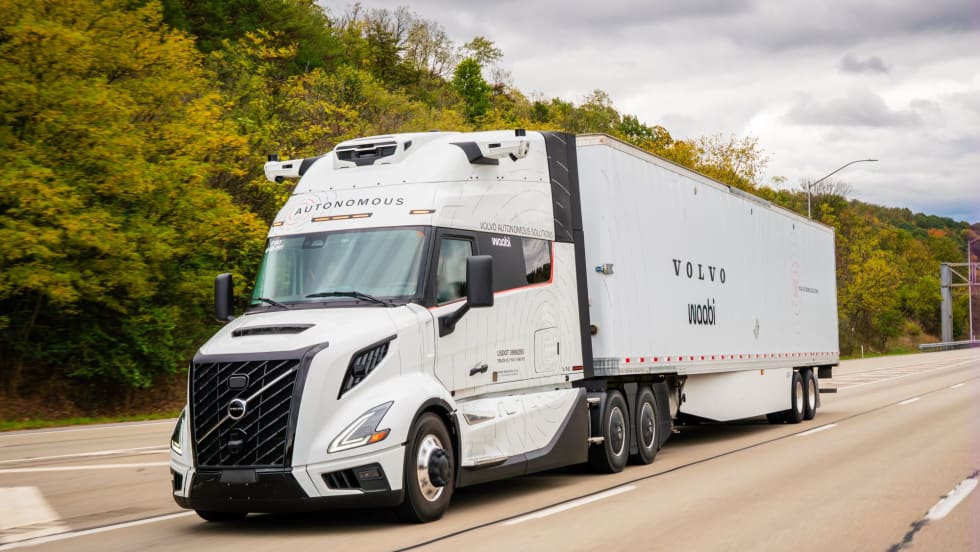
Volvo, Waabi Start Commercial Autonomous Operations in Texas
Volvo VNL Autonomous trucks, powered by the Waabi Driver, are hauling freight directly to third-party facilities for a customer in Texas.
Read More →
Samsara Launches Custom AI Agent Builder
Agent Studio lets fleets create AI tools for hours-of-service monitoring, reporting and driver support, including agents that communicate by phone.
Read More →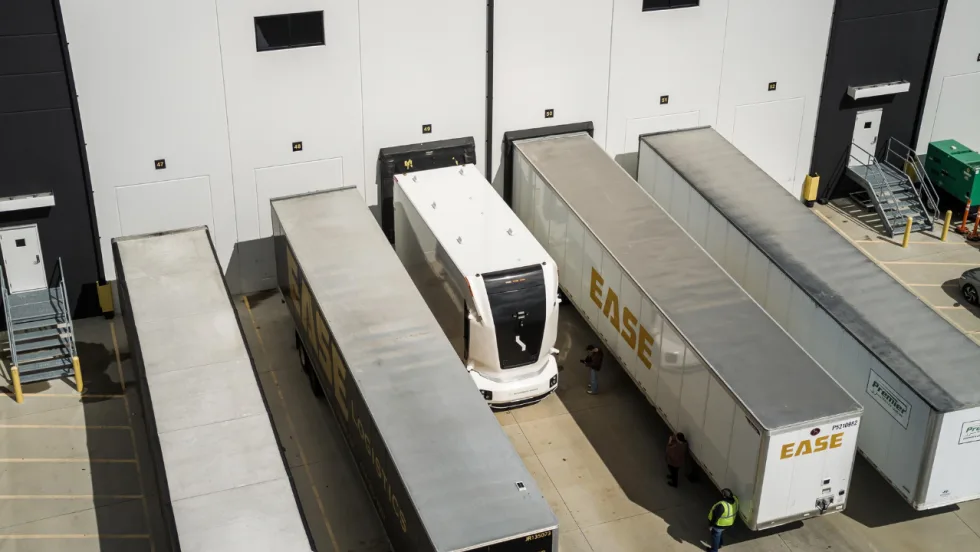
Einride Driverless Electric Trucks Begin Daily Freight Operations in Ohio
Two cabless electric trucks are hauling freight between EASE Logistics facilities in Marysville, Ohio, as part of a multi-state truck automation project.
Read More →
Geotab Links Fleet Card to Vehicle Data
The new card combines fuel discounts with telematics-based purchase controls. Geotab’s analysis also points to potential savings from choosing lower-priced fuel stops.
Read More →