




DOT Releases $13 Million for Hurricane Sandy Damage
U.S. Transportation Secretary Ray LaHood announced he is making $13 million in quick release emergency relief funds immediately available to New York and Rhode Island to help begin repairing the damage caused by Hurricane Sandy, while assessments continue throughout the Northeast to determine the full extent of the damage
U.S. Transportation Secretary Ray LaHood announced he is making $13 million in quick release emergency relief funds immediately available to New York and Rhode Island to help begin repairing the damage caused by Hurricane Sandy, while assessments continue throughout the Northeast to determine the full extent of the damage.
The announcement follows President Obama's call for federal agencies to act quickly and bring all available resources to bear as quickly as possible. It also builds on the disaster assistance for these states approved by President Obama in the last several days, including the major disaster declaration approved for New York early Tuesday, which make federal assistance - like these emergency relief funds - available to supplement state and local response and recovery efforts.
The $13 million represents 100% of the state-requested funds - $10 million from New York and $3 million from Rhode Island. These two requests are just the first to arrive at the Department of Transportation and represent the first installment of federal-aid highway funds to help repair roads, bridges and tunnels in these two states. DOT is expecting other states impacted by Hurricane Sandy to apply for additional emergency relief funding in the coming days.
"President Obama has directed us to immediately help restore vital transportation infrastructure following this unprecedented and devastating storm - and that's exactly what we're doing," said Secretary LaHood. "These emergency relief funds are just a down payment on our commitment to all of the states impacted by Hurricane Sandy."
Quick release emergency funds provided by the U.S. Department of Transportation's Federal Highway Administration will be used to pay for a variety of repairs to roads and bridges that are immediately necessary. Rhode Island will use the funding to repair damaged sea walls supporting roadways; New York will use it for general emergency repairs to federal aid highways.
To further speed access to critical repair funds, LaHood held a conference call Tuesday afternoon with officials from 14 impacted states to outline how they can apply for quick release emergency relief funding. Secretary LaHood also described other steps the Department of Transportation has taken to assist states, including an Eastern Regional Emergency Declaration from the Federal Motor Carrier Safety Administration to temporarily lift hours-of-service requirements and other regulations to assist interstate motor carrier drivers and operators providing direct emergency relief.
FHWA's emergency relief program provides funds for the repair or reconstruction of federal-aid roads and bridges damaged by natural disasters or catastrophic events. Restoring critical infrastructure is essential to enabling first responders and relief workers to access impacted communities and to quickly restoring services to impacted residents.
More Drivers

Nussbaum, Roehl Announce Second Driver Pay Increase This Year
This year has seen a swath of major truck driver pay increases as freight capacity has tightened.
Read More →
From One Generation to the Next: How Mentorship Builds Safer Truck Drivers
After three decades in trucking, Harold Perry shares what he's learned about driver safety, mentorship, and helping the next generation build confidence behind the wheel.
Read More →
Truck Drivers Need More Than Another Alert
Fleets have more visibility into truck health, safety events, and driver activity than ever. The next challenge is turning all that information into useful guidance for the person who has to decide what to do next.
Read More →
FMCSA Removes 110 Truck Driver Training Schools from Certified ELDT List
Federal regulators also are targeting more than 160 additional training providers and launching a nationwide audit of third-party CDL skills testers as part of a broader crackdown on trucking fraud.
Read More →
Hours of Service Pilot Programs: FMCSA Readies for 2027 Rollout
Two pilot programs could eventually reshape hours-of-service rules, giving truck drivers options to pause their 14-hour clock or use longer split sleeper rest periods.
Read More →
Medical Cards, English Proficiency Reshape Roadcheck Violations
Medical-card violations jumped to the top of the driver out-of-service list during CVSA’s 2026 International Roadcheck, while English-language proficiency violations appeared among the leading violations for the first time.
Read More →
Driver Trust Can Make or Break the Success of Fleet Safety Technology
New Teletrac Navman research suggests that onboarding, transparency about driver data, and positive feedback can play a significant role in how commercial drivers respond to safety and coaching technology.
Read More →
EEOC Sues KLLM Over Alleged Sex Discrimination in Driver Training
KLLM is facing a federal sex-discrimination lawsuit over policies the EEOC alleges put female truck driver trainees at a disadvantage.
Read More →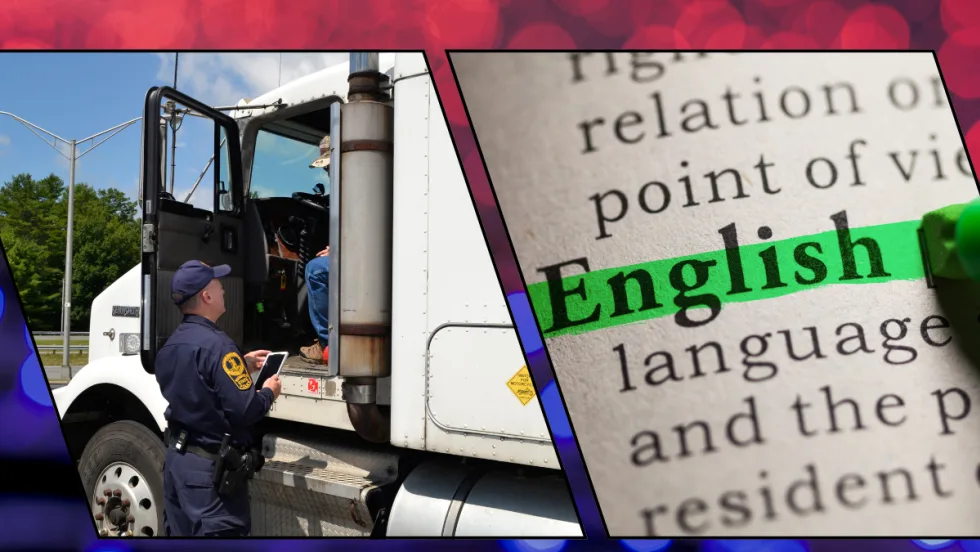
FMCSA Moves to Codify English Language Requirements for Commercial Drivers
By changing regulations on English-language proficiency requirements for commercial drivers, rather than relying on a guidance memo, the FMCSA said future administrations won't be able to walk back the Trump administration's stricter enforcement with just a memo.
Read More →
Drivers Put Western Star Trucks to the Test at Star Nation Experience
Watch to get an inside look at the Western Star trucks, technology, and community behind the Star Nation Experience 2026!
Read More →