




DOT Issues Changes to Drug Test Reporting Rules
In an effort to streamline the annual reporting of drug and alcohol data and eliminate some confusion, the U.S. Department of Transportation has adopted a one-page reporting form
In an effort to streamline the annual reporting of drug and alcohol data and eliminate some confusion, the U.S. Department of Transportation has adopted a one-page reporting form
and issued new instructions for counting specimens and employees.
The new standardized form replaces 21 different forms used by various DOT agencies. The single-page format is designed to make it easier to enter and process data via electronically based systems. As part of the streamlining process, DOT removed some data elements.
In the case of Federal Motor Carrier Safety Administration reporting, the following elements have been removed:
1. Number of persons denied a position following a positive drug test.
2. Number of employees returned to duty following a refusal or positive drug test.
3. Supervisor initial drug training data.
4. Number of employees denied a position following an alcohol test of 0.04 or greater.
5. Number of employees returned to duty after engaging in alcohol misuse.
6. Number of employees having both a positive drug test and an alcohol test of 0.04 or greater when both tests were administered at the same time.
7. Actions taken for alcohol violations other than alcohol testing.
8. Supervisor initial alcohol training data.
To clear up confusion and discrepancies regarding collections counting methods, DOT will count the number of specimens collected as the number of testing events. That includes negative and positive tests as well as "refusal to test" results, no matter the reason for refusal.
Cancelled test results will not be included because they don’t count toward compliance with DOT requirements, the agency said. Invalid test results are always cancelled and will not be included. Invalid results requiring a subsequent directly observed collection will be considered another collection. Blind testing will not be counted as a testing event. If an employee is required to take a second test, the cancelled test will not count.
To determine the total number of employees against which the annual random rate applies, the new rule instructs employers to add the total number of covered employees eligible for random testing in each random testing selection period for the year then divide that total by the number of random testing periods.
For instance, a company conducting random testing quarterly will add the total of safety-sensitive employees they had in the random pool when each selection was made, then divide this number by four to obtain the yearly average number of covered employees.
DOT agencies will continue to determine other submissions rules, such as dates for submission and selection of companies required to submit. Agency regulations will also continue to address the manner (mail, electronic, etc.) and locations for submitting the forms.
DOT said it is currently working toward an electronic MIS form capable of Internet submission. Each form would be DOT agency specific and would not have extraneous items showing (for example, the RSPA-specific form would not show an alcohol random testing category). The system would automatically flag mathematical errors and employee categories listed would only be those for the specific DOT agency.
Because the new form will be required for 2004 submissions, DOT says employers must immediately adopt provisions in the rule that will permit them to start collection of the required data and which establish how companies are to determine the number of employees upon which 2003 random testing is based.
The new form and instructions will be placed in 49 CFR Part 40. Additional information and discussion regarding the changes can be found in the July 25 Federal Register, accessed at www.gpoaccess.gov.
More Drivers
How Top Trucking Fleets Improve Driver Retention [Video]
What do healthy snacks, optimized routing, and just picking up the phone have in common? They're all strategies the Best Fleets to Drive For are using to retain truck drivers.
Read More →
Trucker Path Adds Verisk CargoNet Theft Data to Navigation Platform
Trucker Path’s new cargo theft risk overlays give drivers and fleets visibility into high-risk areas, stolen commodity trends, and theft hotspots.
Read More →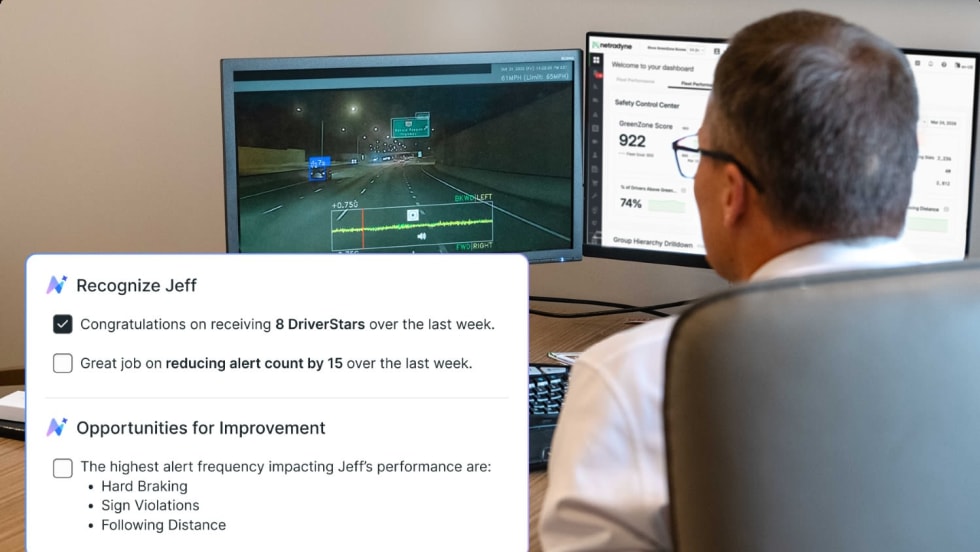
Netradyne Intelligence Uses New AI Agents to Automate Response to In-Cab Camera Data
The company called the next-generation in-cab camera safety platform "a fundamental shift from systems that report on what happened to systems that actively drive what should happen next."
Read More →
Why Truck Detention Keeps Costing Fleets Time and Money
A 2024 ATRI study found detention affects nearly 40% of truckload stops and costs the industry more than $15 billion annually. Despite the toll on drivers, fleets, and supply chains, the problem remains stubbornly persistent.
Read More →
Prime Inc. to Open $7.9M Flagship Used-Truck Dealership
A new driver-focused facility to sell Prime Inc's used trucks and trailers will be the first purpose-built location in the company's history.
Read More →
Short Takes: Inside K&B’s Truck Safety Tech
Listen to learn how K&B Transportation uses cellphone-blocking technology, speed management systems, weather geofencing, bridge avoidance tools, and more to improve driver safety.
Read More →
Nussbaum Expands Driver Compensation with Pay Raises, Profit Sharing
Nussbaum Transportation said its latest compensation package could push first-year driver earnings above $90,000 in key hiring markets.
Read More →
Listen: Inside Modern Fleet Safety: AI, Cameras & Speed Control at K&B Transportation
Fleet safety is evolving fast—and technology is at the center of it. Learn how a former commercial vehicle enforcement officer turned director of safety at K&B Transportation is embracing real-world safety technology.
Read More →
Maverick Announces 2026 Driver Pay Raises
New raises for Maverick Transportation drivers will take effect on May 31, 2026.
Read More →
Illinois Trucker Indicted for Nearly $22,000 in Ohio Turnpike Toll Evasion
Authorities say an Illinois trucker avoided paying tolls for two years, and now faces felony charges, possible prison time, and forfeiture of his Freightliner tractor.
Read More →