




DOT Denies Carrier Requests to Keep Financial Data Private
Carriers that don’t want their financial and operating data made public will have to show more than “possible” harm, says the U. S. Department of Transportation’s Bureau of Transportation Statistics
Carriers that don’t want their financial and operating data made public will have to show more than “possible” harm, says the U. S. Department of Transportation’s Bureau of Transportation Statistics.
Federal regulations require for-hire carriers with annual revenues of $3 million or more to report financial and operating data to BTS. The information, required since the days of economic regulation, is intended for a variety of government uses but is also available to the public, including shippers and other carriers. Many trucking companies see the requirement as little more than a way for customers and competitors to dig out otherwise private pricing and profit information.
One big user is Fredericksburg, VA based Transportation Technical Services which publishes the National Motor Carrier Directory and a variety of other directories and reports that rely heavily on the BTS data. Carriers do use the information, but mainly for benchmarking, says TTS’ Ron Roth. It can’t be used to calculate specific rates because the data is too generalized, too aggregated, he adds.
The government seems to agree. The 1995 ICC Termination Act transferred data collection responsibilities from the Interstate Commerce Commission to the BTS. It also created an exemption from public release of the data if a carrier could meet certain conditions. First, the carrier cannot be publicly held or otherwise subject to reporting requirements of the Securities and Exchange Commission. Second, confidentiality must be “necessary to avoid competitive harm and to avoid the disclosure of information that qualifies a trade secret or privileged or confidential information under the Freedom of Information Act.”
Last year 24 carriers requested exemptions, including five operations of Schneider National. BTS recently denied 20 of these requests, asked one carrier for more information, and gave Schneider a limited exemption.
Most of the petitioners claimed potential competive harm but failed to show how and what information might be used by competitors, the agency pointed out. Revenue and expense data are generalized across all customer and all commodities, and therefore unlikely to reveal rates or prices,” it said, citing a similar court ruling to back its argument.
Some argued that a relataively small number of customers account for the majority of their business, thus there is greater potential that the data might disclose rates. BTS agreed that the potential exists, but said those carriers didn’t provide enough information to prove their argument.
It did withhold a final decision on one carrier, Clarksville Refrigerated Lines, which runs a dedicated operation with one customer. In that case BTS agreed that disclosure could reveal sensitive information, but added that the carrier “didn’t state specifically what information is it is worried about and how that information would be used to its competitors’ advantage.”
Schneider, who has battled the reporting requirements for years, did win confidentiality on one point. It argued that competitors would be able to compare certain statistics to determine the impact of certain strategies, technologies or methods of doing business.
For instance, a competitor might be able to determine the cost and financial benefits of new trailer tracking systems by analyzing communications costs, number of trailers and other
data before and after the company began using the technology. BTS agreed and granted
confidentiality for some line items such as communications and utilities.
Roth calls it a “small victory” for data users but few expect the matter to end here. These carriers have 30 days to request reconsideration. Others may file now that the rules are clearer. Meantime, those data users want DOT to start enforcing the rules.
“At least Schneider is up front on this issue,” says Roth. “They have stated their opposition publicly, to DOT and in the courts. But there are a great number of motor carriers that don’t do anything.” TTS, in fact , estimates that there are 4,000 to 5,000 carriers large enough to meet filing requirements. Only about 1,500 to 1,700 actually submit reports.
A copy of the BTS decision is available through the DOT Dockets Management System. The docket number is BTS-99-5889.
More Drivers

Competition Heating Up for Truck Drivers
New report reveals rising driver hiring costs, the return of sign-on bonuses, growing AI advantages, and the operational factors shaping driver retention.
Read More →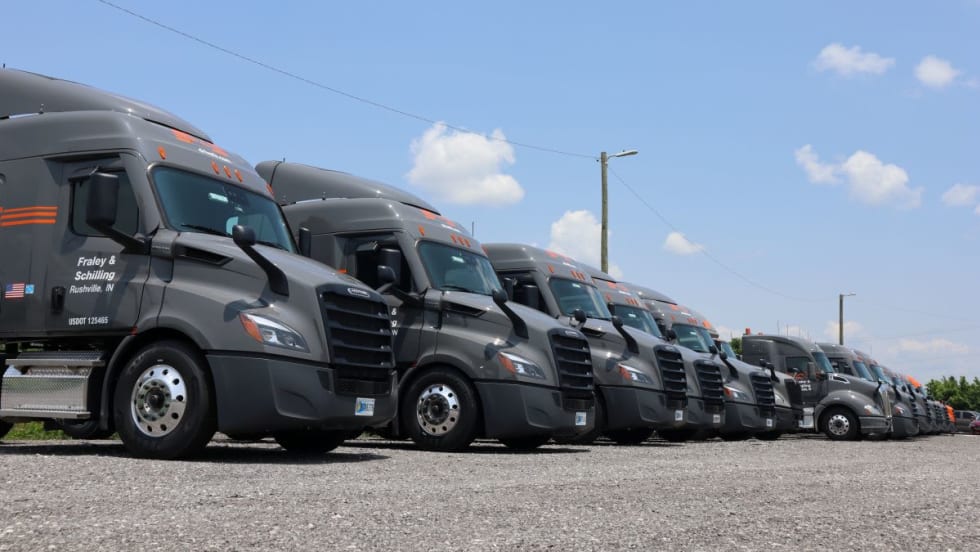
How Fraley & Schilling Improved Logbook Compliance by Over 50%
Fraley & Schilling needed a way to close a compliance workflow gap in its ELD system without adding more work from driver training, reminders, and back-office follow-ups. It found the answer in a custom driver app.
Read More →
Volvo Goes Gaming
Volvo has roared into American Truck Simulator with two new flagship trucks.
Read More →
What the Best Fleets to Drive For Teach About Driver Retention
Survey fatigue, AI-powered routing, owner-operator expectations, and the decline of social media all emerged as themes from this year's Best Fleets to Drive For program.
Read More →
Driver Retention Lessons From the Best Fleets to Drive For
What separates trucking's best workplaces from the rest? Jane Jazrawy shares the biggest lessons from this year's Best Fleets to Drive For program on driver retention, communication, AI, and workforce trends on the HDT Talks Trucking podcast.
Read More →
Farewell, CDL: Why I'm Giving Up My Commercial Driver's License
After more than 20 years as a CDL holder, HDT Executive Editor Jack Roberts is letting his commercial license expire. Not because he wants to — but because trucking's nuclear verdict crisis has made the risks of public-road test drives too great for editors, manufacturers, and everyone involved.
Read More →
How Top Trucking Fleets Improve Driver Retention [Video]
What do healthy snacks, optimized routing, and just picking up the phone have in common? They're all strategies the Best Fleets to Drive For are using to retain truck drivers.
Read More →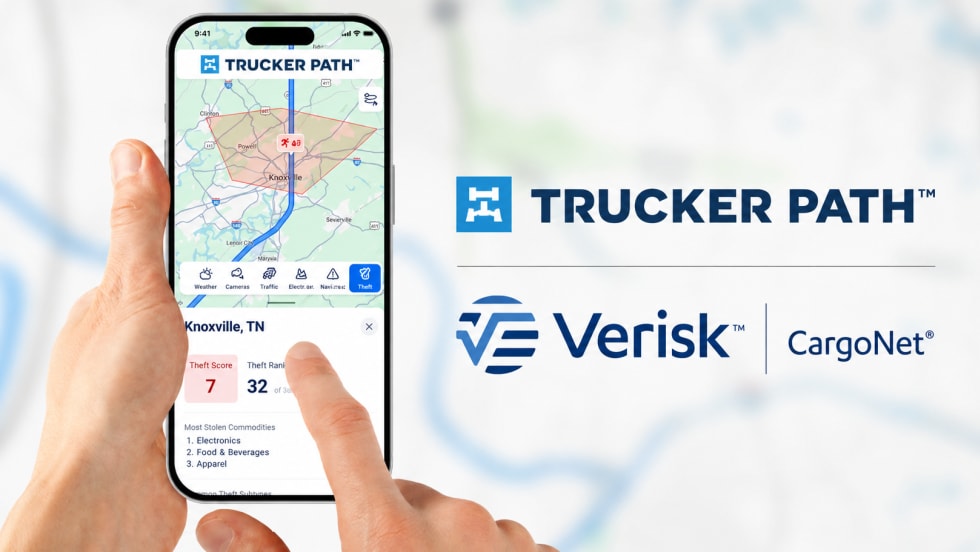
Trucker Path Adds Verisk CargoNet Theft Data to Navigation Platform
Trucker Path’s new cargo theft risk overlays give drivers and fleets visibility into high-risk areas, stolen commodity trends, and theft hotspots.
Read More →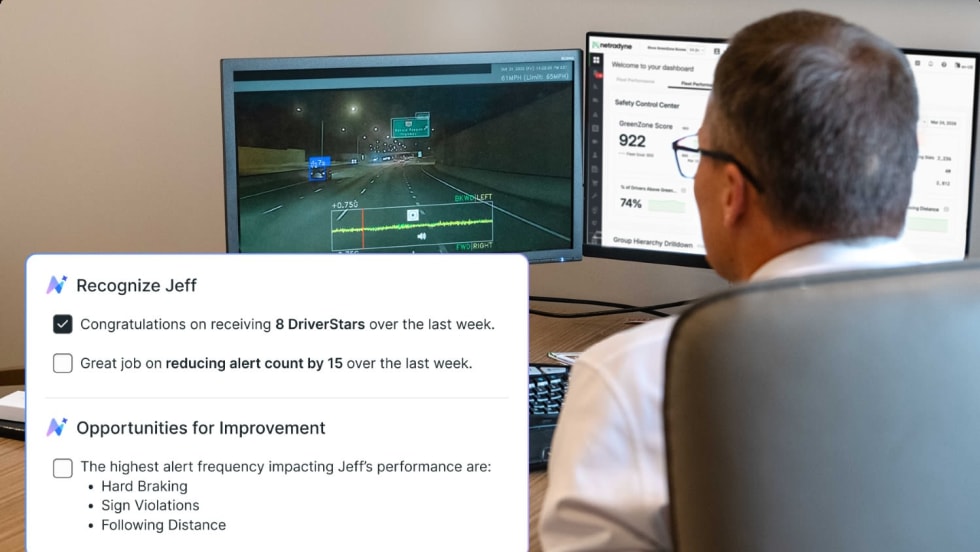
Netradyne Intelligence Uses New AI Agents to Automate Response to In-Cab Camera Data
The company called the next-generation in-cab camera safety platform "a fundamental shift from systems that report on what happened to systems that actively drive what should happen next."
Read More →
Why Truck Detention Keeps Costing Fleets Time and Money
A 2024 ATRI study found detention affects nearly 40% of truckload stops and costs the industry more than $15 billion annually. Despite the toll on drivers, fleets, and supply chains, the problem remains stubbornly persistent.
Read More →