




Disabled Drivers: Trucking Struggles with Safety and the ADA
The Americans With Disabilities Act has created a cottage industry in litigation. Because the Act was drafted with very broad language, the courts have been left with the task of applying concrete meaning and determining how
The Americans With Disabilities Act has created a cottage industry in litigation. Because the Act was drafted with very broad language, the courts have been left with the task of applying concrete meaning and determining how it applies to specific employment situations. The trucking industry has had more than its share of ADA litigation, most of which has been related to safety issues and federal medical qualifications for truck drivers.
There were two landmark decisions issued by the U.S. Supreme Court last year. In the first, Albertson’s v. Kirkinburg, the court ruled that a trucking employer was justified in refusing to hire a driver who did not fully meet Department of Transportation vision requirements, even though DOT had granted that driver a waiver.
In the second decision, Murphy v. United Parcel Service, the court held that UPS was justified in discharging a mechanic who could not pass a driver physical because of hypertension. UPS requires its mechanics, as a condition of employment, to be able to drive the vehicles on which they work.
Some other recent decisions by lower courts also provide guidance to trucking employers in applying this troublesome statute. For instance, the ADA requires employers to make "reasonable accommodation" to aid employment for persons with disabilities. Thoms v. Arkansas Best Freight System helps give meaning to the term "reasonable accommodation."
Non-management employees at ABF’s Milwaukee terminal fell into two categories: clerical workers or driver/dock laborers. The company doesn’t maintain a pure dock laborer or driver position at the terminal. Driver/dock laborers do both tasks.
In June 1994, Thoms began working at the terminal as a casual driver/dock laborer. In October he had to be hospitalized and was diagnosed as an insulin-dependent diabetic. After he returned to work, the terminal manager sent him to a company doctor for examination. The company doctor advised ABF that Thoms was insulin-dependent and therefore not qualified to drive in interstate commerce. ABF terminated his employment.
Thoms sued ABF, alleging discrimination under the ADA. He contended that the company could have made reasonable accommodation for his disability by eliminating the driving requirement and assigning him only to yard spotting and duties on the dock. The evidence in the suit established that, after his insulin medication was adjusted, Thoms experienced no further difficulty and in fact maintained an excellent attendance record at his new job.
A District Judge granted ABF’s motion to dismiss the suit. He noted that what Thoms wanted was for ABF to reallocate an essential job function and create a new position solely for him, but the ADA "does not require reassignment to a position that does not exist."
While the Kirkinburg decision established that a carrier may legally insist upon compliance with the letter of the DOT physical standards, it is also true that companies, as a matter of policy, may require physical qualifications that exceed the minimum DOT standards. However, they must be prepared to justify those more stringent standards.
For example, a U.S. District Court held a bus line liable for violation of ADA when it refused to hire a driver who was more obese than company policy permitted, even though DOT rules impose no weight limits.
Also, consider the fact that Federal Motor Carrier Safety Regulations impose no standard pertaining to the ability to lift and carry weight. Assume that a flatbed carrier requires its drivers to be able to handle chains and tarps weighing up to 100 pounds. What should the carrier do when a driver applicant is restricted to lifting no more than 20 pounds because of a back injury?
That person clearly cannot perform the essential functions of the job, but the question doesn't end there. The carrier must be able to prove that no reasonable accommodation can be made. Possibly the carrier could establish that the economics of its operation are such that it cannot provide a co-driver or a helper and still show a profit on the freight.
On the other hand, this is an area where it's impossible to draw hard and fast lines. Accommodation that is reasonable in some circumstances may be unreasonable in others. For example, another carrier engaged in local pickup and delivery might be able to assign such a driver to a route where all the packages weigh no more than 20 pounds. The heart of the matter is that these issues must be weighed consciously, and any carrier must be prepared to back up its decision in court.
More Drivers

Competition Heating Up for Truck Drivers
New report reveals rising driver hiring costs, the return of sign-on bonuses, growing AI advantages, and the operational factors shaping driver retention.
Read More →
How Fraley & Schilling Improved Logbook Compliance by Over 50%
Fraley & Schilling needed a way to close a compliance workflow gap in its ELD system without adding more work from driver training, reminders, and back-office follow-ups. It found the answer in a custom driver app.
Read More →
Volvo Goes Gaming
Volvo has roared into American Truck Simulator with two new flagship trucks.
Read More →
What the Best Fleets to Drive For Teach About Driver Retention
Survey fatigue, AI-powered routing, owner-operator expectations, and the decline of social media all emerged as themes from this year's Best Fleets to Drive For program.
Read More →
Driver Retention Lessons From the Best Fleets to Drive For
What separates trucking's best workplaces from the rest? Jane Jazrawy shares the biggest lessons from this year's Best Fleets to Drive For program on driver retention, communication, AI, and workforce trends on the HDT Talks Trucking podcast.
Read More →
Farewell, CDL: Why I'm Giving Up My Commercial Driver's License
After more than 20 years as a CDL holder, HDT Executive Editor Jack Roberts is letting his commercial license expire. Not because he wants to — but because trucking's nuclear verdict crisis has made the risks of public-road test drives too great for editors, manufacturers, and everyone involved.
Read More →
How Top Trucking Fleets Improve Driver Retention [Video]
What do healthy snacks, optimized routing, and just picking up the phone have in common? They're all strategies the Best Fleets to Drive For are using to retain truck drivers.
Read More →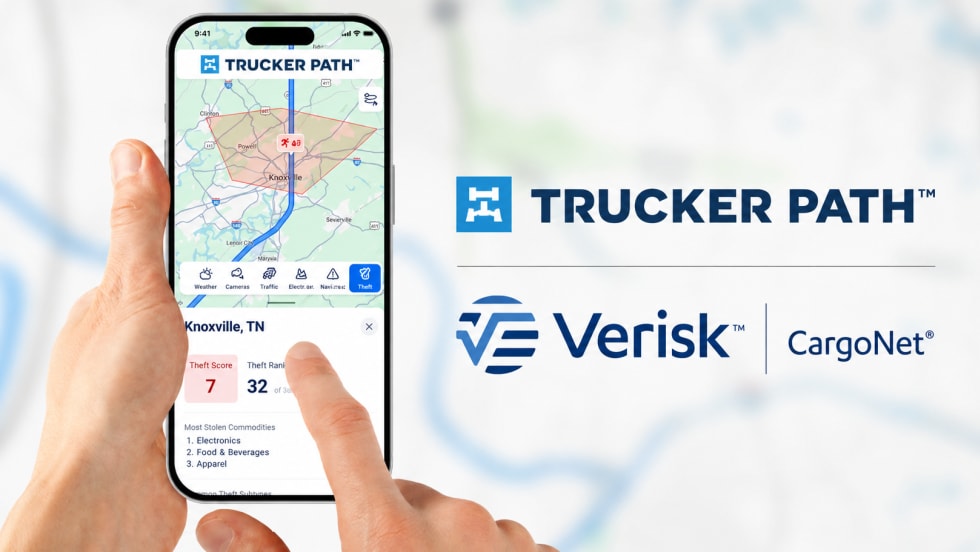
Trucker Path Adds Verisk CargoNet Theft Data to Navigation Platform
Trucker Path’s new cargo theft risk overlays give drivers and fleets visibility into high-risk areas, stolen commodity trends, and theft hotspots.
Read More →
Netradyne Intelligence Uses New AI Agents to Automate Response to In-Cab Camera Data
The company called the next-generation in-cab camera safety platform "a fundamental shift from systems that report on what happened to systems that actively drive what should happen next."
Read More →
Why Truck Detention Keeps Costing Fleets Time and Money
A 2024 ATRI study found detention affects nearly 40% of truckload stops and costs the industry more than $15 billion annually. Despite the toll on drivers, fleets, and supply chains, the problem remains stubbornly persistent.
Read More →