




Diesel up for Second Straight Week, Oil Rises as Well
The average cost of diesel has posted its second straight weekly increase.

The average cost of diesel has posted its second straight weekly increase.
The U.S. Energy Department reports it has gained 2.4 cents over the past week, registering $3.89 per gallon. Despite the hike it is 6.6 cents a gallon lower than the same time a year ago.
Prices moved higher in all regions of the country, except in the New England sub-region of the East Coast region, where it’s down 0.4 cents for an average of $3.991 per gallon, the second highest priced area in the country.
The area with the highest regional prices is the West Coast, where diesel increased 3.9 cents to $4.008 while the Gulf Coast region has the least expensive prices at $3.775 per gallon, increasing 3.6 cents over the past week.
Gasoline prices also followed the same path, increasing for the third consecutive week, with the U.S. average up 7 cents from a week ago to $3.673 per gallon. The cost is 4.2 cents per gallon lower than the same time a year ago but is at its highest level since late March.
Prices range from an average of $3.392 in the Gulf Coast region to $3.952 in the West Coast region. All regions saw price increases except for the Lower Atlantic sub-region of the East Coast region, dropping 0.8 cents to $3.427 per gallon
As for oil it settled at $96.71 per barrel by the end of trading on Monday in New York. It added 69 cents as the dollar dropped in value to other major currencies and following a report that consumer sentiment in May hit its highest level in six years. This puts the black gold up nearly $2.50 over the past week.
More Drivers

Driver Trust Can Make or Break the Success of Fleet Safety Technology
New Teletrac Navman research suggests that onboarding, transparency about driver data, and positive feedback can play a significant role in how commercial drivers respond to safety and coaching technology.
Read More →
EEOC Sues KLLM Over Alleged Sex Discrimination in Driver Training
KLLM is facing a federal sex-discrimination lawsuit over policies the EEOC alleges put female truck driver trainees at a disadvantage.
Read More →
FMCSA Moves to Codify English Language Requirements for Commercial Drivers
By changing regulations on English-language proficiency requirements for commercial drivers, rather than relying on a guidance memo, the FMCSA said future administrations won't be able to walk back the Trump administration's stricter enforcement with just a memo.
Read More →
Drivers Put Western Star Trucks to the Test at Star Nation Experience
Watch to get an inside look at the Western Star trucks, technology, and community behind the Star Nation Experience 2026!
Read More →
Trump Administration Looks to Put More Veterans Behind the Wheel
The Freedom Haulers program pulls together existing and expanded programs at several federal agencies to recruit veterans to drive commercial heavy-duty trucks and cut the red tape for them to get a CDL, training, and employment.
Read More →
Putting Mack’s Command Steer to the Test
A test drive of Mack’s Command Steer active steering system evaluates how it can make truck driving easier and less tiring.
Read More →
Competition Heating Up for Truck Drivers
New report reveals rising driver hiring costs, the return of sign-on bonuses, growing AI advantages, and the operational factors shaping driver retention.
Read More →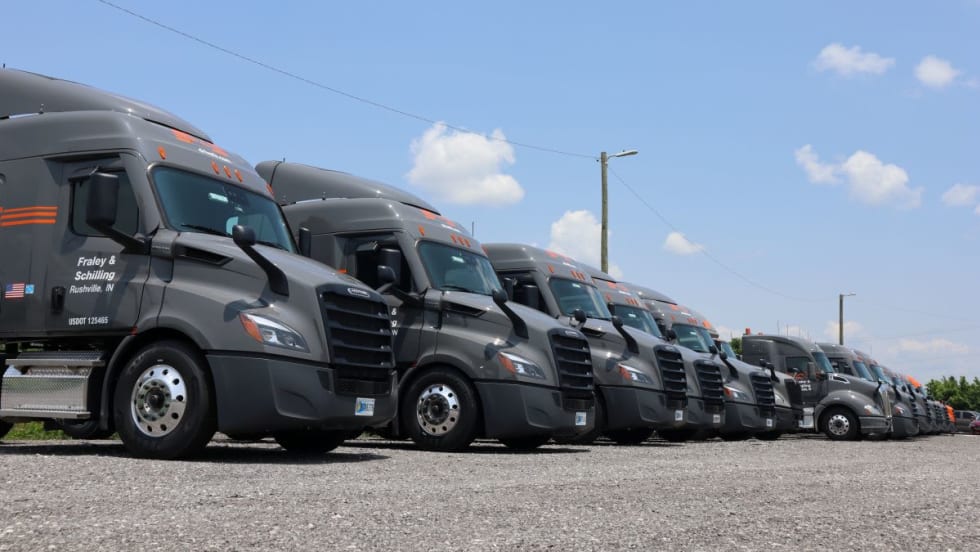
How Fraley & Schilling Improved Logbook Compliance by Over 50%
Fraley & Schilling needed a way to close a compliance workflow gap in its ELD system without adding more work from driver training, reminders, and back-office follow-ups. It found the answer in a custom driver app.
Read More →
Volvo Goes Gaming
Volvo has roared into American Truck Simulator with two new flagship trucks.
Read More →
What the Best Fleets to Drive For Teach About Driver Retention
Survey fatigue, AI-powered routing, owner-operator expectations, and the decline of social media all emerged as themes from this year's Best Fleets to Drive For program.
Read More →