




Daimler Testing Heavy-Duty Electric Actros Truck
A battery-electric heavy-duty hauler fitted with the Mercedes-Benz three-point star may be on the market in just three years.


Daimler has begun fleet-testing its Mercedes-Benz eActros fully electric heavy-duty truck as it nears full production, planned to begin in 2021. Photo: Daimler AG
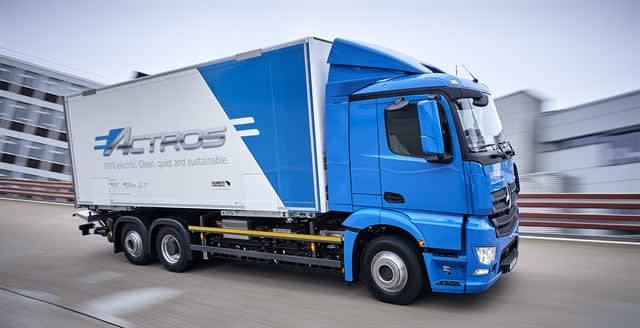
Daimler has begun fleet-testing its Mercedes-Benz eActros fully electric heavy-duty truck as it nears full production, planned to begin in 2021. Photo: Daimler AG
A battery-electric heavy-duty hauler fitted with the Mercedes-Benz three-point star may be on the market in just three years.
Taking the next step toward rolling out a fully electric heavy-duty hauler, Germany’s Daimler Ag will soon be placing its Mercedes-Benz eActros emissions-free trucks with some customers so that they can test “their everyday feasibility and economic efficiency under real-life conditions.”
According to Daimler, the electric truck “could go into” full production starting in 2021.
Operating solely on battery power, the eActros offers a range of up to 200 km (124 miles) yet offers the “customary level of performance and payload,” the OEM stated in a Feb. 21 news release.
The customer test fleet consists of 10 trucks in 2-axle and 3-axle variants, with GVWs of 18 or 25 metric tons. The field-testing will start in the next few weeks and will run until at least mid-2020. Its aim is to establish energy requirements for some specific applications as well as the economic efficiency of the electric trucks and to compare their environmental performance vs. diesel trucks.
“Initially the [fleet testing] focus will be on inner-city goods transport and delivery services – the ranges required here are well within the scope of our Mercedes-Benz eActros,” said Stefan Buchner, Head of Mercedes-Benz Trucks.
"We have developed a vehicle that has been configured from the outset for electric mobility,” he added. “Compared with our prototype, quite a few technical changes have been made: the power supply is now ensured by eleven [lithium-ion] battery packs in all – and wherever possible we have used already proven components that are ready, or very close to ready, for use in [full] series production.”
The road testing will help drive “ongoing optimization measures” and the results will be published, “giving potential users the opportunity to optimize their route planning or to develop new business models for their logistics processes.
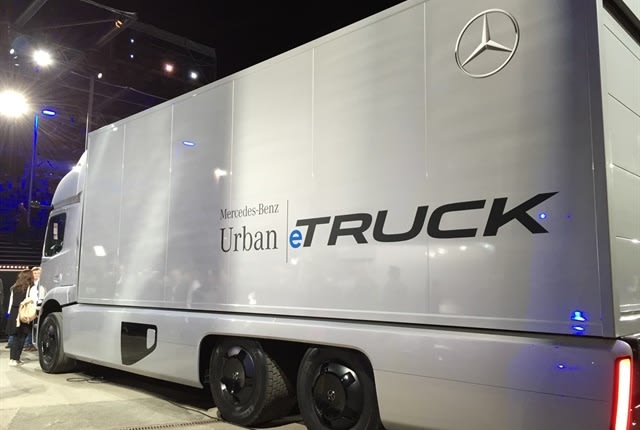
Mercedes-Benz "Urban eTruck" concept vehicle was displayed by Daimler at IAA Show in 2016. Photo: Deborah Lockridge
Back in 2016, at the IAA Commercial Vehicles show in Hanover, Germany, Mercedes-Benz displayed what it called an “Urban eTruck” as a concept for a heavy-duty electric-powered “distribution truck” aimed at urban use. The OEM said feedback to its presentation was “positive across the board,” including from customers as well as the general public and politicians, noting that in Germany alone, some 150 “very serious inquiries were received.”
Testing by Customers Seen as Key to Completing Development
“We now want to work together with our customers to move swiftly forward with the development of our Mercedes-Benz eActros to the point where it becomes a viable proposition in tough everyday operations - both technically and commercially,” Martin Daum, the Daimler AG Board Member responsible for Daimler Trucks and Buses, said in a statement.
“We are beginning this process by creating an ‘innovation fleet’ and will be supporting its testing in the day-to day logistics environment of our customers. This will enable us to establish just what remains to be done, in terms of technical matters, infrastructure and service, to make our Mercedes-Benz eActros competitive” as a full-production truck.
Daimler noted that “a number of technical and, above all, business-related issues remain outstanding” in the development of the eActros. Key among these are the truck’s range and the cost of batteries as well as the infrastructure required for use by fleets.
Related: How Much Does it Cost to Operate a Battery Electric Truck?
More Fuel Smarts

Trucking’s Diesel Squeeze Isn’t Letting Up
With diesel topping $6 a gallon nationally, ATA's Bob Costello explains why fleets should prepare for continued pressure at the pump.
Read More →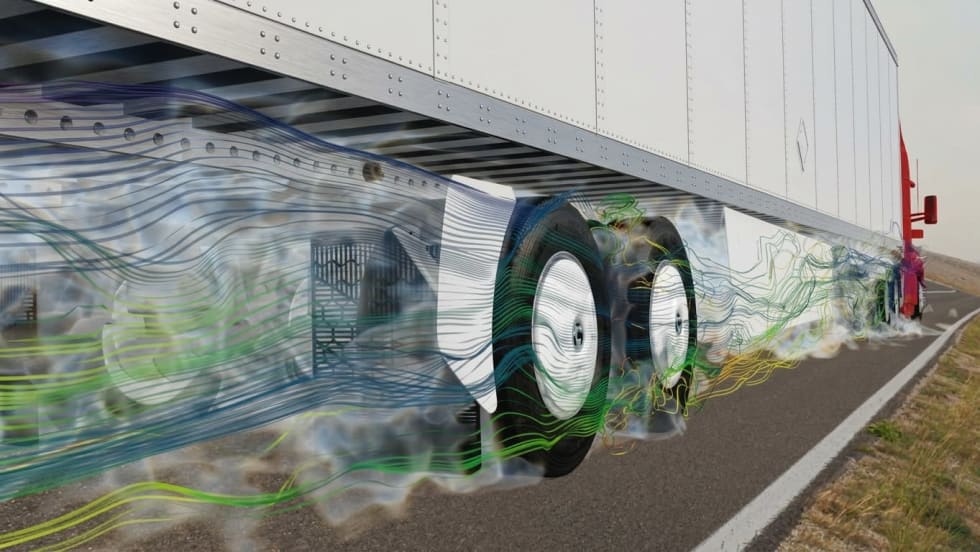
FlowBelow Redesigns Trailer AeroSlider to Cut Fuel Use
The lighter trailer aerodynamic system installs in less than 45 minutes, according to the company, with potential payback in under a year depending on fuel prices and trailer mileage.
Read More →
Why Diesel Price Relief Efforts May Fall Short
Diesel prices have eased from September’s record high, but doubts about additional Russian supply and limits on dyed-diesel tax relief mean trucking fleets still face expensive fuel. And prices could go higher.
Read More →
Why Small Fuel Savings Matter in Trucking
Can better fuel economy help pay for driver raises? In this podcast, GP Transco explains how small efficiency gains create room to reinvest in its people.
Read More →
How GP Transco Cuts Trucking Fuel Costs, a Tenth of a Gallon at a Time
What’s another tenth of a mile per gallon worth? GP Transco shares how equipment upgrades and driver coaching turn small gains into meaningful fuel savings.
Read More →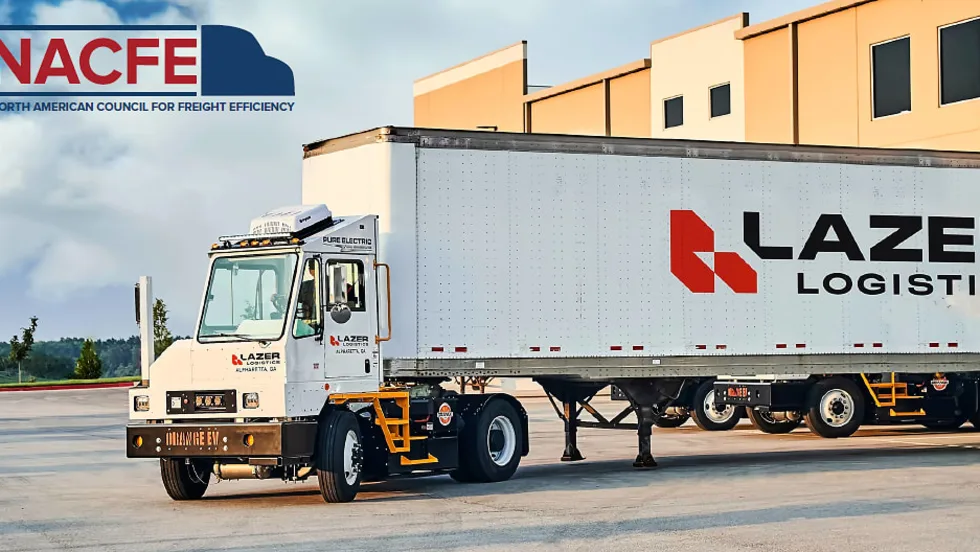
Electric Yard Tractors Move Beyond Pilots
Operating-cost savings have overtaken sustainability goals as the leading reason surveyed fleets are adopting battery-electric terminal tractors, according to new NACFE research.
Read More →
Geotab Links Fleet Card to Vehicle Data
The new card combines fuel discounts with telematics-based purchase controls. Geotab’s analysis also points to potential savings from choosing lower-priced fuel stops.
Read More →
Fleet Economics Shape Electric Truck Outlook
ACT Research expects costs, charging infrastructure, and technology improvements to drive zero-emission commercial vehicle adoption as federal regulations and incentives retreat.
Read More →
Wex Adds Cardless Fuel Payments for Over-the-Road Customers
A new fuel card feature for Wex customers offers convenience and security.
Read More →
New California Law Could Shed Light on Electric Truck Prices
Why do battery-electric Class 8 trucks remain so expensive? A California bill signed by Gov. Gavin Newsom would give fleets and state agencies more visibility into what manufacturers charge.
Read More →