




Daimler, PGE Open 'Electric Island' Charging Site
Less than a mile from Interstate 5 in Portland, Oregon, a new electric-vehicle charging site opened April 21 aimed at medium- and heavy-duty trucks and buses.
April 21, 2021

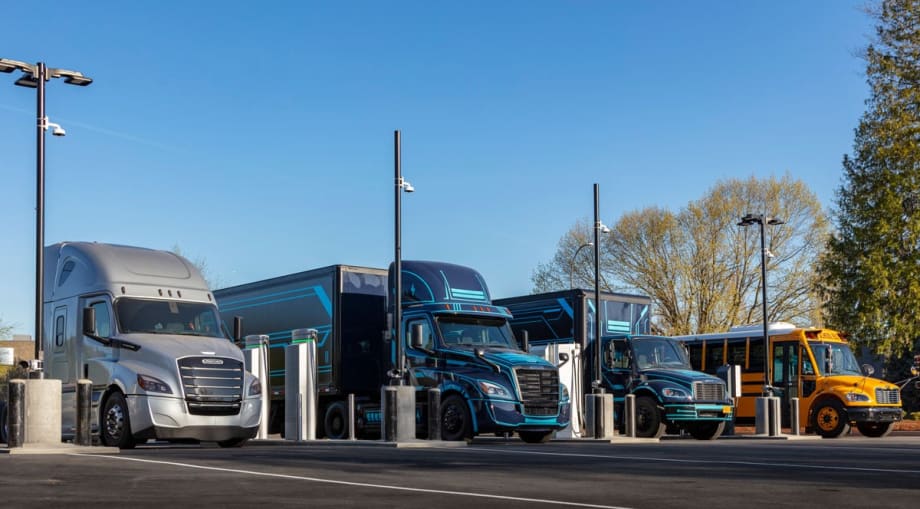
Electric Island opens with eight vehicle charging stations for electric cars, buses, box vans and semi-trucks.
Photo: Daimler Trucks North America
3 min to read
Less than a mile from Interstate 5 in Portland, Oregon, a new heavy-duty electric truck charging site opened April 21. Called “Electric Island,” it’s a joint project of Daimler Trucks North America and Portland General Electric, designed to accelerate the development, testing and deployment of zero-emissions commercial vehicles.
Electric Island opens with eight vehicle charging stations for electric cars, buses, box vans and semi-trucks. A majority of these stations are available for public use. The facility will allow PGE and DTNA to study energy management, charger use and performance – and, in the case of DTNA, its own vehicles’ charging performance.
Located across the street from DTNA headquarters, the facility represents the first location specifically designed for medium- and heavy-duty trucks aligned to the blueprint of the West Coast Clean Transit Corridor Initiative, according to DTNA. WCCTCI’s collaboration between nine electric utilities and two government agencies yielded a strategic plan in 2020 to electrify 1,300 miles of I-5 across the three West Coast states to provide publicly available charging for freight and delivery trucks.
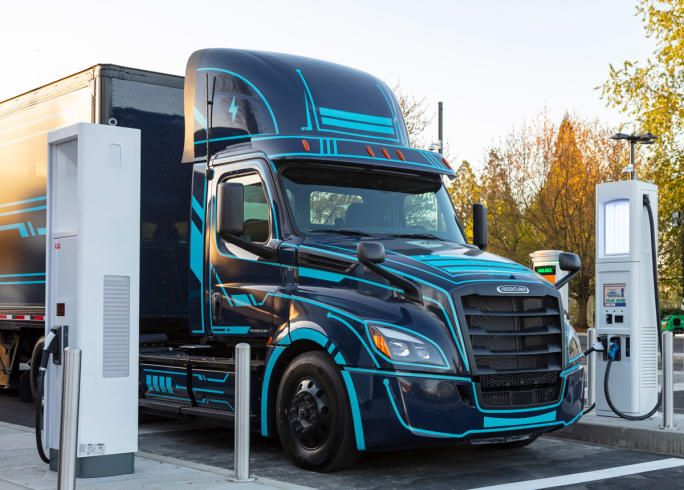
Freightliner's eCascadia recently became available for order.
Photo: Daimler Trucks North America
“For the first time in our history, we have to deliver not just a reliable, dependable, economic truck, but we have to address the entire ecosystem around this vehicle,” said Nate Hill of Daimler Trucks North America in a video provided to reporters by DTNA. “We get to test our vehicles with many different chargers, test the performance of each of these chargers with our vehicles, and experiment with different software to help us manage these chargers.”
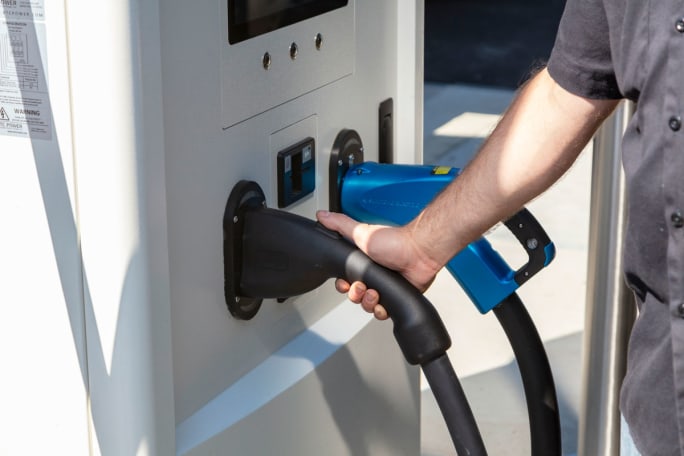
The site will allow DTNA to test its electric vehicles with many different chargers and experiment with different software to help manage these chargers.
Photo: Daimler Trucks North America
The Electric Island site is designed to be flexible, allowing the chargers of today to be replaced with new charger technologies of the future, including planned 1+ megawatt chargers, when they are released. Additional plans for future on-site energy storage, solar power generation, and a product and technology showcase building remain under development.
“The site has up to 5 megawatts of capacity, making it easy… to add new, more advanced charging stations as the technology progresses,” explained Joe Colett with PGE. “The site also has room for complementary grid edge technologies, thing like energy storage, on site generation, and an advanced control system to help all these technologies work together.”
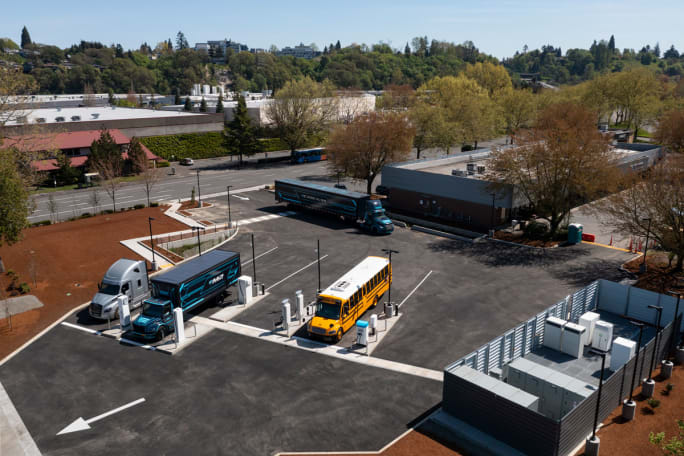
An aerial view of the new Electric Island electric vehicle charging facility, located across the street from DTNA headquarters in Portland.
Photo: Daimler Trucks North America
The site will provide insights into charging issues such as:
Use of vehicle chargers featuring power delivery of up to over one megawatt (over four times faster than today’s fastest light-duty vehicle chargers), enabling PGE and DTNA to develop best practices for cost-effective future deployments;
Integration of heavy-duty charging technology into PGE’s Smart Grid, such as vehicle-to-grid technologies, second-life use of Daimler’s battery packs, and onsite energy generation; and
Testing information technology opportunities like fleet and energy management by captive solutions and services.
“Through collaboration with great partners like Portland General Electric, we are helping to shape the future of carbon-neutral freight transportation, starting right here in the City of Portland,” said John O’Leary, president and CEO of DTNA, in a statement. “Moreover, the manufacture of reliable, durable and efficient medium- and heavy-duty battery electric trucks will take place just down the road at our Portland Truck Manufacturing Plant, demonstrating that we truly are crafting an Electric Island.”
More Fuel Smarts

How Volvo Updated Its D13 for EPA 2027 [Watch]
Volvo’s updated D13 promises lower emissions without sacrificing performance or fuel economy. Take a closer look at what changed inside the engine in this HDT Spotlight video.
Read More →
Diesel Price Spike Shortens Payback for Natural Gas Trucks, Report Says
Energy Vision estimates fleets could recover the higher purchase price of an RNG-fueled Class 8 tractor in 1.3 to 2.8 years under current fuel-price scenarios.
Read More →
Calstart Becomes Catalyst Mobility, Reflecting Broader Focus
Calstart is now Catalyst Mobility, reflecting the nonprofit’s growing national role in clean transportation, including zero-emission trucks, infrastructure and incentive programs.
Read More →

Record Diesel Prices Squeeze Trucking Fleets
Average U.S. diesel prices have climbed to nearly $6 a gallon, surpassing the 2022 record as tight refinery capacity and Middle East disruptions keep fuel costs elevated.
Read More →
Sponsored•September 9, 2026
How Fuel Delivery Shapes Engine Performance
Fuel delivery depends on more than what happens at the injector. For fleet, maintenance and technical professionals, looking at the full path from pump to injector can provide useful context for understanding engine performance.
Read More →
East Coast Port Launches $45M Electric Truck Push
The Port Authority of New York and New Jersey announced millions in incentives for zero-emission drayage trucks, yard tractors, and new charging hubs near the port.
Read More →
California Bill Could Shed Light on Electric Truck Prices
Why do battery-electric Class 8 trucks remain so expensive? A California bill headed to Gov. Gavin Newsom would give fleets and state agencies more visibility into what manufacturers charge.
Read More →
Detroit Opens Orders for EPA 2027 Engines
Detroit isn’t starting from scratch to meet EPA 2027 diesel emissions standards. Its Gen 6 DD13 and DD15 engines keep much of today’s platform while updating the fuel and aftertreatment systems.
Read More →
Zero-Emission Truck Corridor Planned for West Coast
California, Oregon, Washington, British Columbia and Baja California are coordinating plans for truck charging and hydrogen fueling from Canada to Mexico.
Read More →
A Closer Look at Kenworth’s Electric T880E Vocational Truck [Video]
Learn more about Kenworth's T880E battery-electric vocational truck at the Paccar Technical Center, including its range, applications, upfitting considerations, and PTO options, in this HDT Spotlight video.
Read More →