




Related: Cummins Westport Introduces 6.7L Natural Gas Engine
Cummins Westport Tests Near Zero NOx Natural Gas Engine
Cummins Westport has announced field-testing of a spark-ignited natural gas engine capable of producing near zero NOx emissions for use in refuse and transit applications.
by Staff
May 6, 2015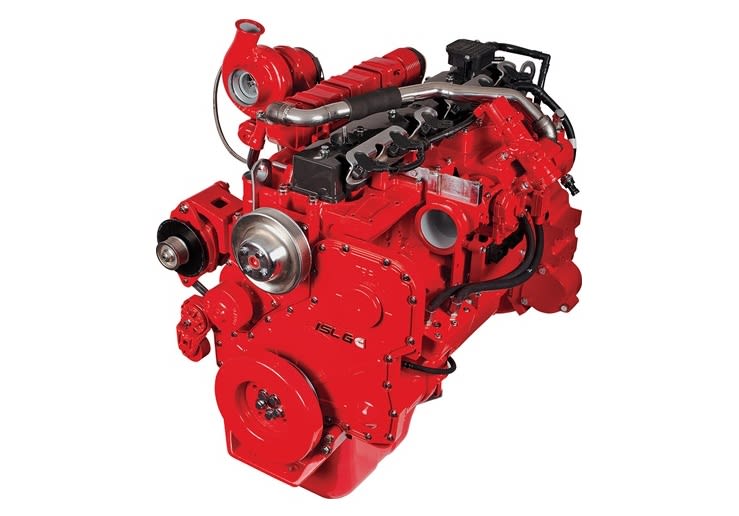
An ISL G engine Photo: Cummins Westport
2 min to read
An ISL G enginePhoto: Cummins Westport
Cummins Westport has announced field-testing of a spark-ignited natural gas engine capable of producing near zero NOx emissions ahead of the 2023 California Near Zero NOx schedule for low NOx vehicles.
The testing will begin this year in California on transit buses. The Near Zero NOx technology is being tested in the ISL G engine and will be made available as a first fit engine with transit and refuse OEMs as a replacement for existing ISL G vehicles.
CWI believes its Stoichiometric EGR spark ignited natural gas engine technology is suited to meeting California’s air quality improvement initiatives. The SESI technology was a part of the recently announced ISB6.7 G natural gas engine and is also a part of the ISL G and ISX12 G engines.
With funding support from South Coast Air Quality Management District, SoCal Gas and California Energy Commission, CWI said it invested significantly on leveraging the SESI platform to develop a new Near Zero NOx technology pathway to reducing emissions by 90% from 0.2 to 0.02 grams per brake horsepower NOx.
The technology will also meet the 2017 EPA greenhouse gas emission requirements, according to CWI. Commercial availability will be announced at a later date.
The new ISL G will also include Three-Way Catalyst passive aftertreatment, packaged as part of the muffler. Cummins Westport natural gas engines do not require active aftertreatment such as a diesel particulate filter or selective catalytic reduction.
The ISL G 8.9-liter engine was introduced in 2007 and has been used primarily in transit buses and refuse trucks.
More Fuel Smarts
FlowBelow Redesigns Trailer AeroSlider to Cut Fuel Use
The lighter trailer aerodynamic system installs in less than 45 minutes, according to the company, with potential payback in under a year depending on fuel prices and trailer mileage.
Read More →
Why Diesel Price Relief Efforts May Fall Short
Diesel prices have eased from September’s record high, but doubts about additional Russian supply and limits on dyed-diesel tax relief mean trucking fleets still face expensive fuel. And prices could go higher.
Read More →
Why Small Fuel Savings Matter in Trucking
Can better fuel economy help pay for driver raises? In this podcast, GP Transco explains how small efficiency gains create room to reinvest in its people.
Read More →
How GP Transco Cuts Trucking Fuel Costs, a Tenth of a Gallon at a Time
What’s another tenth of a mile per gallon worth? GP Transco shares how equipment upgrades and driver coaching turn small gains into meaningful fuel savings.
Read More →
Electric Yard Tractors Move Beyond Pilots
Operating-cost savings have overtaken sustainability goals as the leading reason surveyed fleets are adopting battery-electric terminal tractors, according to new NACFE research.
Read More →
Geotab Links Fleet Card to Vehicle Data
The new card combines fuel discounts with telematics-based purchase controls. Geotab’s analysis also points to potential savings from choosing lower-priced fuel stops.
Read More →
Fleet Economics Shape Electric Truck Outlook
ACT Research expects costs, charging infrastructure, and technology improvements to drive zero-emission commercial vehicle adoption as federal regulations and incentives retreat.
Read More →
Wex Adds Cardless Fuel Payments for Over-the-Road Customers
A new fuel card feature for Wex customers offers convenience and security.
Read More →
New California Law Could Shed Light on Electric Truck Prices
Why do battery-electric Class 8 trucks remain so expensive? A California bill signed by Gov. Gavin Newsom would give fleets and state agencies more visibility into what manufacturers charge.
Read More →
How Volvo Updated Its D13 for EPA 2027 [Watch]
Volvo’s updated D13 promises lower emissions without sacrificing performance or fuel economy. Take a closer look at what changed inside the engine in this HDT Spotlight video.
Read More →