




Cummins Showcases 2013 Engines, New Features
Cummins will have its new 2013 engine line up at this year's Mid-America Trucking show, boasting 2% better fuel economy, along with some new gearing recommendations to increase fuel economy and lower operating costs.

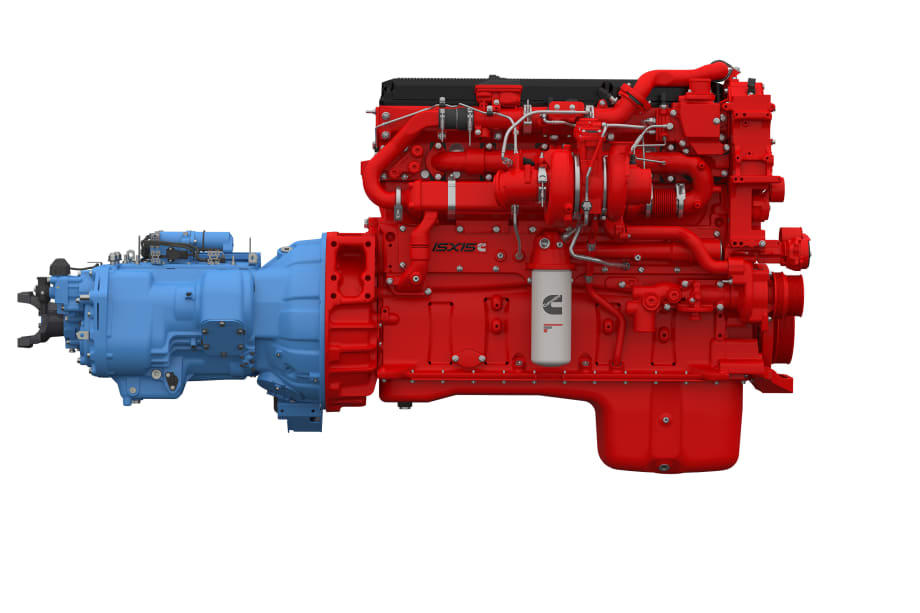
LOUISVILLE -- Cummins will have its new 2013 engine line up at this year's Mid-America Trucking show, boasting 2% better fuel economy, along with some new gearing recommendations to increase fuel economy and lower operating costs.
Cummins says its 2013 on-highway engines will deliver up to 2% better fuel economy compared with the 2012 model-year engines. On top of that, the Columbus, Ind.-based engine makers says all of its engines meet EPA's 2014 greenhouse gas and fuel efficiency rules one full year ahead of the requirement.
"Last year at Mid-America we made some promises, and this year I'm telling you, we've kept them," says Steve Charlton, vice president and chief technical officer, Engine Business. "We were certified in the fall of last year, not only to emissions and on-board diagnostics, but we are a year early on the greenhouse gas regulations."
Announced last week at the TMC press event, two new SmartTorque ratings are available, designed to meet the needs of fuel-conscious fleets. They deliver up to 200 pounds-feet of extra torque in the top two gears. New SmartTorque2 ratings, delivering 3% to 6% better fuel economy when matched with the new Eaton Fuller Advantage automated transmission, will be available in the fall of 2013.
Cummins has also made some changes to current gearing recommendations that will see ISX15 engines cruising at 65 mph while turning 1,170 or 1,270 rpm, depending on the application.
"We're now allowing the engine to operate in the 1,200-1,300 rpm range in heavy duty," says Charlton. "Three or four years ago, we were running at 1,450 or 1,500 rpm. Dropping the engine speed, or downspeeding, is a key lever for attaining these tough fuel economy goals."
Fuel economy is improved through the use of downspeeding, which allows the ISX15 and ISX12 to achieve peak torque at 100 fewer rpm.
Now approved with the 2013 is the use of low-viscosity 10W-30 oils.
"We're offering the option to use low-viscosity 10W-30 oils, which bring with them some fuel economy advantages," says Charlton. "Overall, that's delivering 2% better fuel economy, engine only."
Low-soot combustion is another feature customers have been looking for. Cummins says it has driven down the soot levels coming out of the cylinder, which is easing the soot loading the DPF. "That's allowed us run almost 100% passive regeneration, which is good operational efficiency as well as fuel economy," Charlton says.
On the MidRange side for 2013, the ISL9 and the ISB6.7 come equipped with NanoNet fuel filters from Cummins Filtration. This two-stage fuel filter exceeds 99.6 percent filtration efficiency, offering double the contaminant holding capacity and providing approximately 10 times better protection of the engine’s fuel system.
“Cummins and Cummins Westport offer the industry’s broadest product line of both clean-diesel and natural gas engines to meet the needs of our customers,” said Jeff Jones, Cummins vice president, North American Engine Business. “Cummins is committed to deliver better where it counts – better on the road, at the fuel pump, in the used truck market and better for the customer’s bottom line.”
On the show floor, Cummins will display its clean diesel ISX15, ISX12, ISL9 and ISB6.7, as well as the Cummins Westport ISX12 G and ISL G natural gas engines.
More Drivers

EEOC Sues Texas Trucking Company Over Driver Age Limits
The agency says Trancasa USA rejected applicants over 65 and applied tougher driving-record standards to those over 60.
Read More →
Nussbaum, Roehl Announce Second Driver Pay Increase This Year
This year has seen a swath of major truck driver pay increases as freight capacity has tightened.
Read More →
From One Generation to the Next: How Mentorship Builds Safer Truck Drivers
After three decades in trucking, Harold Perry shares what he's learned about driver safety, mentorship, and helping the next generation build confidence behind the wheel.
Read More →
Truck Drivers Need More Than Another Alert
Fleets have more visibility into truck health, safety events, and driver activity than ever. The next challenge is turning all that information into useful guidance for the person who has to decide what to do next.
Read More →
FMCSA Removes 110 Truck Driver Training Schools from Certified ELDT List
Federal regulators also are targeting more than 160 additional training providers and launching a nationwide audit of third-party CDL skills testers as part of a broader crackdown on trucking fraud.
Read More →
Hours of Service Pilot Programs: FMCSA Readies for 2027 Rollout
Two pilot programs could eventually reshape hours-of-service rules, giving truck drivers options to pause their 14-hour clock or use longer split sleeper rest periods.
Read More →
Medical Cards, English Proficiency Reshape Roadcheck Violations
Medical-card violations jumped to the top of the driver out-of-service list during CVSA’s 2026 International Roadcheck, while English-language proficiency violations appeared among the leading violations for the first time.
Read More →
Driver Trust Can Make or Break the Success of Fleet Safety Technology
New Teletrac Navman research suggests that onboarding, transparency about driver data, and positive feedback can play a significant role in how commercial drivers respond to safety and coaching technology.
Read More →
EEOC Sues KLLM Over Alleged Sex Discrimination in Driver Training
KLLM is facing a federal sex-discrimination lawsuit over policies the EEOC alleges put female truck driver trainees at a disadvantage.
Read More →
FMCSA Moves to Codify English Language Requirements for Commercial Drivers
By changing regulations on English-language proficiency requirements for commercial drivers, rather than relying on a guidance memo, the FMCSA said future administrations won't be able to walk back the Trump administration's stricter enforcement with just a memo.
Read More →