




HDT Talks Trucking Podcast, Season 1 Episode 4: How Do We Get Started With Electric Trucks?
COVID-19 Can’t Derail Electrification Momentum
Speakers at the opening session of ACT Virtual share progress on electric-truck development and deployment.
by James Menzies, Todays Trucking
August 20, 2020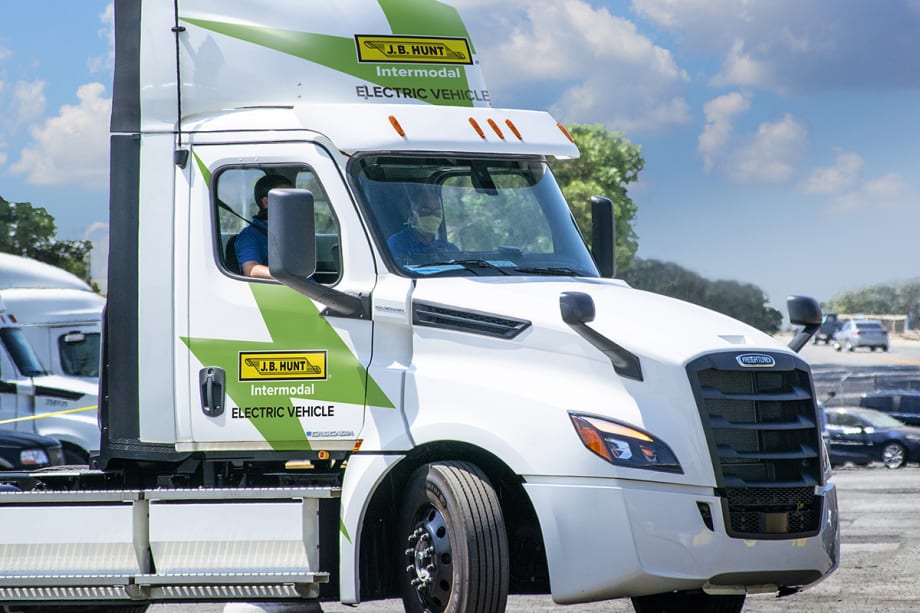
J.B. Hunt said it's applying lessons learned in deploying natural-gas trucks in its electric-truck plans.
Photo: J.B. Hunt
4 min to read
When economies around the world ground to a sudden halt due to the global COVID-19 pandemic, the impact of emissions became clear – literally. Suddenly, distant mountain ranges came into view. NASA video from space was clearer. Cities like New Delhi were under uncharacteristically blue skies.
That could be a permanent benefit of adopting zero-emissions transportation technologies, Ryan Laskey, senior vice president, Dana’s Commercial Vehicle Group, pointed out during a session at ACT Virtual, this year’s digital version of the annual ACT (Alternative Clean Transportation) Expo.
“Look at the air quality and the difference you had during the quarantine period,” he said. “There are not a lot of times in history you’re able to stop transportation like we did.”
In some places, particulate emissions were down 60% during the quarantine period.
Judy Mitchell, on the governing board of California’s South Coast Air Quality Management District, agreed the crisis temporarily cleared the air. But while passenger traffic disappeared, truck and container traffic only decreased about 20%, she noted.
“Heavy-duty diesel trucks continued to bring NOx emissions and smog to our regions,” she said. “What we need now, more than ever, are cleaner zero and near-zero-emissions trucks and equipment.”
The good news is, those trucks are coming, and the COVID-19 pandemic has done little to slow their advance. Peter Voorhoeve, president, Volvo Trucks North America, gave an update on the Volvo LIGHTS (Low Impact Green Heavy Transport Solution) program, which is putting electric Volvo VNR regional haul tractors into service in California.
“We have gained experience to help guide fleets as they embark down this unpaved path towards electrification,” Voorhoeve said of the initiative. He emphasized the need to work collaboratively – there are 14 partners involved in Volvo LIGHTS. “Partnership is the new leadership.”
Developing the required charging infrastructure is the “most pressing need and the biggest obstacle” at the moment, Voorhoeve added.
Suppliers driving the shift to battery-electric transportation have had to become creative in how they achieved this during the pandemic. Laskey spoke of Dana engineers designing wiring harnesses on the kitchen table and having design meetings using cellphone cameras.
But, he added, “We have not backed off at all in any of our sustainable mobility investments.”
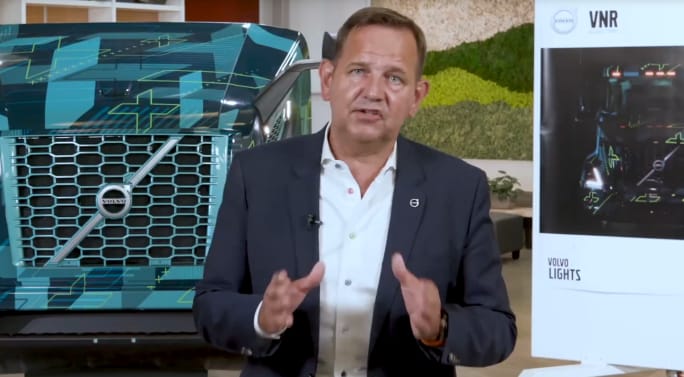
Volvo Trucks North America's Peter Voorhoeve emphasized the importance of teamwork in electric truck development and deployment.
Photo: ACT Virtual screenshot
The same can be said of Daimler Trucks North America, according to Kary Schaefer, general manager of marketing and strategy. The company has continued deploying electric trucks as part of its Innovation Fleet. That fleet recently surpassed 300,000 miles in real-world applications despite Covid-19 interruptions.
“We have kept dealers and customers running to support drivers, who were essential to delivering freight at that time,” said Schaefer. “We managed to get through the past few months with a minimal impact to program schedules.”
Painful Lessons on Alt-Fuel Infrastructure
J.B. Hunt is one of the latest fleets to take delivery of a Class 8 electric truck – a Freightliner eCascadia it's using in intermodal service. Craig Harper, chief operations officer with the company, said it learned some painful lessons when deploying natural gas vehicles about the importance of having an entire fueling ecosystem set up before the trucks are put on the road.
“When we kicked off (with natural gas), we heard of all these stations that were available, then we found out many were built for cars. Many were slow-fill, so it took too long to fuel our equipment. We learned from that – we have to have better infrastructure set up,” Harper said.

Daimler Trucks North America's Kary Schaefer said truck makers need to address charging infrastructure when bringing electric trucks to market.
Photo: ACT Virtual screenshot
DTNA’s Schaefer agreed, and admitted truck makers have a role to play.
“You can’t bring a truck to market without that ecosystem wrapped around it,” she said, noting the OEM has to proactively work with utilities, government, and industry to ensure adequate fueling infrastructure is developed. “OEMs cannot be a bystander in this process.”
When adopting new technologies, Harper said J.B. Hunt leans heavily on its OEM partners to understand the implications. But as diesel has become more efficient, the performance bar new technologies must surpass is continuously raised.
“There’s a high bar for alternative vehicles to get over right now, with the improvements OEMs have made in mpg, and also cleaner-burning technology,” he said. This is especially true as diesel prices fall, he added.
He emphasized the need for government incentives so battery-electric trucks can get into the field and prove their worth.
“Right now, when you get a quote on an electric vehicle, we’re talking numbers that are three to four times the price of diesel (trucks),” he said. “We can’t make that work. Part of being sustainable is having a sustainable piece of equipment to operate, but it’s also staying in business.”
Laskey said progress is being made in both battery and fuel cell technologies.
“We’ve got a way to go. We have to get that total cost of ownership at least at parity (with diesel),” he said.
“I think economic sustainability and environmental sustainability really need to go hand in hand,” added Schaefer. “Incentives are critical to reach scale.”
James Menzies is the editor of Today's Trucking, where this article originally appeared. Content was used with permission from Newcom Media as part of a cooperative editorial agreement.
More Fuel Smarts
Cummins Adjusts 2027 Engine Rollout After EPA Proposal
The engine maker will gradually introduce its new Model Year 2027 diesel engines while continuing to offer current models during the transition, citing the EPA's proposed emissions rule changes.
Read More →
EPA Proposal Could Ease 2027 Truck Costs and Buying Uncertainty
The proposal doesn't change the tougher NOx standard, but it would revise key implementation requirements that manufacturers say have driven up costs and complicated fleet purchasing decisions.
Read More →
Cummins, Paccar Ease DEF Derates After EPA Guidance
Updated diesel engine software gives truck operators more time to address emissions-system issues while staying compliant with EPA emissions standards.
Read More →
Maintenance in the Messy Middle Part 3: Biodiesel
Biodiesel can reduce emissions, improve fuel-system lubricity and use existing diesel infrastructure. But NACFE’s Messy Middle maintenance report says fleets must actively manage storage, cold-weather operation, filters and oil drain intervals to avoid problems.
Read More →
Enhance Fleet Performance with High-Efficiency Auxiliary Power Units
Drive sustainable cost savings while increasing driver comfort during short- and long-haul logistics operations.
Read More →
Maintenance in the ‘Messy Middle’ Part 2: Renewable Diesel Fuel
NACFE's latest Messy Middle Powertrain Service & Maintenance report says renewable diesel gives fleets an opportunity to reduce carbon emissions without changing trucks, fueling infrastructure or maintenance practices. But technicians still need to understand several important operational differences.
Read More →
The Diesel Engine Enters NACFE’s ‘Messy Middle’
NACFE’s new Messy Middle Powertrain Service & Maintenance report says keeping modern diesel engines running now depends as much on software, diagnostics and data as traditional mechanical service.
Read More →
DTNA Software Update Gives Truckers More Time Before DEF Derates Take Effect
The changes reflect EPA guidance aimed at reducing downtime caused by emissions-system faults while maintaining compliance requirements.
Read More →
New Agentic Predictive Maintenance Report Demonstrates How Degraded Aftertreatment Systems Waste Fuel
Questar analyzed a large mixed-class fleet and discovered it was wasting as much as $30 in fuel per vehicle, per day, because of mechanically degraded aftertreatment systems.
Read More →
New York City's Microhub Project is Delivering Results
Trucking, last-mile delivery companies, and environmental advocates like what they are seeing so far with New York's microhub program.
Read More →