




Covenant Returns to Profitability for 2010
Covenant Transportation Group, Chattanooga, Tenn., reported improved fourth-quarter 2010 numbers compared to the fourth quarter of 2009
Covenant Transportation Group, Chattanooga, Tenn., reported improved fourth-quarter 2010 numbers compared to the fourth quarter of 2009.
Freight revenue of $136.6 million was an increase of 0.6% compared with the fourth quarter of 2009. Operating income of $6 million and an operating ratio of 95.6%, compared with an operating loss of $0.8 million and an operating ratio of 100.6% in the fourth quarter of 2009. And net income of $0.7 million, or $0.05 per share, compared with a net loss of $2.7 million, or ($0.19) per share in the fourth quarter of 2009.
"I am pleased to report a profitable fourth quarter and full year for 2010," said Chairman, President, and CEO David R. Parker. "This performance marks the mid-point of a dramatic turnaround in Covenant's performance over the past several years. I use the word midpoint to emphasize that much work remains to be done to achieve acceptable margins and returns on our investment."
For the year, total revenue increased 10.4%, to $649.7 million from $588.7 million for 2009. Freight revenue increased 5%, to $546.3 million in 2010 from $520.5 million in 2009. The company reported net income of $3.3 million, or $0.23 per share, for 2010 compared to a net loss, including impairment charges, of $25 million, or ($1.77) per share in 2009.
For the quarter, total revenue in Covenant's asset-based operations increased $9.6 million, or 6.6%, compared with the fourth quarter of 2009. Of this increase, $5.3 million related to higher fuel surcharge revenue. The remaining $4.3 million related to a 3% increase in average freight revenue per tractor per week and a minor 14 truck (or 0.5%) increase in the average tractor fleet. Average freight revenue per tractor per week improved to $3,113 during the 2010 quarter from $3,023 during the 2009 quarter due to an improved rate environment, partially offset by an approximately 2.1% decrease in miles per tractor.
Average freight revenue per total mile increased 6.6 cents per mile (or 5.2%) compared with the fourth quarter of 2009, which was especially favorable given a 6.3% increase in average length of haul from 846 miles to 899 miles.
Fixed costs decreased for the quarter. This was due to reduction of leased trailers, improved terms on a large portion of the remaining dry van trailers, and an improving market for used tractors.
Driver wages increased as various incentive pay items were improved.
Covenant Transport Solutions, the company's freight brokerage subsidiary, also improved its profitability over the 2009 quarter. Although total revenue decreased 27.5%, to $9.1 million from $12.6 million in the same quarter of 2009, this was related primarily to a decision to eliminate unprofitable freight and agents. Net revenue (total revenue less purchased transportation) for the quarter decreased 20.1% compared to the 2009 quarter, but gross margins improved as purchased transportation was 80.9% of total revenue in the current quarter, down from 82.7% of total revenue in the prior year quarter.
"Our existing annual tractor fleet plan for 2011 includes the purchase and disposal of approximately 850 tractors," Parker said. "With a relatively young average fleet age of 19 months at December 31, 2010, we believe there is significant flexibility to manage our fleet and we plan to regularly evaluate our tractor replacement cycle and new tractor purchase requirements.
"We had $37.8 million of available borrowing capacity under our revolving credit facility at December 31, 2010. We were in compliance with our financial covenant at December 31, 2010. In addition, we believe we have sufficient financing available from the captive finance subsidiaries of our main tractor suppliers to fund most of our expected tractor purchases in 2011."
More Drivers

Platform Science Adds Dispatch and Safety Tools
Four additions to PS Fleet help fleets monitor loads, manage driver coaching, share truck locations and adjust video system settings.
Read More →
When Language Stops the Truck: The Return of ELP Out-of-Service Orders
English language proficiency rules for commercial drivers aren’t new, but renewed out-of-service enforcement has raised the stakes. Here’s what carriers need to know before a driver reaches a roadside inspection.
Read More →
Samsara Launches Custom AI Agent Builder
Agent Studio lets fleets create AI tools for hours-of-service monitoring, reporting and driver support, including agents that communicate by phone.
Read More →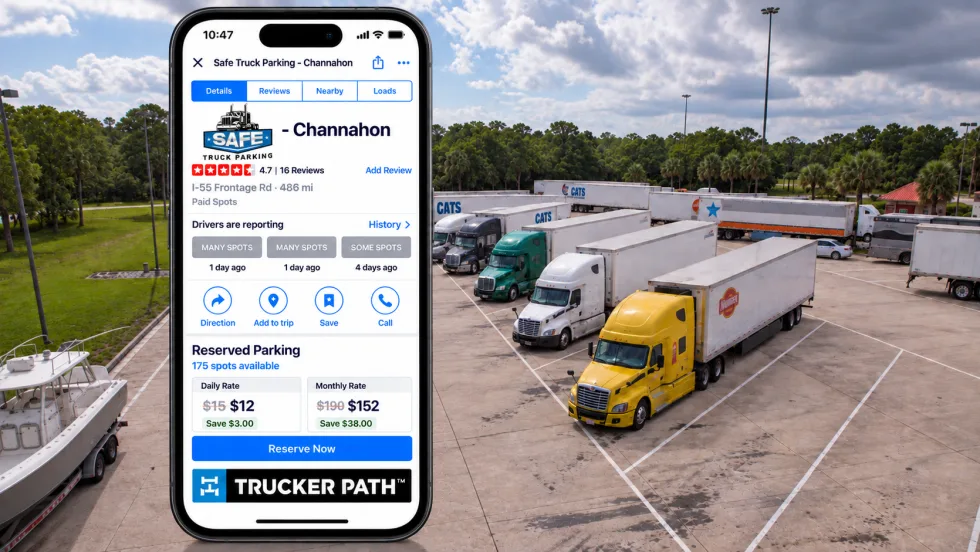
Trucker Path Expands Reserved Parking Network
Trucker Path has added close to 6,000 more truck parking spaces to its Trucker Path Reserved Parking Network with the addition of Safe Truck Parking.
Read More →
EEOC Sues Texas Trucking Company Over Driver Age Limits
The agency says Trancasa USA rejected applicants over 65 and applied tougher driving-record standards to those over 60.
Read More →
Nussbaum, Roehl Announce Second Driver Pay Increase This Year
This year has seen a swath of major truck driver pay increases as freight capacity has tightened.
Read More →
From One Generation to the Next: How Mentorship Builds Safer Truck Drivers
After three decades in trucking, Harold Perry shares what he's learned about driver safety, mentorship, and helping the next generation build confidence behind the wheel.
Read More →
Truck Drivers Need More Than Another Alert
Fleets have more visibility into truck health, safety events, and driver activity than ever. The next challenge is turning all that information into useful guidance for the person who has to decide what to do next.
Read More →
FMCSA Removes 110 Truck Driver Training Schools from Certified ELDT List
Federal regulators also are targeting more than 160 additional training providers and launching a nationwide audit of third-party CDL skills testers as part of a broader crackdown on trucking fraud.
Read More →
Hours of Service Pilot Programs: FMCSA Readies for 2027 Rollout
Two pilot programs could eventually reshape hours-of-service rules, giving truck drivers options to pause their 14-hour clock or use longer split sleeper rest periods.
Read More →