




Court Certifies Lawsuit Against Swift as Class Action
A lawsuit accusing Phoenix, Ariz.-based Swift Transportation Corp. of routinely shorting its drivers in pay will move forward as a class action after a long and circuitous route through the Arizona court system
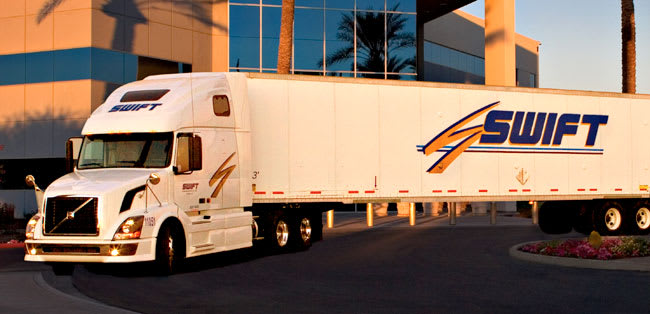
A lawsuit accusing Phoenix, Ariz.-based Swift Transportation Corp. of routinely shorting its drivers in pay will move forward as a class action after a long and circuitous route through the Arizona court system.
The case claims that rather than paying drivers on actual miles driven, the company calculates mileage using a software program. The suit claims that in doing so, the program, on average, underpays drivers by 7 percent to 10 percent.
According to court documents, Swift Transportation's manager of contract finance from 1998 until 2002 admitted the software consistently underreported the mileage that drivers actually log by an average of 6 percent.
The lawsuit alleges breach of contract for not paying the correct amount and breach of the implied covenant of good faith and fair dealing based on Swift Transportation's adoption of a system that underpays drivers.
The lawsuit was first filed against Swift Transportation in early 2004, but the motion to certify it as a class action was initially denied by a Maricopa County (Arizona) Superior Court judge. The judge's decision was appealed by plaintiffs' attorneys at Hagens Berman Sobol Shapiro LLP, and the Arizona Court of Appeals reversed the lower court's decision.
The appellate court's decision to certify the suit against Swift Transportation as a class action, however, was then overturned by the Arizona Supreme Court on procedural grounds. The Arizona Supreme Court held that the appellate court lacked the jurisdiction to review the decision by the trial court not to certify the suit as a class action.
The case was sent back to the Maricopa County Superior Court, where attorneys for lead plaintiff Leonel Garza and the class filed a renewed motion to have it certified as a class action. The court granted that motion Thursday.
"It's been a long and difficult road to get to this moment, but we're happy that the court ruled in our favor," said Hagens Berman attorney Rob Carey. "We've heard from numerous Swift drivers that the company's mileage calculation method cheats them out of honest and hard-earned compensation. These drivers deserve their day in court, and now they'll get it."
Maricopa County Superior Court Judge J. Richard Gama ruled Thursday that the class for the case against Swift Transportation encompasses "all persons in the United States, including those who were employed by Swift as employee drivers on or after Jan. 30, 1998 or contracted with Swift as owner-operator drivers on or after Jan. 30, 1998, who were compensated by Swift by reference to miles driven."
More Drivers

Truck Drivers Need More Than Another Alert
Fleets have more visibility into truck health, safety events, and driver activity than ever. The next challenge is turning all that information into useful guidance for the person who has to decide what to do next.
Read More →
FMCSA Removes 110 Truck Driver Training Schools from Certified ELDT List
Federal regulators also are targeting more than 160 additional training providers and launching a nationwide audit of third-party CDL skills testers as part of a broader crackdown on trucking fraud.
Read More →
Hours of Service Pilot Programs: FMCSA Readies for 2027 Rollout
Two pilot programs could eventually reshape hours-of-service rules, giving truck drivers options to pause their 14-hour clock or use longer split sleeper rest periods.
Read More →
Medical Cards, English Proficiency Reshape Roadcheck Violations
Medical-card violations jumped to the top of the driver out-of-service list during CVSA’s 2026 International Roadcheck, while English-language proficiency violations appeared among the leading violations for the first time.
Read More →
Driver Trust Can Make or Break the Success of Fleet Safety Technology
New Teletrac Navman research suggests that onboarding, transparency about driver data, and positive feedback can play a significant role in how commercial drivers respond to safety and coaching technology.
Read More →
EEOC Sues KLLM Over Alleged Sex Discrimination in Driver Training
KLLM is facing a federal sex-discrimination lawsuit over policies the EEOC alleges put female truck driver trainees at a disadvantage.
Read More →
FMCSA Moves to Codify English Language Requirements for Commercial Drivers
By changing regulations on English-language proficiency requirements for commercial drivers, rather than relying on a guidance memo, the FMCSA said future administrations won't be able to walk back the Trump administration's stricter enforcement with just a memo.
Read More →
Drivers Put Western Star Trucks to the Test at Star Nation Experience
Watch to get an inside look at the Western Star trucks, technology, and community behind the Star Nation Experience 2026!
Read More →
Trump Administration Looks to Put More Veterans Behind the Wheel
The Freedom Haulers program pulls together existing and expanded programs at several federal agencies to recruit veterans to drive commercial heavy-duty trucks and cut the red tape for them to get a CDL, training, and employment.
Read More →
Putting Mack’s Command Steer to the Test
A test drive of Mack’s Command Steer active steering system evaluates how it can make truck driving easier and less tiring.
Read More →