




Convoy To Re-enact 1919 Military Trek Across U.S.
Truck enthusiasts this summer will re-enact a historic 1919 U.S. Army cross-country convoy that eventually led to establishment of the modern Interstate Highway system
Truck enthusiasts this summer will re-enact a historic 1919 U.S. Army cross-country convoy that eventually led to establishment of the modern Interstate Highway system.
Members of the Military Vehicle Preservation Association will drive vintage and modern trucks following the route of the old Lincoln Highway, now U.S. 30, to mark the pioneering trek's 90th anniversary.
The MVPA convoy will leave Washington, D.C., on June 13 and plans to arrive 26 days later in San Francisco, on July 8. Its first rest stop in Wooster, Ohio, on June 16, will include a military encampment and a gathering of military units and trucks, said Terry Shelswell, the event's coordinator, who will drive his 1952 Willys M-38 Jeep in the convoy. He works at Inergy Automotive, a supplier of fuel systems for autos and light trucks.
The 1919 convoy by the Army's young Motor Transport Corps took 62 days, from July 7 to September 6. It was done partly to test the mettle of trucks then available and publicize the need for good roads. The trek tested the balloon tire developed by Harvey Firestone and sought to interest young men in motor transport schooling.
Among its members was Dwight D. Eisenhower, then a young lieutenant colonel who would later become a five-star general and eventually President of the U.S. What he saw during the convoy, along with his experiences with Germany's Autobahns during World War II, influenced him to push for construction of the U.S. System of Interstate and Defense Highways, which began in 1956.
In 1919 the Lincoln Highway was the nation's first semi-official long-distance road. It had been laid out and, due to promotion and lobbying by industrialists, was mostly paved east of the Mississippi River. But over vast sections of the West it consisted only of dirt and sand trails, if that. Eighty-one vehicles, 282 soldiers and 15 Department of the Army observers embarked on the trip. They operated under simulated wartime conditions, assuming that much of the route was damaged and destroyed by fighting.
The real-life condition of the route supported the war gaming. Soldiers worked strenuously to pull trucks out of countless ditches, mud holes and deep ruts, and from creek beds after heavy vehicles plunged through about 100 weak bridges. Army engineers then rebuilt the bridges. Nine trucks broke down and 21 men were injured and had to be left behind for treatment. Yet soldiers completed the trip only four days behind schedule.
The 2009 convoy is expected to draw 150 vehicles, from modern Humvees to ponderous two- and four-wheel-drive trucks from the World War I era. One is a 1917 FWD ammunition carrier restored by Don Chew, an active member of MVPA and the American Truck Historical Society, who lives in Brighton, Colo. He plans to join the convoy in the West. Trucks similar to his FWD made the original trip.
By coincidence, Chew's friend Doreen Slater has photos of the 1919 convoy as it passed through North Platte, Neb. She found them last year among possessions passed down by her mother, Carolyn Baker Slater. The convoy photos were taken by members of the Baker family and had been stored away.
There'll probably be thousands of photos shot this summer as MVPA members drive their military trucks, cars and motorcycles varying distances by joining and leaving the convoy as it passes through 11 states. Some intend to drive the entire 3,300-mile distance. Only military vehicles in good operating condition may participate, and for insurance requirements, drivers must be MVPA members.
A story on the upcoming convoy is in the May-June issue of Wheels of Time, ATHS's magazine. Information on the convoy and its schedule are posted at the military group's website, www.mvpa.org. Contact person is Terry Shelswell, (586) 212-9523 or Terry.Shelswell@inergyautomotive.com.
More Drivers

Nussbaum, Roehl Announce Second Driver Pay Increase This Year
This year has seen a swath of major truck driver pay increases as freight capacity has tightened.
Read More →
From One Generation to the Next: How Mentorship Builds Safer Truck Drivers
After three decades in trucking, Harold Perry shares what he's learned about driver safety, mentorship, and helping the next generation build confidence behind the wheel.
Read More →
Truck Drivers Need More Than Another Alert
Fleets have more visibility into truck health, safety events, and driver activity than ever. The next challenge is turning all that information into useful guidance for the person who has to decide what to do next.
Read More →
FMCSA Removes 110 Truck Driver Training Schools from Certified ELDT List
Federal regulators also are targeting more than 160 additional training providers and launching a nationwide audit of third-party CDL skills testers as part of a broader crackdown on trucking fraud.
Read More →
Hours of Service Pilot Programs: FMCSA Readies for 2027 Rollout
Two pilot programs could eventually reshape hours-of-service rules, giving truck drivers options to pause their 14-hour clock or use longer split sleeper rest periods.
Read More →
Medical Cards, English Proficiency Reshape Roadcheck Violations
Medical-card violations jumped to the top of the driver out-of-service list during CVSA’s 2026 International Roadcheck, while English-language proficiency violations appeared among the leading violations for the first time.
Read More →
Driver Trust Can Make or Break the Success of Fleet Safety Technology
New Teletrac Navman research suggests that onboarding, transparency about driver data, and positive feedback can play a significant role in how commercial drivers respond to safety and coaching technology.
Read More →
EEOC Sues KLLM Over Alleged Sex Discrimination in Driver Training
KLLM is facing a federal sex-discrimination lawsuit over policies the EEOC alleges put female truck driver trainees at a disadvantage.
Read More →
FMCSA Moves to Codify English Language Requirements for Commercial Drivers
By changing regulations on English-language proficiency requirements for commercial drivers, rather than relying on a guidance memo, the FMCSA said future administrations won't be able to walk back the Trump administration's stricter enforcement with just a memo.
Read More →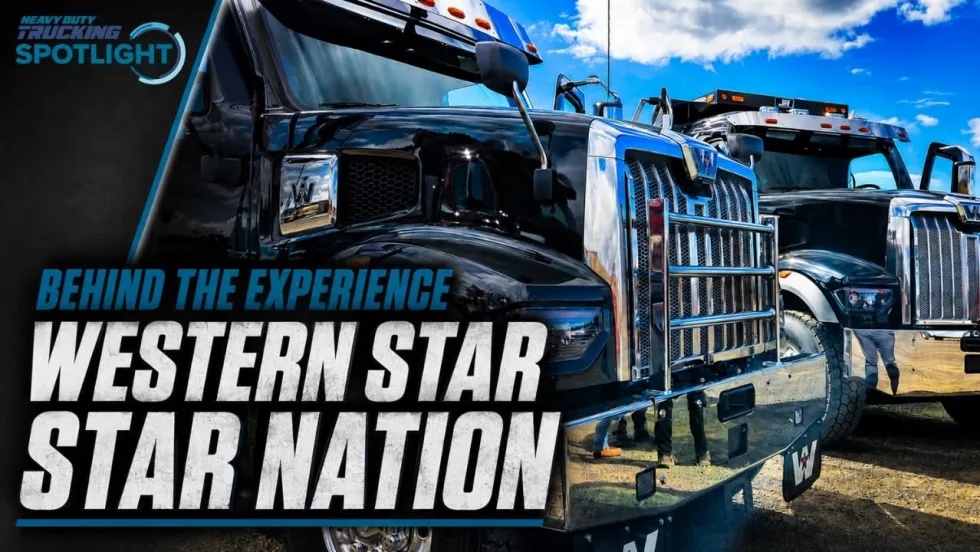
Drivers Put Western Star Trucks to the Test at Star Nation Experience
Watch to get an inside look at the Western Star trucks, technology, and community behind the Star Nation Experience 2026!
Read More →