




Overall, the index remains at levels associated with an expanding economy and a relatively confident consumer.
Consumer Confidence Drops, Service Sector Rebounding
UPDATED -- Economic Watch: Consumers are not feeling quite as rosy about the U.S. economy, while a separate report shows a rebound in economic conditions for the U.S. services sector.

Evan Lockridge・Former Business Contributing Editor
3 min to read
UPDATED -- Consumers are not feeling quite as rosy about the U.S. economy, while a separate report shows a rebound in economic conditions for the U.S. services sector.
The Consumer Confidence Index from the private research group The Conference Board declined this month to a reading of 90.9 following a June increase to 99.8. This latest reading is the lowest level since last September.
“Consumers continue to assess current conditions favorably, but their short-term expectations deteriorated this month,” said Lynn Franco, director of economic indicators at The Conference Board. “A less optimistic outlook for the labor market, and perhaps the uncertainty and volatility in financial markets prompted by the situation in Greece and China, appears to have shaken consumers’ confidence.”
She said overall, the index remains at levels associated with an expanding economy and a relatively confident consumer.
The survey's Present Situation Index decreased moderately from 110.3 last month to 107.4 in July, while the Expectations Index declined sharply to 79.9 from 92.8 in June.
Consumers’ saying business conditions are “good” dropped from 26.1% to 24.2%. However, those claiming business conditions are “bad” was virtually unchanged at 17.9%.
They were slightly less positive about the job market, with those stating jobs are “plentiful” dropping from 21.3% to 20.7%.
Consumers expecting business conditions to improve over the next six months fell from 17.9% to 14.7%, while those expecting business conditions to worsen rose slightly from 10.2% to 10.7%
Also their outlook for the labor market was less optimistic. The number anticipating more jobs in the months ahead fell from 17.1% to 13.1%, while those anticipating fewer jobs increased from 15.2% to 20%.
The proportion of consumers expecting growth in their incomes edged down from 17.6% to 17%, while the proportion expecting a decline increased slightly from 10.6% to 11.2%.
Services Growth
Meantime, a separate report from the financial information services provider Markit showed U.S. service providers said there was a slight rebound in business activity growth this month from the five-month low recorded in June.
This was highlighted by a rise in the seasonally adjusted Markit Flash U.S. Services PMI Business Activity Index from 54.8 to 55.2 in July. The latest index reading was well above the crucial 50 no-change mark, but still weaker than the average of 56.3 for 2015 to date.
Higher levels of service sector output have been recorded by the survey in each month since November 2013, with the latest upturn attributed to improving U.S. economic conditions and an associated increase in client spending, according to the report. July data indicated that overall growth of new work picked up to a three-month high, reflecting rising levels of business and consumer spending, alongside successful marketing strategies and new product launches.
The report follows one from a few days earlier showing a rebound in the U.S. manufacturing sector during July.
“Having indicated a worrying slowdown in June, the flash PMI surveys showed that both the services and manufacturing sectors enjoyed modestly stronger growth in July,” said Chris Williamson, chief economist at Markit. “This is by no means runaway growth, but the latest data point to a reasonably robust 2% annualized gross domestic product growth rate at the start of the third quarter, down from the 2.75% rate signaled by the surveys over the second quarter as a whole but still a solid rate of expansion.”
He said both surveys also suggest that first quarter GDP growth will be revised to show a stronger start to the year than previously thought, adding to the upbeat tone of the economy’s performance so far this year.
“The upturn in the survey data will help to reassure policymakers that the economy is continuing along a moderate growth path which will inevitably further fuel suspicions that the U.S. Federal Reserve will step up its rhetoric in terms of interest rates starting to rise later this year, upping the odds of a September [interest rate] hike,” Williamson said.
Update adds when consumer sentiment was last as low.
More Fleet Management

What the U.S.-Canada Trade War Means for Trucking
Escalating U.S.-Canada tariffs could disrupt cross-border freight, reduce truck volumes, raise costs, and create new uncertainty for carriers on both sides of the border.
Read More →
What Are Trucking’s Top Concerns for 2026?
The American Transportation Research Institute wants to know what's worrying trucking fleet managers, drivers, and other stakeholders in its annual Industry Issues survey.
Read More →
American Trucking Associations Looks for a New Leader
ATA President and CEO Chris Spear abruptly left his job at the association on August 21, at a pivotal time for the trucking industry.
Read More →
Public Wi-Fi Cybersecurity Risks: How Truck Drivers and Fleets Can Protect Their Data
Public Wi-Fi can expose truck drivers and fleets to credential theft, malware, and other cyber threats. Here’s how to reduce the risk on the road.
Read More →
For Nicky Cupp, Fleet Innovation Starts With Frustration
HDT Truck Fleet Innovator Nicky Cupp turns everyday pain points at Fraley & Schilling into opportunities for better technology and smarter processes.
Read More →
Adam Buttgenbach’s Approach to Electric Trucks: Start With Where They Fit
HDT Truck Fleet Innovator Adam Buttgenbach helped PepsiCo build one of North America’s largest EV fleets by focusing on where electric trucks make operational sense.
Read More →
Deen Albert: Let Automation Do the Math, People Make the Decisions
HDT Truck Fleet Innovator Deen Albert makes sure people are still at the heart of operations at Grand Island Express, even while adopting artificial intelligence tools. AI-assisted dispatch helped boost revenue 25% with the same number of trucks.
Read More →
Trimble’s New AI Agent Takes Aim at Fleet Back-Office Busywork
Arc Agent works across Trimble TMS products to automate repetitive tasks such as freight orders, maintenance, invoices, fuel costs and more.
Read More →
How HDT’s 2026 Truck Fleet Innovators Are Rethinking Fleet Operations
Meet five trucking leaders who are challenging assumptions, solving operational problems, and putting innovative ideas to work.
Read More →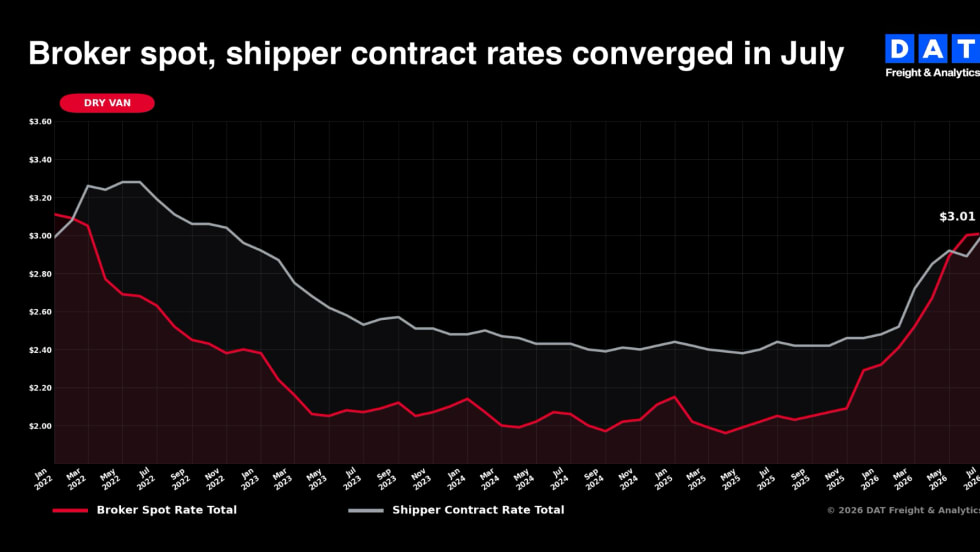
Tight Trucking Capacity Pushes Rates Higher Even as Freight Volumes Fall
“Spot rates moving ahead of contract rates have historically signaled a tightening market, but we haven’t seen a capacity-driven market quite like this one,” said DAT's Dean Croke.
Read More →