




Clean Energy Launches Renewable Natural Gas Fuel
Fleets that want to use an even "greener" alternative fuel than natural gas can now purchase renewable natural gas fuel, made from methane that comes from landfills, large farms and other waste streams, from Clean Energy.

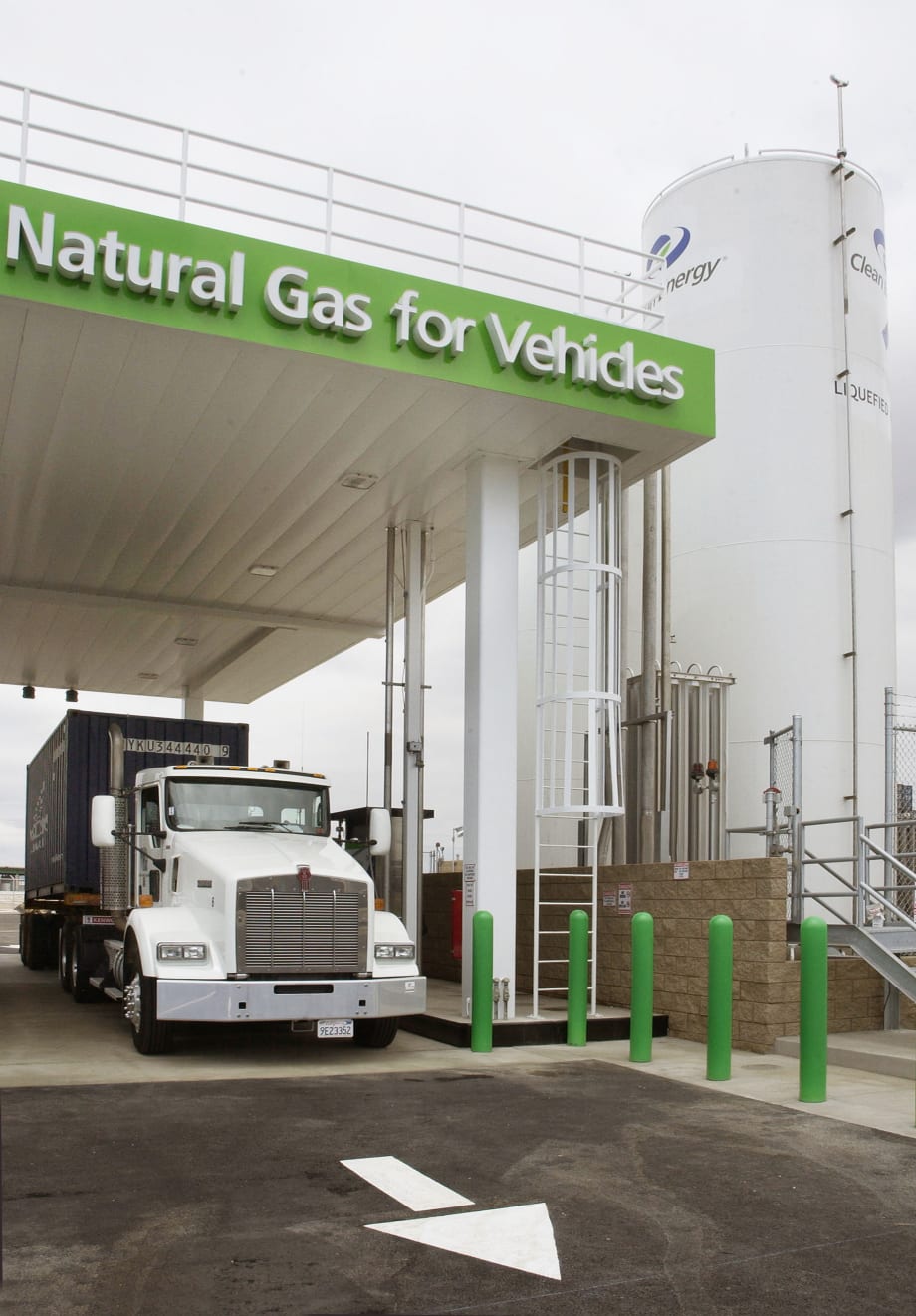
Clean Energy's Port of Long Beach facility is one location where fleets will be able to fill up with Redeem renewable natural gas.
Clean Energy's Port of Long Beach facility is one location where fleets will be able to fill up with Redeem renewable natural gas.
Fleets that want to use an even "greener" alternative fuel than natural gas can now purchase renewable natural gas fuel, made from methane that comes from landfills, large farms and other waste streams, from Clean Energy.
Clean Energy says it's the first company to commercially distribute a renewable natural gas vehicle fuel, which it is branding Redeem. It is available in CNG or LNG form.
Redeem by Clean Energy is a renewable natural gas vehicle fuel, often referred to as biomethane. It is derived from biogenic methane or biogas, which is methane generated by the decomposition of organic waste in landfills or farms. As a greenhouse gas believed to contribute to climate change, biomethane is 26 times worse than carbon dioxide when released into the atmosphere. So capture and combustion of this methane, which might otherwise have migrated to atmosphere, can actually result in a negative carbon footprint.
According to California Air Resource Board estimates, Redeem enables up to a 90% reduction in carbon emissions when displacing diesel or gasoline. In comparison, regular natural gas is around 25% to 28% cleaner, Clean Energy spokesman Patric Rayburn told HDT.
To make renewable natural gas, methane gas is collected from organic waste sources, such as landfills and farms. During the conversion process, impurities are removed. Then the biomethane enters the same fuel pipeline as regular natural gas. Because the two are molecularly the same, they mix just fine and there is no difference in how they work in vehicles.
So fleets purchasing Redeem may not actually get the same biomethane that's being produced several states away, It works a little like a carbon credits program, where the fleet buying Redeem is getting credit for the overall carbon reduction in the pipeline. Rayburn explains that the Environmental Protection Agency requires the company to account for every gallon of renewable natural gas created and consumed.
Redeem is produced from renewable natural gas production facilities owned and operated by Clean Energy. It currently has two, one in Michigan and one in Texas, and another one in the works in Tennessee. Biomethane is also procured from third-party producers and distributed as Redeem to Clean Energy customers. "So there are different sources we can draw on," Rayburn says.

Several refuse companies have been using landfill methane to produce natural gas to fuel their own trucks, such as Waste Management at its facility in Altamont, Calif., and municipal governments in DeKalb County, Ga., and other areas.
Currently, Clean Energy is offering Redeem through the majority of its public CNG and LNG stations in California, more than 40 locations, including the one at the Port of Long Beach. Redeem is available in other parts of the country by contract to Clean Energy fleet vehicle customers.
At launch, it will be offered at the same price as conventional natural gas, according to Rayburn, who also noted that "conventional natural gas is cheap and abundant and still the majority of our business." The price of Redeem may at some point go up, but Rayburn said the price will still be cheaper than gasoline or diesel.
However, especially in California, with its new emphasis on low-carbon fuel that takes into account the entire fuel supply pathway from wells to wheels, the renewable natural gas has benefits. Ultra low sulfur diesel scores 97; conventional CNG scores about 70; while Redeem's carbon score is only about 13 to 30, Rayburn says.
“Our goal is to produce and distribute 15 million gallons of Redeem in our first year which can make significant progress towards achieving California’s climate change goals and prove that this is a viable, cleaner and abundant alternative fuel source for our future," said Andrew J. Littlefair, president and CEO of Clean Energy.
More info: www.redeembycleanenergy.com
Related stories:
DeKalb County in Georgia is converting landfill gas to CNG to run its fleet
More Fuel Smarts

How Volvo Updated Its D13 for EPA 2027 [Watch]
Volvo’s updated D13 promises lower emissions without sacrificing performance or fuel economy. Take a closer look at what changed inside the engine in this HDT Spotlight video.
Read More →
Diesel Price Spike Shortens Payback for Natural Gas Trucks, Report Says
Energy Vision estimates fleets could recover the higher purchase price of an RNG-fueled Class 8 tractor in 1.3 to 2.8 years under current fuel-price scenarios.
Read More →
Calstart Becomes Catalyst Mobility, Reflecting Broader Focus
Calstart is now Catalyst Mobility, reflecting the nonprofit’s growing national role in clean transportation, including zero-emission trucks, infrastructure and incentive programs.
Read More →

Record Diesel Prices Squeeze Trucking Fleets
Average U.S. diesel prices have climbed to nearly $6 a gallon, surpassing the 2022 record as tight refinery capacity and Middle East disruptions keep fuel costs elevated.
Read More →
How Fuel Delivery Shapes Engine Performance
Fuel delivery depends on more than what happens at the injector. For fleet, maintenance and technical professionals, looking at the full path from pump to injector can provide useful context for understanding engine performance.
Read More →
East Coast Port Launches $45M Electric Truck Push
The Port Authority of New York and New Jersey announced millions in incentives for zero-emission drayage trucks, yard tractors, and new charging hubs near the port.
Read More →
California Bill Could Shed Light on Electric Truck Prices
Why do battery-electric Class 8 trucks remain so expensive? A California bill headed to Gov. Gavin Newsom would give fleets and state agencies more visibility into what manufacturers charge.
Read More →
Detroit Opens Orders for EPA 2027 Engines
Detroit isn’t starting from scratch to meet EPA 2027 diesel emissions standards. Its Gen 6 DD13 and DD15 engines keep much of today’s platform while updating the fuel and aftertreatment systems.
Read More →
Zero-Emission Truck Corridor Planned for West Coast
California, Oregon, Washington, British Columbia and Baja California are coordinating plans for truck charging and hydrogen fueling from Canada to Mexico.
Read More →
A Closer Look at Kenworth’s Electric T880E Vocational Truck [Video]
Learn more about Kenworth's T880E battery-electric vocational truck at the Paccar Technical Center, including its range, applications, upfitting considerations, and PTO options, in this HDT Spotlight video.
Read More →