




DeKalb County in Georgia is converting landfill gas to CNG to run its fleet
The old saying goes, "When life gives you lemons, make lemonade." Life, or in this case, a landfill, gave DeKalb County, Ga., methane gas - so the Sanitation Department decided to make vehicle fuel. In 2009, DeKalb County, located just east of Atlanta, was experiencing the same economic frustrations and high fuel prices as the rest of the country
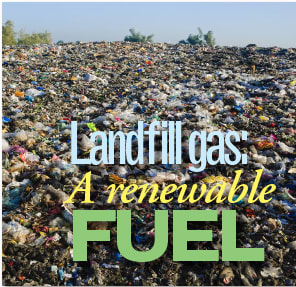
The old saying goes, "When life gives you lemons, make lemonade." Life, or in this case, a landfill, gave DeKalb County, Ga., methane gas - so the Sanitation Department decided to make vehicle fuel.
In 2009, DeKalb County, located just east of Atlanta, was experiencing the same economic frustrations and high fuel prices as the rest of the country.
Burrell Ellis, CEO of DeKalb County, challenged his department heads to come up with green, sustainable and innovative initiatives.
Billy Malone, assistant director of the DeKalb County Sanitation Department, took up the challenge.
After seeing gasoline and diesel fuel costs for his fleet of 306 vehicles increase by $2 million in one year, he decided to look seriously at alternative fuel options.
"We started looking at our methane gas, and looking for a way to fuel our trucks with our landfill gas reserves," Malone says.
Landfills produce gases as a result of chemical reactions and of microbes acting upon the waste as it breaks down. The gas is mostly methane and carbon dioxide. Both are greenhouse gases believed to contribute to global warming, so capturing these gases and using them for fuel is environmentally friendly. In fact, methane from a municipal solid waste landfill is a 90% reduction in GHG emissions compared to gasoline or diesel, Malone explains.
The county had been converting a portion of its landfill gas to produce electricity since 2006, but it had additional reserves and needed to find ways to use it. In 2006 the county had looked at converting it to transportation fuel, but at the time, diesel prices were still fairly low, and there wasn't a proven natural gas engine that would power a solid waste vehicle. The county put the idea on the shelf.
By the time county officials dusted the idea off in 2009, Cummins had come out with the 8.9-liter ISL G natural gas engine, which was being used in garbage trucks by companies such as Waste Management, Allied Waste and Veolia for their solid waste vehicles.
"Finally in 2009, the engine technology was there for us to explore this option," Malone says. "It was obvious that we had gas reserves, and we needed to figure out how to power our vehicles with our own renewable source of natural gas."
Turning waste into fuel
Malone traveled all over the country looking at how other landfills were converting gases to transportation fuel.
To be used as fuel, landfill gas must be converted to high-Btu gas by reducing its carbon dioxide, nitrogen, and oxygen content. Malone found a technology feasible for the county's needs from ARC Technologies in Pennsylvania.
Decomposing waste begins producing methane and carbon dioxide three to five years after it is disposed of in a metropolitan solid waste landfill, and will continue to produce the gas for 30 years after a landfill is closed.
DeKalb County's landfill is active, taking in about 2,000 tons of garbage a day. Around 150 landfill gas extraction wells are installed inside the landfill pipe and collect the gases in the ground with a small vacuum. The landfill gases eventually go through the process of being made into transportation fuel. DeKalb's Renewable Fuels Facility was designed, built and operated by Energy Systems Group.
To pay for it, DeKalb County submitted an application and was awarded a $ 15 million Clean Cities Petroleum Reduction grant from the Department of Energy. To make the application more competitive, Malone brought in private companies such as Coca-Cola, UPS and Marriott, all of which had experience with natural gas and alternative-fueled vehicles, to be included in the grant award.
DeKalb County now is running 40 alternative fuel vehicles, and hopes to replace the rest of its solid waste vehicles with CNG as they are scheduled to be replaced.
Fuel for all
The grant also included the money to build six new public fast-fill CNG fueling stations. "In 2009, we only had one CNG fueling station in the whole state of Georgia, and it was near the [Atlanta] airport," Malone says. "We added six more with this grant, with four being designated to be built in DeKalb County."
The DeKalb County landfill gases are producing 2.1 million diesel-gallon equivalents of natural gas each year, and the county's fleet uses 1.5 million gallons. The county owns one station, which was designed, built and operated by Winters Environmental Co. It sells the remaining natural gas as transportation fuel for the other CNG fueling stations.
"What we have discovered is that approximately one-third of the landfill gas in any MSW landfill will power all your vehicles, leaving two-thirds that can do something else beneficial," Malone says.
Malone has become a proponent of tapping into this underutilized reserve of landfill gas to make transportation fuel.
"There are 525 landfills in North America, including Canada, that produce between 500 to 1,000 SCFM [standard cubic feet per minute] of landfill gas, which haven't figured out anything beneficial to do with that gas," Malone says. "If all of these landfills were to make transportation fuel, that would produce 1 billion gallons of CNG a year."
Many companies, sanitation departments and representatives from 14 other countries have come to the DeKalb County Sanitation facility to learn about what the county is doing.
"It's not just the environmental part of this that everyone is very interested in, it's also the economical part," Malone says. "Because the county has a renewable resource for producing natural gas, we established a public fuel price of $2.10 per gasoline gallon equivalent or GGE. Since the county owns the reserve and has a fixed cost to produce and pump the fuel, the price will stay stable for at least five years if not longer. We won't be subject to all of the inflationary ups and downs of diesel and gasoline costs."
DeKalb County's Department of Sanitation has won four awards for its landfill gas-to-CNG project, including the recent 2012 NGV Achievement Award from NGVAmerica.
More Fuel Smarts

How Volvo Updated Its D13 for EPA 2027 [Watch]
Volvo’s updated D13 promises lower emissions without sacrificing performance or fuel economy. Take a closer look at what changed inside the engine in this HDT Spotlight video.
Read More →
Diesel Price Spike Shortens Payback for Natural Gas Trucks, Report Says
Energy Vision estimates fleets could recover the higher purchase price of an RNG-fueled Class 8 tractor in 1.3 to 2.8 years under current fuel-price scenarios.
Read More →
Calstart Becomes Catalyst Mobility, Reflecting Broader Focus
Calstart is now Catalyst Mobility, reflecting the nonprofit’s growing national role in clean transportation, including zero-emission trucks, infrastructure and incentive programs.
Read More →

Record Diesel Prices Squeeze Trucking Fleets
Average U.S. diesel prices have climbed to nearly $6 a gallon, surpassing the 2022 record as tight refinery capacity and Middle East disruptions keep fuel costs elevated.
Read More →
How Fuel Delivery Shapes Engine Performance
Fuel delivery depends on more than what happens at the injector. For fleet, maintenance and technical professionals, looking at the full path from pump to injector can provide useful context for understanding engine performance.
Read More →
East Coast Port Launches $45M Electric Truck Push
The Port Authority of New York and New Jersey announced millions in incentives for zero-emission drayage trucks, yard tractors, and new charging hubs near the port.
Read More →
California Bill Could Shed Light on Electric Truck Prices
Why do battery-electric Class 8 trucks remain so expensive? A California bill headed to Gov. Gavin Newsom would give fleets and state agencies more visibility into what manufacturers charge.
Read More →
Detroit Opens Orders for EPA 2027 Engines
Detroit isn’t starting from scratch to meet EPA 2027 diesel emissions standards. Its Gen 6 DD13 and DD15 engines keep much of today’s platform while updating the fuel and aftertreatment systems.
Read More →
Zero-Emission Truck Corridor Planned for West Coast
California, Oregon, Washington, British Columbia and Baja California are coordinating plans for truck charging and hydrogen fueling from Canada to Mexico.
Read More →
A Closer Look at Kenworth’s Electric T880E Vocational Truck [Video]
Learn more about Kenworth's T880E battery-electric vocational truck at the Paccar Technical Center, including its range, applications, upfitting considerations, and PTO options, in this HDT Spotlight video.
Read More →