




Civil Engineers: Families Will Suffer if Infrastructure Crumbles
The nation's deteriorating surface transportation infrastructure will cost the American economy more than 870,000 jobs, and suppress the growth of the country's Gross Domestic Product by $3.1 trillion by 2020, according to a new report released by the American Society of Civil Engineers
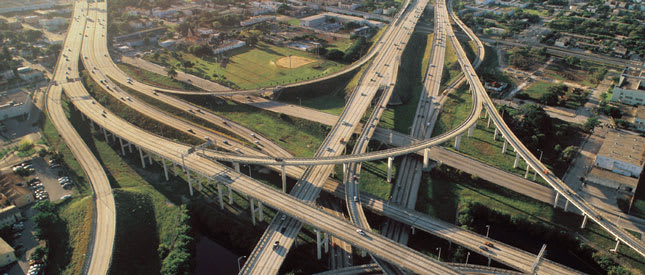
The nation's deteriorating surface transportation infrastructure will cost the American economy more than 870,000 jobs, and suppress the growth of the country's Gross Domestic Product by $3.1 trillion by 2020, according to a new report released by the American Society of Civil Engineers.
The report, conducted by the Economic Development Research Group of Boston, showed that in 2010, deficiencies in America's roads, bridges, and transit systems cost American households and businesses more than $129 billion, including approximately $97 billion in vehicle operating costs, $32 billion in delays in travel time, $1.2 billion in safety costs, and $590 million in environmental costs.
If investments in surface transportation infrastructure are not made soon, those costs are expected to grow exponentially. Within 10 years, U.S. businesses would pay an added $430 billion in transportation costs, household incomes would fall by more than $7,000, and U.S. exports will fall by $28 billion.
"Clearly, failing to invest in our roads, bridges and transit systems has a dramatic negative impact on America's economy," said Kathy J. Caldwell, president of ASCE. "This report is a wake-up call for policymakers because it shows that investing in infrastructure contributes to creating jobs, while failing to do so hurts main street America."
A lack of investment in transportation infrastructure would inflict a double whammy on American families who would see their household incomes fall by $60 a month by 2020, while having to spend $30 per month more for goods. The total cost to families would exact about $10,600 per family between now and 2020, equal to $1,060 per year on household budgets.
Modest investment needed
The report estimates that in order to bring the nation's surface transportation infrastructure up to tolerable levels, policymakers would need to invest approximately $1.7 trillion between now and 2020 in the nation's highways and transit systems. The U.S. is currently on track to spend a portion of that, $877 billion, during the same timeframe.
The infrastructure funding gap equals $846 billion over 9 years or $94 billion per year.
According to the report, small investments in infrastructure, equal to about 60 percent of what Americans spend on fast food each year, would:
* Protect 1.1 million jobs;
* Save Americans 180 million hours in travel time each year;
* Deliver an average of $1,060 to each family;
* Protect $10,000 in GDP for every man, woman and child in the U.S.
The report, the first of four scheduled by ASCE, examined the country's surface transportation infrastructure. Future reports will examine the state of the nation's infrastructure as it relates to water and wastewater delivery and treatment, energy transmission, and airports and marine ports.
More Drivers

Platform Science Adds Dispatch and Safety Tools
Four additions to PS Fleet help fleets monitor loads, manage driver coaching, share truck locations and adjust video system settings.
Read More →
When Language Stops the Truck: The Return of ELP Out-of-Service Orders
English language proficiency rules for commercial drivers aren’t new, but renewed out-of-service enforcement has raised the stakes. Here’s what carriers need to know before a driver reaches a roadside inspection.
Read More →
Samsara Launches Custom AI Agent Builder
Agent Studio lets fleets create AI tools for hours-of-service monitoring, reporting and driver support, including agents that communicate by phone.
Read More →
Trucker Path Expands Reserved Parking Network
Trucker Path has added close to 6,000 more truck parking spaces to its Trucker Path Reserved Parking Network with the addition of Safe Truck Parking.
Read More →
EEOC Sues Texas Trucking Company Over Driver Age Limits
The agency says Trancasa USA rejected applicants over 65 and applied tougher driving-record standards to those over 60.
Read More →
Nussbaum, Roehl Announce Second Driver Pay Increase This Year
This year has seen a swath of major truck driver pay increases as freight capacity has tightened.
Read More →
From One Generation to the Next: How Mentorship Builds Safer Truck Drivers
After three decades in trucking, Harold Perry shares what he's learned about driver safety, mentorship, and helping the next generation build confidence behind the wheel.
Read More →
Truck Drivers Need More Than Another Alert
Fleets have more visibility into truck health, safety events, and driver activity than ever. The next challenge is turning all that information into useful guidance for the person who has to decide what to do next.
Read More →
FMCSA Removes 110 Truck Driver Training Schools from Certified ELDT List
Federal regulators also are targeting more than 160 additional training providers and launching a nationwide audit of third-party CDL skills testers as part of a broader crackdown on trucking fraud.
Read More →
Hours of Service Pilot Programs: FMCSA Readies for 2027 Rollout
Two pilot programs could eventually reshape hours-of-service rules, giving truck drivers options to pause their 14-hour clock or use longer split sleeper rest periods.
Read More →