




Chain Law Season Has Begun in Colorado
The chain law season has officially begun in Colorado, which means that all commercial vehicles traveling on I-70 between milepost 133 (Edwards exit) and milepost 259 (Morrison exit) must carry sufficient chains to be in compliance with the Colorado chain law
The chain law season has officially begun in Colorado, which means that all commercial vehicles traveling on I-70 between milepost 133 (Edwards exit) and milepost 259 (Morrison exit) must carry sufficient chains to be in compliance with the Colorado chain law.
The law requires commercial vehicles to carry chains on this segment of I-70 from Sept. 1 to May 31 each year.
"Inclement weather can hit our higher elevations at any time during the next nine months and it is critical that commercial vehicle drivers are prepared for the worst," said CDOT Region Transportation Director Tony DeVito. "There are a significant number of chain stations across the corridor to help drivers comply with the chain law when it is put into effect. CDOT will also continue services such as the heavy tow and chain assistance programs to help clear disabled vehicles and keep traffic flowing."
The Chain Law
Colorado's chain law applies to all state, federal and Interstate highways and was initially enacted in 1996. It includes two levels for commercial vehicles.
Chain Law Level 1 requires all single drive axle combination commercial vehicles* to chain up. All four drive wheels must be chained; cables are not permitted as an alternate traction device. All other commercial vehicles must have snow tires or chains. Level 1 may be implemented any time there is snow covering any part of the traveled portion of pavement on an ascending grade.
Chain Law Level 2 requires all commercial vehicles to chain up. Auto transports must comply to the extent possible without causing damage to hydraulic lines. Buses must chain two drive wheels to comply. Level 2 may be implemented any time there is snow covering the entire traveled portion of pavement on an ascending grade or when driving conditions dictate this level is necessary to protect safety and minimize closures.
To help ensure that commercial vehicles have a safe location to chain up or down, CDOT has 21 chain stations along the I-70 west corridor, many of which have been improved over the last several years and provide more parking and a safer environment.
The 11 chain stations on eastbound I-70 are located at mileposts 178, 183, 184 (shoulder), 187 (shoulder), 195, 203 (scenic area), 205, 219, 228, 241 and 251. The 10 chain stations on westbound I-70 are located at mileposts 263, 260, 254 (Buffalo Overlook), 228, 223, 221, 219, 213 (brake check area) and 197 (scenic area) and 179.
In addition, CDOT has a few chain stations on the I-70 east corridor at mileposts 289 and 343 eastbound and milepost 358 westbound. There is also a chain station located on northbound I-25 at milepost 157 (near Monument) and southbound at milepost 172 (near Larkspur).
An alternate traction control device known as the AutoSock has also been approved in Colorado. Commercial vehicles (both single and double axle) exceeding 26,000 pounds GVW will have the option of using AutoSock rather than chains. This traction control device is a fabric that slips over a vehicle's outer driving wheels, providing extra traction on snowy and icy roads. It can be installed over the tire in less time than traditional chains.
Keeping Highways Clear
To help keep the highways clear and traffic moving, CDOT will continue its heavy tow program for the fourth year in a row. The program is designed to promptly clear disabled heavy trucks from the highway in order to open the road more quickly. CDOT recently issued a request for proposal (RFP) and will soon be under contract with a towing association to provide three heavy wreckers at strategic locations along I-70 this winter, allowing commercial vehicles to be moved quickly from traffic lanes to a safe location.
"We have seen great results from this program over the years," said CDOT Traffic Engineer Bernie Guevara. "In fact, in a typical year, over 180 commercial vehicles are relocated, over 200 lanes are cleared and the average clearance time is approximately 25 minutes. This greatly helps reduce traffic impacts and the economic impacts of those traffic delays."
Heavy tow coverage will begin around Thanksgiving and will continue each weekend through late March or early April 2011.
CDOT also offers one other program to help commercial vehicle driver through inclement weather. The chain assistance program allows vendors to assist commercial vehicles when the Colorado Chain Law is in effect by selling and installing chains and other approved equipment. Vendors will be on site at chain stations where the chain law is currently in effect. The service will be available starting around Thanksgiving, depending on weather.
Commercial vehicle drivers can sign up for e-mail and text message alerts on chain laws and other road condition information. To receive updates visit www.coloradodot.info and click on the logo in the upper right-hand corner below the search function and choose the appropriate items under "Chain Law" as well as any other traveler information you may be interested in.
Road condition and chain law information may also be found at www.cotrip.org or by calling 511.
More Drivers

Truck Drivers Need More Than Another Alert
Fleets have more visibility into truck health, safety events, and driver activity than ever. The next challenge is turning all that information into useful guidance for the person who has to decide what to do next.
Read More →
FMCSA Removes 110 Truck Driver Training Schools from Certified ELDT List
Federal regulators also are targeting more than 160 additional training providers and launching a nationwide audit of third-party CDL skills testers as part of a broader crackdown on trucking fraud.
Read More →
Hours of Service Pilot Programs: FMCSA Readies for 2027 Rollout
Two pilot programs could eventually reshape hours-of-service rules, giving truck drivers options to pause their 14-hour clock or use longer split sleeper rest periods.
Read More →
Medical Cards, English Proficiency Reshape Roadcheck Violations
Medical-card violations jumped to the top of the driver out-of-service list during CVSA’s 2026 International Roadcheck, while English-language proficiency violations appeared among the leading violations for the first time.
Read More →
Driver Trust Can Make or Break the Success of Fleet Safety Technology
New Teletrac Navman research suggests that onboarding, transparency about driver data, and positive feedback can play a significant role in how commercial drivers respond to safety and coaching technology.
Read More →
EEOC Sues KLLM Over Alleged Sex Discrimination in Driver Training
KLLM is facing a federal sex-discrimination lawsuit over policies the EEOC alleges put female truck driver trainees at a disadvantage.
Read More →
FMCSA Moves to Codify English Language Requirements for Commercial Drivers
By changing regulations on English-language proficiency requirements for commercial drivers, rather than relying on a guidance memo, the FMCSA said future administrations won't be able to walk back the Trump administration's stricter enforcement with just a memo.
Read More →
Drivers Put Western Star Trucks to the Test at Star Nation Experience
Watch to get an inside look at the Western Star trucks, technology, and community behind the Star Nation Experience 2026!
Read More →
Trump Administration Looks to Put More Veterans Behind the Wheel
The Freedom Haulers program pulls together existing and expanded programs at several federal agencies to recruit veterans to drive commercial heavy-duty trucks and cut the red tape for them to get a CDL, training, and employment.
Read More →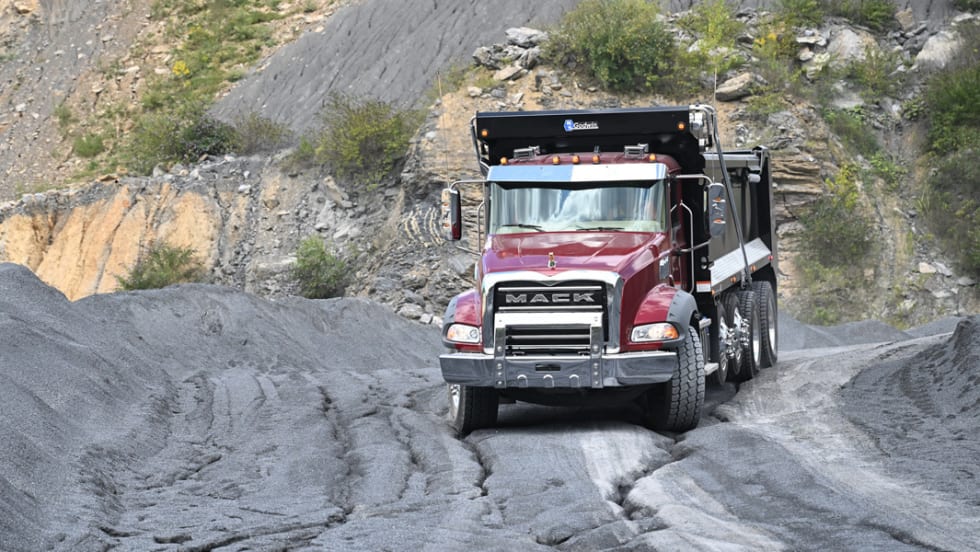
Putting Mack’s Command Steer to the Test
A test drive of Mack’s Command Steer active steering system evaluates how it can make truck driving easier and less tiring.
Read More →