




CBO Marks 3 Paths to Smarter Highway Funding
Contending that “spending on highways does not correspond very well with how the roads are used and valued,” the Congressional Budget Office has issued a new report that looks at three ways lawmakers could “make highway spending more productive."

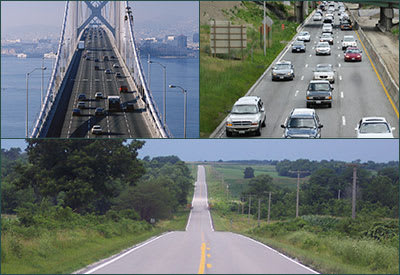
Image: Congressional Budget Office

Image: Congressional Budget Office
Contending that “spending on highways does not correspond very well with how the roads are used and valued,” the Congressional Budget Office has issued a new report that looks at three ways lawmakers could “make highway spending more productive."
These are: More often charging drivers directly for their use of roads (including congestion pricing); allocating funds to states on a per-project benefits vs. costs basis; or linking federal funding more closely to performance measures, such as traffic congestion or road quality.
Noting that CBO presented the three funding paths as “approaches” and did not endorse any of them, the American Association of State Highway and Transportation Officials said in an AASHTO Journal post that the budget office’s discussion of the pros and cons of each “suggested the most upside and least downside could come from allocating more federal funds through a benefit-cost analysis of how the money would be spent.”
In the report, CBO advises that policymakers could “boost the impact of highway spending on the economy by allocating more funding to programs or projects with economic benefits that were expected to outweigh the costs— rather than allocating funds on a geographic basis or providing fixed allocations to states.”
CBO writes that, per analysis by the Federal Highway Administration, “such capital spending would produce greater benefits relative to costs than it has recently if it was reoriented toward these purposes: Expanding urban Interstates, making major repairs of urban highways (both Interstates and other roads), and repairing bridges, particularly those in the Interstate System in rural areas and those not part of that system in urban areas.”
Lawmakers could also provide more funding to programs that use benefit-cost analysis in selecting projects, including several existing programs, such as the Transportation Investment Generating Economic Recovery (TIGER) grant program, notes the budget office. “Another approach would be to promote the use of benefit-cost analysis at the state and local levels, where most of the spending decisions are made.”
However, CBO adds that “programs that assess the benefits and costs of highway spending will improve the economy’s performance only to the extent that the calculations adequately capture the benefits to the economy, and benefit-cost analysis on a project-by-project basis may miss important ways in which distinct components of the highway network affect one another. Also, some such policies would reduce state and local governments’ discretion in how they use their federal funds.”
As to linking spending more closely to performance measures, CBO contends that “the cost, speed, and reliability of travel can largely be captured through measures of congestion, road quality, bridge quality, and safety. Formulas for federal highway spending in each state could be tied more closely to realizing set standards based on those measures.”
While the budget office thinks relying on such performance measures “could be easier than using pricing or benefit-cost analysis because performance information can be readily obtained,” it adds that “performance measures alone do not provide any information about the relative costs of improving the performance of the system in different places or the valuation of the benefits that would accrue from those improvements. As a result, using performance measures to guide spending does not always yield the same results as benefit-cost analyses.”
When it comes to “drivers,” CBO says that charging them specifically for using roads would allow “highly valued transportation” to move more quickly and more reliably. Such pricing could take the form of per-mile charges (also known as vehicle-miles traveled, or VMT, charges), congestion pricing or tolls on Interstates. “Besides affecting travel, such pricing would raise revenues, which could be used to make repairs, expand capacity, or substantially renovate the Interstate System or could be put to other purposes. It would also provide important information for spending decisions by showing how much drivers value the use of a road, helping to set priorities for future improvements.”
CBO points out that with more use of driver-pricing over time, spending could shift from less to more productive highway uses. “Such shifts could boost economic growth— or they could allow spending to be reduced without affecting overall growth.
However, CBO also sees several downsides to this approach. “Charging drivers to use roads could raise concerns about privacy, depending on the methods used. The approach could also place a proportionately greater burden on low-income households. Moreover, highway users could resent paying tolls if they believed that they had already paid for the roads through gasoline taxes over the years. And technological hurdles may exist: Although the costs of charging drivers are declining with improvements in technology, the costs remain higher than those for collecting revenues through the gasoline tax.”
In the report, CBO notes that “two factors have combined to highlight the importance of making each dollar spent on federal highway programs more productive economically.” First, the federal government’s main source of funds for highways— fuel tax revenues dedicated to the Highway Trust Fund— has been insufficient to pay for federal spending on highways. The budget office says that since 2008, Congress has transferred some $143 billion from other sources to maintain a positive balance in the trust fund. Second, adjusted for changes in construction costs, “total federal spending on highways buys less now than at any time since the early 1990s.”
More Fleet Management
Public Wi-Fi Cybersecurity Risks: How Truck Drivers and Fleets Can Protect Their Data
Public Wi-Fi can expose truck drivers and fleets to credential theft, malware, and other cyber threats. Here’s how to reduce the risk on the road.
Read More →
For Nicky Cupp, Fleet Innovation Starts With Frustration
HDT Truck Fleet Innovator Nicky Cupp turns everyday pain points at Fraley & Schilling into opportunities for better technology and smarter processes.
Read More →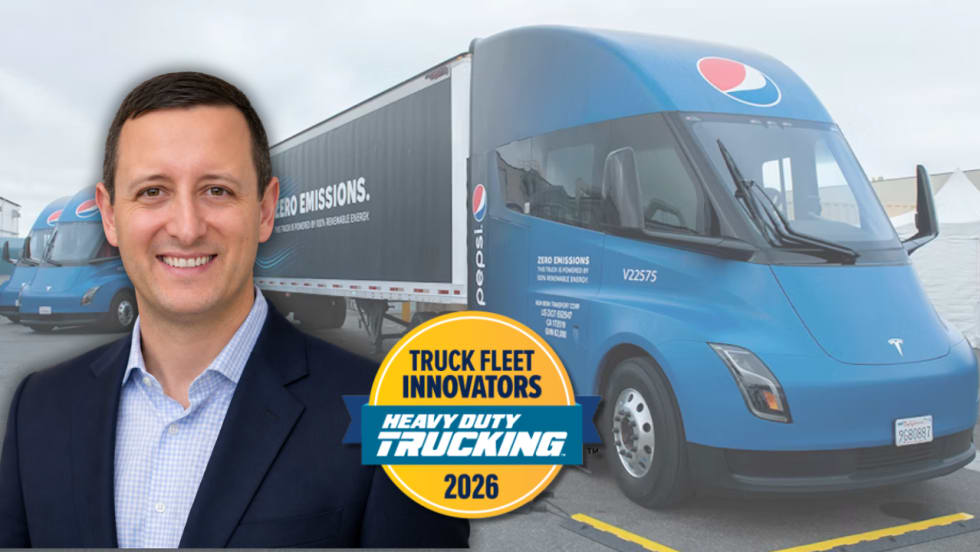
Adam Buttgenbach’s Approach to Electric Trucks: Start With Where They Fit
HDT Truck Fleet Innovator Adam Buttgenbach helped PepsiCo build one of North America’s largest EV fleets by focusing on where electric trucks make operational sense.
Read More →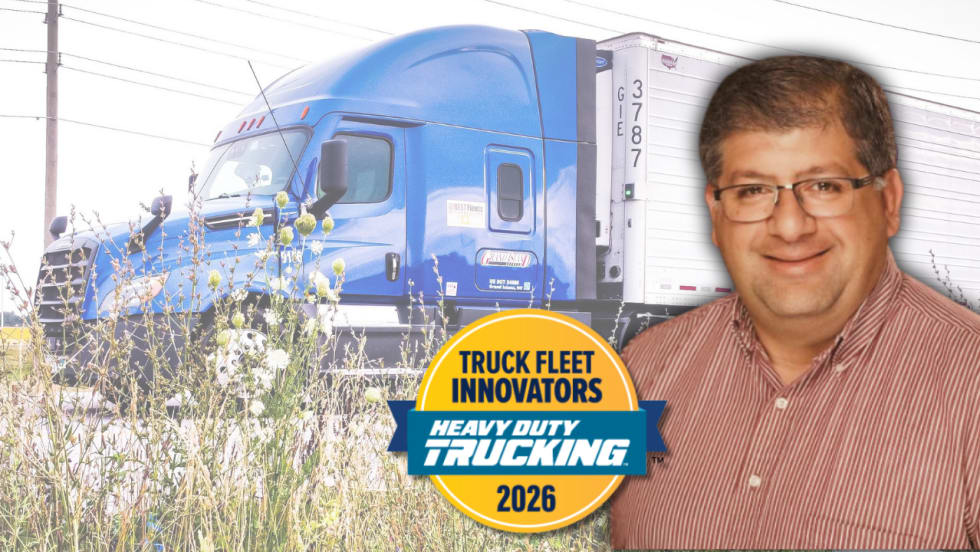
Deen Albert: Let Automation Do the Math, People Make the Decisions
HDT Truck Fleet Innovator Deen Albert makes sure people are still at the heart of operations at Grand Island Express, even while adopting artificial intelligence tools. AI-assisted dispatch helped boost revenue 25% with the same number of trucks.
Read More →
Trimble’s New AI Agent Takes Aim at Fleet Back-Office Busywork
Arc Agent works across Trimble TMS products to automate repetitive tasks such as freight orders, maintenance, invoices, fuel costs and more.
Read More →
How HDT’s 2026 Truck Fleet Innovators Are Rethinking Fleet Operations
Meet five trucking leaders who are challenging assumptions, solving operational problems, and putting innovative ideas to work.
Read More →
Tight Trucking Capacity Pushes Rates Higher Even as Freight Volumes Fall
“Spot rates moving ahead of contract rates have historically signaled a tightening market, but we haven’t seen a capacity-driven market quite like this one,” said DAT's Dean Croke.
Read More →
Import Cargo’s Early Peak Season is Winding Down
There was an early start to peak season this year at the nation's gateway ports, as retailers brought in merchandise ahead of tariff changes in late July and responded to other supply chain uncertainties,
Read More →
Fewer Cargo Thefts, Bigger Losses: Criminals Target Higher-Value Loads
CargoNet says organized theft rings are stealing fewer shipments but choosing more valuable freight, including metals and technology, resulting in record losses.
Read More →
How Innovative Trucking Leaders Turn Change Into an Advantage
As the pace of change accelerates in trucking, the fleets that adapt best have more than the latest technology. They have cultures that embrace improvement.
Read More →