




Carriers Reluctant to Add Capacity as Shippers Seek Longer Term Options
Carriers are still reluctant to add capacity, according to results from Transport Capital Partners' Second Quarter 2012 Business Expectations Survey. Seventy-one percent of carriers expect to add little or no capacity, a slight increase from last quarter's 65%
Carriers are still reluctant to add capacity, according to results from Transport Capital Partners' Second Quarter 2012 Business Expectations Survey. Seventy-one percent of carriers expect to add little or no capacity, a slight increase from last quarter's 65%.
"Carriers' confidence in the economy to generate volumes and compensatory rates is dropping as the industry is certainly bearing the burdens of more federal regulation, scarce drivers, an anticipated jump in 2013 taxes, and hearing more pundits ponder recession," says Richard Mikes, a TCP partner specializing in finance and economics.
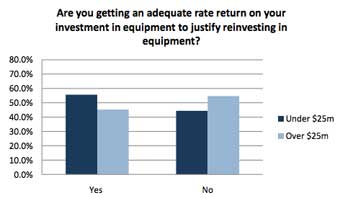
More carriers believe that they are not getting an adequate return on investment for their equipment compared to this time a year ago: 51% versus 47% in May of 2011. The high percentage of carriers that find the ROIs to be lacking might explain why carriers are unwilling to add capacity.
"This, coupled with adverse driver dynamics - i.e. shifting demographics, CSA putting pressure on drivers, raising turnover and pay rising, - is similar to causing carriers to die by a thousand cuts," stresses Lana Batts, TCP partner with long-term industry experience in driver issues.
With uncertainty about capacity, carriers are unsure as to how shippers will respond. Thirty-five percent of smaller carriers think that shippers will do nothing, compared to only 14% of the larger carriers. Larger carriers think that it is more likely that shippers will use long-term dedicated services (29.3%) or favor larger fleets (26.7%).
"Dedicated is clearly a win-win option for shippers and carriers over the long run, and dedicated is rising in popularity with our carrier contacts, as well as looking for acquisitions," Mikes says. "It allows the current low interests rates to be locked-in, gives shippers a custom and controlled base line capacity not subject to the spot market over five to seven years and removes the uncertainty of steady volumes to justify an investment."
More Fleet Management

What the U.S.-Canada Trade War Means for Trucking
Escalating U.S.-Canada tariffs could disrupt cross-border freight, reduce truck volumes, raise costs, and create new uncertainty for carriers on both sides of the border.
Read More →
What Are Trucking’s Top Concerns for 2026?
The American Transportation Research Institute wants to know what's worrying trucking fleet managers, drivers, and other stakeholders in its annual Industry Issues survey.
Read More →
American Trucking Associations Looks for a New Leader
ATA President and CEO Chris Spear abruptly left his job at the association on August 21, at a pivotal time for the trucking industry.
Read More →
Public Wi-Fi Cybersecurity Risks: How Truck Drivers and Fleets Can Protect Their Data
Public Wi-Fi can expose truck drivers and fleets to credential theft, malware, and other cyber threats. Here’s how to reduce the risk on the road.
Read More →
For Nicky Cupp, Fleet Innovation Starts With Frustration
HDT Truck Fleet Innovator Nicky Cupp turns everyday pain points at Fraley & Schilling into opportunities for better technology and smarter processes.
Read More →
Adam Buttgenbach’s Approach to Electric Trucks: Start With Where They Fit
HDT Truck Fleet Innovator Adam Buttgenbach helped PepsiCo build one of North America’s largest EV fleets by focusing on where electric trucks make operational sense.
Read More →
Deen Albert: Let Automation Do the Math, People Make the Decisions
HDT Truck Fleet Innovator Deen Albert makes sure people are still at the heart of operations at Grand Island Express, even while adopting artificial intelligence tools. AI-assisted dispatch helped boost revenue 25% with the same number of trucks.
Read More →
Trimble’s New AI Agent Takes Aim at Fleet Back-Office Busywork
Arc Agent works across Trimble TMS products to automate repetitive tasks such as freight orders, maintenance, invoices, fuel costs and more.
Read More →
How HDT’s 2026 Truck Fleet Innovators Are Rethinking Fleet Operations
Meet five trucking leaders who are challenging assumptions, solving operational problems, and putting innovative ideas to work.
Read More →
Tight Trucking Capacity Pushes Rates Higher Even as Freight Volumes Fall
“Spot rates moving ahead of contract rates have historically signaled a tightening market, but we haven’t seen a capacity-driven market quite like this one,” said DAT's Dean Croke.
Read More →