




California Awards Fleets $9M for Zero-Emission Trucks
The State of California is awarding $9 million to the San Bernardino Associated Governments (SANBAG) for 27 zero-emission trucks to replace diesel-powered heavy-duty tractors used in rail yards and large-scale freight distribution centers.
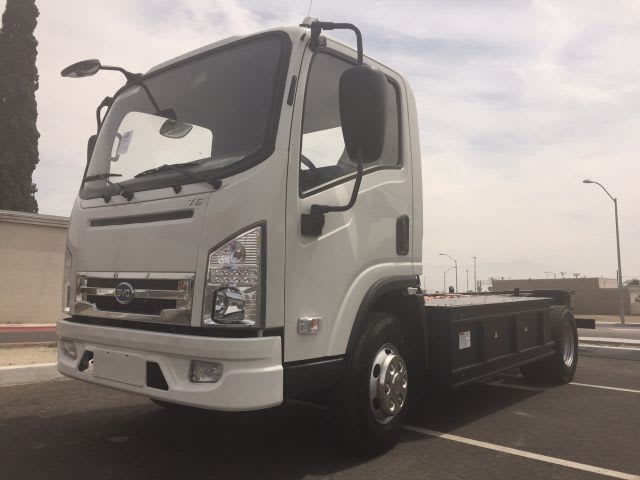
One of the 16 Class 5 medium-duty service trucks. (PHOTO: BYD)
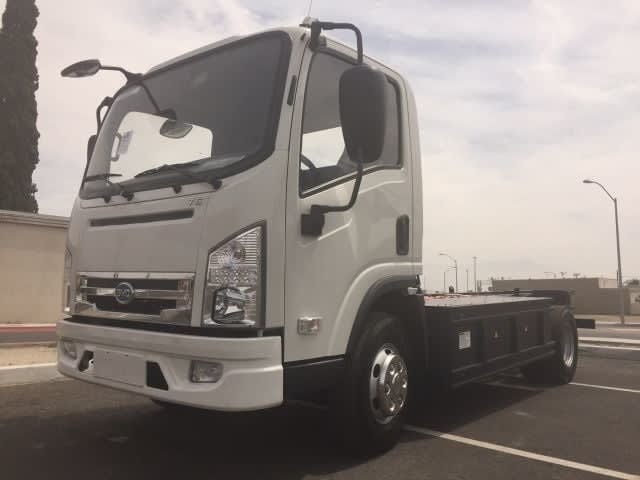
One of the 16 Class 5 medium-duty service trucks. (PHOTO: BYD)
The State of California is awarding $9 million to the San Bernardino Associated Governments (SANBAG) for 27 zero-emission trucks to replace diesel-powered heavy-duty tractors used in rail yards and large-scale freight distribution centers. The funds come from the California Climate Investments (CCI) program and are designed to reduce greenhouse gases (GHG), while also reducing petroleum usage and improving air quality in residential communities.
The project will place these electric-powered trucks in disadvantaged communities within the California cities of San Bernardino, Commerce, and Fontana. The goal is to develop zero-emission vehicles that could replace existing diesel trucks accelerating the commercialization of these and other examples of heavy-duty advanced, zero-emission technologies in California.
“This project will help put the very cleanest trucks to work where they are heavily utilized, moving cargo within freight yards,” California Air Resources Board (CARB) Chair Mary D. Nichols said. “Cleaner trucks mean cleaner air for all Californians, but especially for those who live in neighborhoods next to these freight transfer facilities.”
Over the two-year duration of the demonstration project, the full complement of the zero-emission trucks will result in overall reductions of 3,500 tons of carbon dioxide, 3,250 pounds of nitrogen oxide, and 170 pounds of diesel soot (PM10).
“In a county like ours, it is imperative that we continue to seek the resources needed to fund innovative and effective solutions to the air quality challenges we face,” SANBAG President Ryan McEachron said. “This grant represents just one part of a continued effort by SANBAG to enhance the quality of life for our residents.”
“At BNSF, we believe it is good business and good citizenship to minimize our impact on the environment and to contribute to the long-term sustainability of our business. We welcome the opportunity to participate in this demonstration project to test the viability and effectiveness of using zero-emission trucks inside two of our Southern California facilities,” said Mark Kirschinger, BNSF general manager operations California Division.
The two types of trucks funded by this grant are the most common at every major freight location in the U.S., providing a model for truck electrification that could be scaled to any facility. The project will demonstrate 23 battery-electric 80,000-pound (GVWR) Class 8 yard trucks, also known as “yard goats,” which are used to move heavy freight containers short distances within freight yards, warehouses, distribution centers and port terminals. The project also demonstrates four 16,100-pound (GVWR) Class 5 medium-duty service trucks. BNSF Railway will operate the trucks at two of its intermodal rail yards in the cities of San Bernardino and Commerce; Daylight Transport will also operate the trucks at its new truck freight transfer facility in Fontana.
The grant is part of a larger statewide investment in low-carbon transportation projects that are pivotal to meeting California’s ambitious goals to reduce greenhouse gas emissions, improve air quality and reduce petroleum dependency by accelerating the development and deployment of advanced vehicle technologies. The project also supports the Governor’s Executive Order (B-32-15) to “upgrade freight vehicles and infrastructure” utilizing “technologies, energy sources, and fuels that enable greater transportation efficiency while reducing community and environmental impacts.” The draft California Sustainable Freight Action Plan, required under the Executive Order, was made public last month.
The fully electric trucks will be designed and manufactured by BYD in Lancaster, Calif.
“BYD’s Class 8 heavy-duty yard truck and Class 5 medium-duty service truck technology will prove that vehicle electrification is a solution that can be applied today to a variety of needs — not just passenger vehicles,” said Stella Li, president of BYD Motors. “BYD is proud to collaborate on this project and showcase our best-in-market electric battery technology. By deploying these trucks in 24/7 operations, this project will prove that truck electrification can be adopted at any major freight location and scaled for any facility and business need in the U.S.”
More Fuel Smarts

How Volvo Updated Its D13 for EPA 2027 [Watch]
Volvo’s updated D13 promises lower emissions without sacrificing performance or fuel economy. Take a closer look at what changed inside the engine in this HDT Spotlight video.
Read More →
Diesel Price Spike Shortens Payback for Natural Gas Trucks, Report Says
Energy Vision estimates fleets could recover the higher purchase price of an RNG-fueled Class 8 tractor in 1.3 to 2.8 years under current fuel-price scenarios.
Read More →
Calstart Becomes Catalyst Mobility, Reflecting Broader Focus
Calstart is now Catalyst Mobility, reflecting the nonprofit’s growing national role in clean transportation, including zero-emission trucks, infrastructure and incentive programs.
Read More →

Record Diesel Prices Squeeze Trucking Fleets
Average U.S. diesel prices have climbed to nearly $6 a gallon, surpassing the 2022 record as tight refinery capacity and Middle East disruptions keep fuel costs elevated.
Read More →
How Fuel Delivery Shapes Engine Performance
Fuel delivery depends on more than what happens at the injector. For fleet, maintenance and technical professionals, looking at the full path from pump to injector can provide useful context for understanding engine performance.
Read More →
East Coast Port Launches $45M Electric Truck Push
The Port Authority of New York and New Jersey announced millions in incentives for zero-emission drayage trucks, yard tractors, and new charging hubs near the port.
Read More →
California Bill Could Shed Light on Electric Truck Prices
Why do battery-electric Class 8 trucks remain so expensive? A California bill headed to Gov. Gavin Newsom would give fleets and state agencies more visibility into what manufacturers charge.
Read More →
Detroit Opens Orders for EPA 2027 Engines
Detroit isn’t starting from scratch to meet EPA 2027 diesel emissions standards. Its Gen 6 DD13 and DD15 engines keep much of today’s platform while updating the fuel and aftertreatment systems.
Read More →
Zero-Emission Truck Corridor Planned for West Coast
California, Oregon, Washington, British Columbia and Baja California are coordinating plans for truck charging and hydrogen fueling from Canada to Mexico.
Read More →
A Closer Look at Kenworth’s Electric T880E Vocational Truck [Video]
Learn more about Kenworth's T880E battery-electric vocational truck at the Paccar Technical Center, including its range, applications, upfitting considerations, and PTO options, in this HDT Spotlight video.
Read More →