




Bush Signs $286.45 Billion Highway Bill
It took 11 extensions of the old law and almost two years of haggling, but Congress passed a $286.45 billion highway reauthorization bill Wednesday, increasing road and safety funding by 30% over the current program.
It took 11 extensions of the old law and almost two years of haggling, but Congress passed a $286.45 billion highway reauthorization bill Wednesday, increasing road and safety funding by 30% over the current program.
President Bush signed the Safe, Accountable, Flexible, Efficient Transportation Equity Act: a Legacy for Users (SAFETEA-LU) at a Caterpillar factory in Montgomery, Ill. – in the district of House Speaker Denny Hastert.
As is the case with all highway laws, the signing of this bill was accompanied by a chorus of complaints that it includes excessive “pork” – funding for projects based more on political influence than highway needs. Example: Alaska, one of the least populated states, was near the top in projects at $941 million, including $231 million for a bridge named after Don Young, the chairman of the House Transportation and Infrastructure Committee and the chief architect of the bill.
The bill cleared the House by a 412-8 vote, and the Senate by 91-4.
As important as the money are the policy decisions in the new law, which is effective until 2009.
Of particular note to trucking, the law does not include the Federal Motor Carrier Safety Administration’s bid to codify the hours of service rules as they are now written.
The intent of this amendment was to negate a court finding that the rules are illegal, and bring some stability to the current situation. In the wake of last year’s court finding, the agency has been working on a rewrite that is due by the end of September. The rewrite, which is now being reviewed by the White House Office of Management and Budget, may make the rules more restrictive, or it may set the stage for more legal action. In either case, the industry is in for more uncertainty.
Congress also rejected another major change: to allow drivers to take their two-hour breaks off the clock, in effect extending the 14-hour day to 16 hours.
The law contains an exemption from the hours of service rules for utility drivers, and it preserves the 24-hour restart provision for ground water well drillers. It also amends the agricultural driver exemption by changing the definition of agricultural commodities to include livestock, food, feed, fiber and other farm products. And movie production drivers working within 100 air miles of the production site may use the old hours of service rules.
The trucking industry achieved success on a major long-term project – repeal of the Single State Registration System. The law replaces SSRS with a Unified Carrier Register in which costs will be spread among all carriers, including private fleets and brokers who do not currently pay for the SSRS. It will likely take a couple of years to get the new system up and running.
Another success was provision of funding for enforcement of traffic laws on car drivers who are endangering trucks.
The law makes several important changes in the requirement that hazardous materials drivers clear a security background check.
The requirement will be extended to Mexican and Canadian hazmat drivers. The check must be “similar” to the U.S. check. The Transportation Security Administration has six months come up with the program, and may extend that deadline for up to another six months.
Until now, employers have been out of the information loop – it has been up to the driver to inform his employer that he has not cleared his background check. Under the new law, however, the Transportation Security Administration must develop a process for notifying employers if a driver fails to clear the check.
Congress also wants to eliminate redundant background checks. The law orders TSA to pass a rule under which a driver who clears the hazmat background check automatically clears any other federal transportation check that is equivalent or less stringent.
Industry complaints about bottlenecks in the fingerprinting process evidently got congressional attention. TSA must report on the “adequacy” of fingerprinting locations and other issues. A proposal to scale back the list of hazmats covered by the requirement to only the most dangerous commodities did not make it into the bill, although it may surface in other legislation later this year.
Congress rejected a provision that would require truckload shippers to pay a surcharge for rising fuel costs. The surcharge provision, which was supported by the Owner-Operator Independent Drivers Assn., faced stiff opposition from shippers and large carriers that already have surcharge programs in place.
The truck leasing industry scored a major victory with a provision that prohibits states from imposing liability without fault. The so-called “vicarious liability” practice in some states has been giving leasing companies fits for years.
“This has been a long-fought battle,” said Peter Vroom, president and CEO of the Truck Renting and Leasing Assn. “With the interstate nature of our national rental and lease fleets, federal action was essential to create uniformity that no state can impose vicarious liability. This is simply common sense tort reform.”
More Drivers
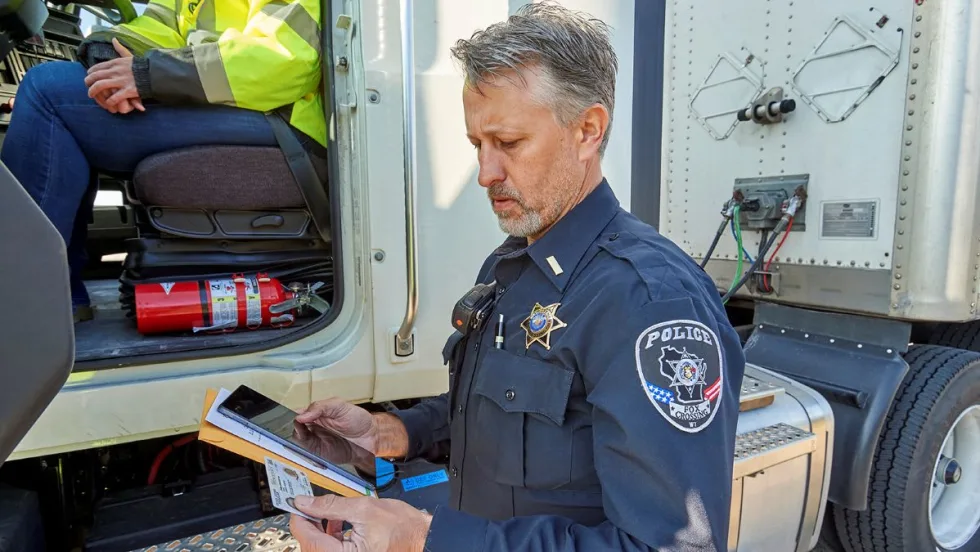
When Language Stops the Truck: The Return of ELP Out-of-Service Orders
English language proficiency rules for commercial drivers aren’t new, but renewed out-of-service enforcement has raised the stakes. Here’s what carriers need to know before a driver reaches a roadside inspection.
Read More →
Samsara Launches Custom AI Agent Builder
Agent Studio lets fleets create AI tools for hours-of-service monitoring, reporting and driver support, including agents that communicate by phone.
Read More →
Trucker Path Expands Reserved Parking Network
Trucker Path has added close to 6,000 more truck parking spaces to its Trucker Path Reserved Parking Network with the addition of Safe Truck Parking.
Read More →
EEOC Sues Texas Trucking Company Over Driver Age Limits
The agency says Trancasa USA rejected applicants over 65 and applied tougher driving-record standards to those over 60.
Read More →
Nussbaum, Roehl Announce Second Driver Pay Increase This Year
This year has seen a swath of major truck driver pay increases as freight capacity has tightened.
Read More →
From One Generation to the Next: How Mentorship Builds Safer Truck Drivers
After three decades in trucking, Harold Perry shares what he's learned about driver safety, mentorship, and helping the next generation build confidence behind the wheel.
Read More →
Truck Drivers Need More Than Another Alert
Fleets have more visibility into truck health, safety events, and driver activity than ever. The next challenge is turning all that information into useful guidance for the person who has to decide what to do next.
Read More →
FMCSA Removes 110 Truck Driver Training Schools from Certified ELDT List
Federal regulators also are targeting more than 160 additional training providers and launching a nationwide audit of third-party CDL skills testers as part of a broader crackdown on trucking fraud.
Read More →
Hours of Service Pilot Programs: FMCSA Readies for 2027 Rollout
Two pilot programs could eventually reshape hours-of-service rules, giving truck drivers options to pause their 14-hour clock or use longer split sleeper rest periods.
Read More →
Medical Cards, English Proficiency Reshape Roadcheck Violations
Medical-card violations jumped to the top of the driver out-of-service list during CVSA’s 2026 International Roadcheck, while English-language proficiency violations appeared among the leading violations for the first time.
Read More →