




Bill to Lower Interstate Truck Driving Age Reintroduced
The reintroduced DRIVE-Safe ACT would allow drivers as young as 18 years old to drive heavy-duty trucks in interstate commerce.

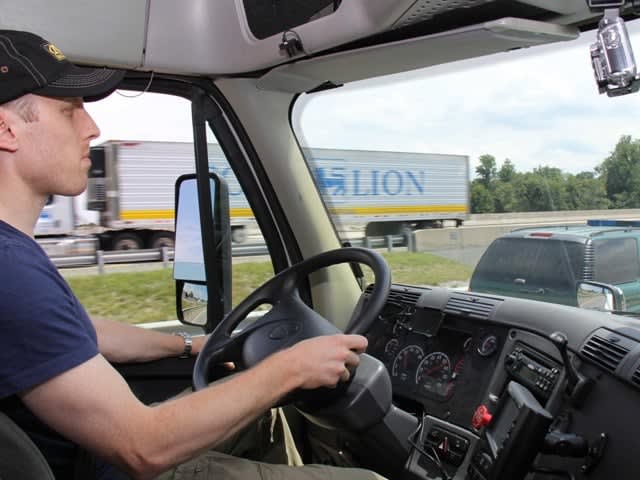
The reintroduced DRIVE-Safe ACT would allow drivers as young as 18 years old to drive heavy-duty trucks in interstate commerce.
Photo via Virginia Tech
A bipartisan effort has reintroduced legislation in the U.S. Senate and House of Representatives that would allow drivers as young as 18 years old to drive heavy- duty trucks in interstate commerce.
The Developing Responsible Individuals for a Vibrant Economy (DRIVE-Safe) Act had to be intrdouced again as a new Congress is now in session. The bill is aimed at changing federal law to allow commercial driver’s license holders under the age of 21 to move goods from state to state. While all 48 states in the continental U.S. currently allow 18-year-olds to obtain a CDL, until federal law is changed, they cannot drive a truck across state lines until they are 21.
If passed, the DRIVE-Safe Act would establish an apprenticeship program for CDL holders under the age of 21 for training these young drivers under institute rigorous safety standards and with performance benchmarks. More importantly, it would effectively lower the driving age for interstate commerce.
The main concern about allowing younger drivers to participate in long-haul driving is safety, which is why the bill includes several stipulations for drivers in the apprenticeship program. The drivers would have to complete at least 400 hours of on-duty time and 240 hours of driving time with an experienced driver in the cab. All trucks used for training in the program would have to be equipped with safety technology, including active braking collision mitigation systems, a video event-capture system, and a speed governor set at 65 miles per hour or below.
The American Trucking Associations once again put its support behind the DRIVE-Safe Act, with ATA President and CEO Chris Spear calling the bill “critically important to the American economy.” The trucking lobby sees lowering the truck driving age as a key component to addressing the shortage of new drivers. ATA is part of the DRIVE Safe Act Coalition along with over 40 other national trade associations and companies that support passage of the bill.
“The strong bipartisan, bicameral support behind this legislation demonstrates how real a threat the driver shortage presents to our nation’s economic security over the long-term – and how serious our lawmakers are about addressing it with common-sense solutions,” Spear said. “Given the broad coalition of interests backing this measure, there is growing understanding across the country that the impact of this issue reaches far beyond just trucking and commercial vehicles. It is a strain on the entire supply chain, from the manufacturers and producers on down to retail and the end consumer, who will see higher prices at the store.”
Not everyone wants to see a younger truck driver on the road. The last time the DRIVE-Safe Act was introduced, the Owner Operator Independent Driver Association and several safety adovcacy groups signed a letter opposing the bill. At the time, OOIDA Acting President Todd Spencer called it "irresponsible to put young drivers behind the wheel of a truck in order to avoid addressing the real problems of high turnover. The focus should instead be on fixing the staggering turnover rate with better pay and working conditions.” Spencer also said that the DRIVE-Safe Act and previous efforts to lower the driving age were a way to "keep driver churn going and keep wages as low as possible."
The reintroduced measure is co-sponsored by Senators Todd Young, (R-IN).; Jon Tester, (D-MT); Tom Cotton, (R-AR); Angus King, (I-ME); Jim Inhofe, (R-OK); Joe Manchin, (D-WV), and Jerry Moran, (R-KS); and Representatives Trey Hollingsworth, (R-IN); Jim Cooper, (D-TN); Henry Cuellar, (D-TX); Al Green, (D-TX), and Sheila Jackson Lee, (D-TX).
More Drivers

Truck Drivers Need More Than Another Alert
Fleets have more visibility into truck health, safety events, and driver activity than ever. The next challenge is turning all that information into useful guidance for the person who has to decide what to do next.
Read More →
FMCSA Removes 110 Truck Driver Training Schools from Certified ELDT List
Federal regulators also are targeting more than 160 additional training providers and launching a nationwide audit of third-party CDL skills testers as part of a broader crackdown on trucking fraud.
Read More →
Hours of Service Pilot Programs: FMCSA Readies for 2027 Rollout
Two pilot programs could eventually reshape hours-of-service rules, giving truck drivers options to pause their 14-hour clock or use longer split sleeper rest periods.
Read More →
Medical Cards, English Proficiency Reshape Roadcheck Violations
Medical-card violations jumped to the top of the driver out-of-service list during CVSA’s 2026 International Roadcheck, while English-language proficiency violations appeared among the leading violations for the first time.
Read More →
Driver Trust Can Make or Break the Success of Fleet Safety Technology
New Teletrac Navman research suggests that onboarding, transparency about driver data, and positive feedback can play a significant role in how commercial drivers respond to safety and coaching technology.
Read More →
EEOC Sues KLLM Over Alleged Sex Discrimination in Driver Training
KLLM is facing a federal sex-discrimination lawsuit over policies the EEOC alleges put female truck driver trainees at a disadvantage.
Read More →
FMCSA Moves to Codify English Language Requirements for Commercial Drivers
By changing regulations on English-language proficiency requirements for commercial drivers, rather than relying on a guidance memo, the FMCSA said future administrations won't be able to walk back the Trump administration's stricter enforcement with just a memo.
Read More →
Drivers Put Western Star Trucks to the Test at Star Nation Experience
Watch to get an inside look at the Western Star trucks, technology, and community behind the Star Nation Experience 2026!
Read More →
Trump Administration Looks to Put More Veterans Behind the Wheel
The Freedom Haulers program pulls together existing and expanded programs at several federal agencies to recruit veterans to drive commercial heavy-duty trucks and cut the red tape for them to get a CDL, training, and employment.
Read More →
Putting Mack’s Command Steer to the Test
A test drive of Mack’s Command Steer active steering system evaluates how it can make truck driving easier and less tiring.
Read More →