




Bill Aims to Strengthen Restart Suspension; Slams Brakes on Twin 33s
Congress is expected to further nail down the suspension of two restrictions placed on the 34-hour restart provision of the hours of service rules — and to bar the door to legalizing twin 33-foot trailers on highways nationwide.


U.S. Capitol Photo: David Cullen

U.S. Capitol Photo: David Cullen
Congress is expected to further nail down the suspension of two restrictions placed on the 34-hour restart provision of the hours of service rules — and to bar the door to legalizing twin 33-foot trailers on highways nationwide.
Both measures are contained within the 2,000-page omnibus spending package that leaders on Capitol Hill completed negotiating late on Dec. 15 to avoid a government shutdown.
Although the Democratic leaders of the House and Senate said they intend to thoroughly review the text before signing off on it, both chambers are expected to pass the bill by week’s end.
In late 2014, Congress ordered the Federal Motor Carrier Safety Administration to suspend enforcement of the provisions of the restart that required drivers to take two 1 a.m. to 5 a.m. periods as part of their 34-hour off-duty period and to wait 168 hours from the beginning of one restart period to the beginning of the next.
The suspension was to remain in effect until the Department of Transportation conducted a study of whether or not the more restrictive provisions provided “a greater net benefit for the operational, safety, health and fatigue impacts” and submitted a final report to the House and Senate appropriations committees. That report is still being awaited on Capitol Hill.
Strong Language
Apparently, what the omnibus bill brings to bear is language that retains the suspension of the 34-hour restart provisions.
The text reads that the rule suspension can only be lifted if the Department of Transportation can establish that commercial motor vehicle drivers who operated under the restart provisions in effect between July 1, 2013 (when the new more restrictive restart provisions went into effect), and the day before the restart provisions were suspended "demonstrated statistically significant improvement in all outcomes related to safety, operator fatigue, driver health and longevity, and work schedules, in comparison to commercial motor vehicle drivers who operated under the restart provisions in effect on June 30, 2013.”
The American Trucking Associations characterized the wording in the omnibus bill as “retaining” the restart suspension. “We’re pleased that Congress has seen fit to demand that FMCSA ‘show its work’ before imposing unnecessary and onerous restrictions on the use of the 34-hour restart by commercial drivers,” said ATA President and CEO Bill Graves.
“FMCSA foisted these restrictions on the industry without doing a proper investigation into how they might impact trucking safety and truck drivers’ health and longevity, so it is completely appropriate for Congress to establish a safety and health standard,” he continued.
When FMCSA in 2013 required that drivers using a 34-hour restart to reset their weekly allotment of hours have two periods between 1 a.m. and 5 a.m. in their extended off-duty period and “artificially limited the use of those extended rests to once a week,” ATA said, it believed that “these restrictions would push more truck traffic into riskier daytime hours, thus increasing – not decreasing – the risk of truck-involved crashes.”
The trucking lobby said its contention was proved correct by the American Transportation Research Institute’s analysis of FMCSA crash data. ATA also said it holds that “FMCSA’s driver health and longevity theory had no basis in reality.”
“We greatly appreciate Congress’ attention into this important matter and their insistence that FMCSA properly vet and support the rules they promulgate,” noted Dave Osiecki, ATA executive vice president and chief of national advocacy.
Double Play
Allowing longer trailers caught fire back in the spring. In May, the House Appropriations Committee approved a transportation and housing spending bill that included a provision to allow 33-foot-long double trailers to operate on Interstate and other highways— regardless of state laws.
That triggered six months of legislative maneuvers and lobbying for and against the measure that even found some trucking groups on opposite sides of the debate.
On Nov. 11, the Senate approved a bipartisan motion that instructed Senate conferees to the highway bill to oppose the inclusion of the twin-33 measure. A week later the Senate stripped it out of their DOT funding bill.
The provision had remained in the House version of that bill, but the language authorizing twin 33-footers on any highway was stripped out of the omnibus spending bill before it was released by Congressional leaders.
The American Trucking Associations said it was “disappointed” that the omnibus bill doesn’t allow for what it termed a “modest increase in tandem trailer length.”
ATA Chairman Pat Thomas, senior vice president of state government affairs for UPS, said the truck lobby was “disheartened that Congress allowed itself to be cowed by the fearmongering tactics of anti-truck lobbyists.
“By removing language that would have allowed twin 33s on U.S. highways, Congress has passed up a huge opportunity to improve highway safety and trucking’s efficiency," he said.
The Coalition for Efficient & Responsible Trucking, a nonprofit organized by leading LTL carriers to lobby for twin 33s, also lamented the action taken.
CERT noted that Capitol Hill acted negatively despite the provision having received bipartisan support in a House Appropriations Committee vote and in a Senate Appropriations Committee vote and was “voted on and approved in bipartisan fashion” by the full House.
“It’s unfortunate and disappointing that political scare tactics won the day over sound policy,” said CERT spokesman Ed Patru. “In rejecting a modest extension in the length of twin trailers, Congress missed an opportunity to bring long-overdue efficiencies to freight trucking that would have produced tangible safety, economic and environmental benefits at a time when so many roads and bridges have fallen into disrepair after years of neglect.”
More Fleet Management
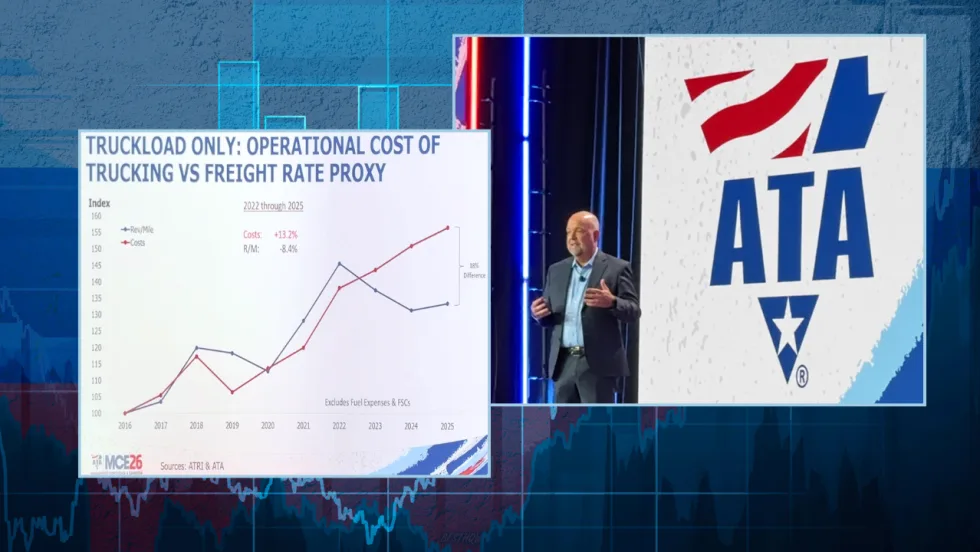
Why This Trucking Recovery Is Different
Freight demand remains sluggish, but rising costs and tougher enforcement have taken enough capacity out of the market to change the outlook for motor carriers.
Read More →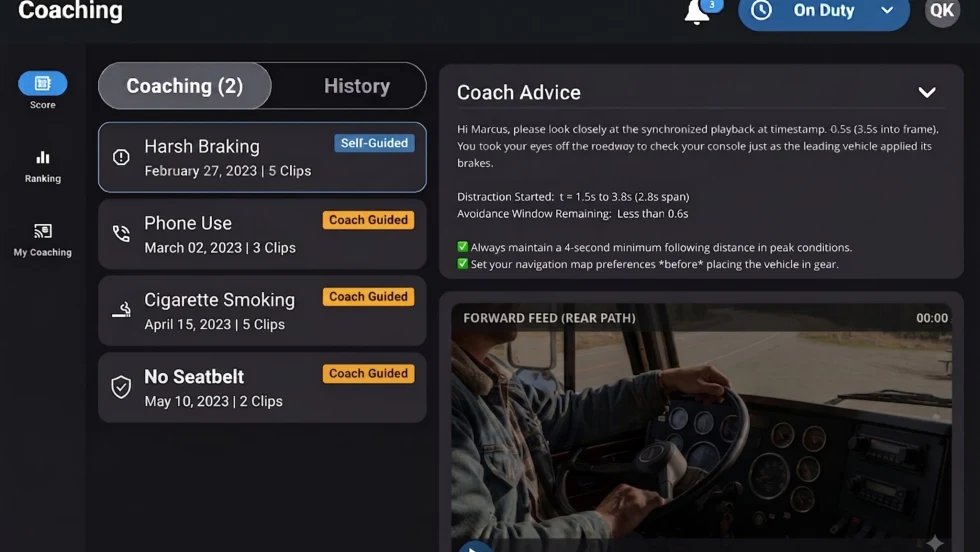
Platform Science Adds Dispatch and Safety Tools
Four additions to PS Fleet help fleets monitor loads, manage driver coaching, share truck locations and adjust video system settings.
Read More →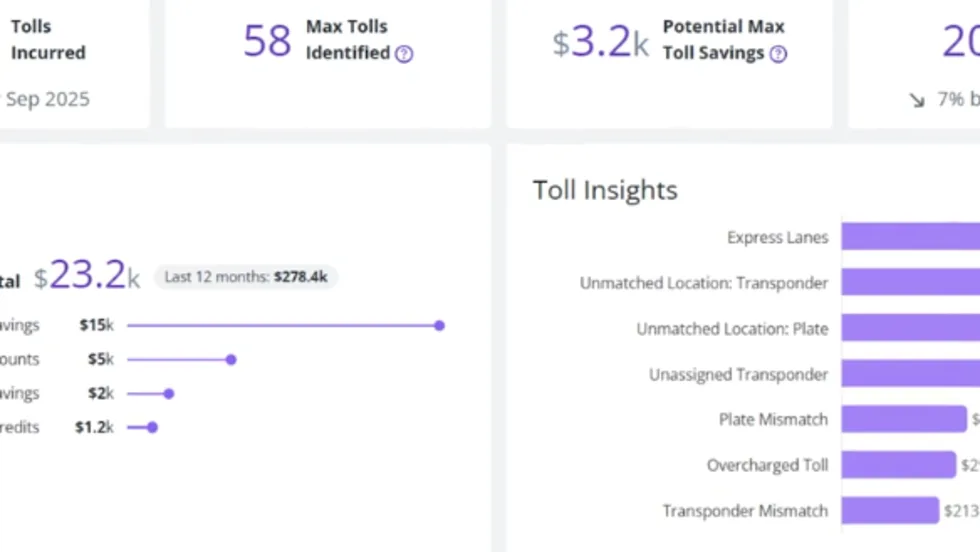
PrePass Intelligence Mines Fleet Bypass, Toll and Safety Data
PrePass Intelligence helps fleets measure bypass savings, flag potential toll overcharges, and spot suspicious transactions by combining data from separate systems.
Read More →
Motive Adds AI Agents for Fleet Operations
New tools automate follow-up on fleet data, from maintenance work orders to driver alerts, with two-way voice conversations planned for later this year.
Read More →
Can You Beat Our Trucking Trivia Challenge?
Test your truck knowledge with 19 trivia questions from Heavy Duty Trucking Exchange. Can you keep up with the fleet pros?
Read More →
BeyondTrucks Adds Rules Checks to Dispatch
New Compatibility Engine checks driver qualifications, equipment requirements and fleet policies before loads are dispatched.
Read More →
Diesel Prices Hijack Trucking’s Worry List
ATRI’s annual survey finds cautious optimism about freight, but diesel costs, litigation, and insurance continue to squeeze fleets. Drivers have different priorities on several issues.
Read More →
Nomination Deadline Extended for HDT Emerging Leaders
Just a few more days to nominate accomplished trucking fleet professionals under 40 who are making an impact and helping lead the industry forward for the HDT Emerging Leaders award. Deadline extended to October 20!
Read More →
What Will ATA’s New Leader Bring to Trucking's Table?
Incoming President and CEO Mark Colson’s record in Alabama offers clues about his priorities and approach following Chris Spear’s abrupt departure as the head of the American Trucking Associations.
Read More →
Volvo, Waabi Start Commercial Autonomous Operations in Texas
Volvo VNL Autonomous trucks, powered by the Waabi Driver, are hauling freight directly to third-party facilities for a customer in Texas.
Read More →