




Average Cargo Theft Loss Jumps 38.5% Despite Fewer Thefts
In the first quarter of 2014 a total of 206 full-truckload cargo theft incidents in the United States were recorded, according to a new report from logistics security services provider FreightWatch International.
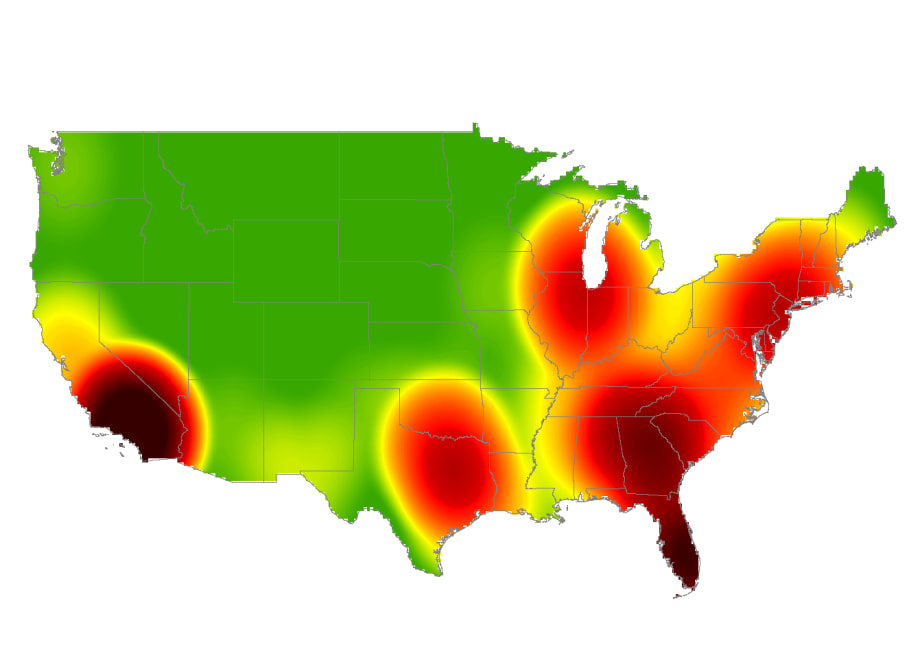
Cargo theft heat map, first quarter 2014. Credit: FreightWatch International
In the first quarter of 2014 a total of 206 full-truckload cargo theft incidents in the United States were recorded, according to a new report from logistics security services provider FreightWatch International.
The average loss value per was $207,982. Compared with the first quarter of 2013, this represent a 4.9% decrease in volume, but is a 38.5% increase in loss value, “indicating the continued persistence and increasing sophistication of organized cargo criminals,” the company said.
Food/drinks was again the product type most often stolen in the quarter, accounting for 21% of all incidents. Home/garden took the second place spot from typical runner-up, electronics, recording 15% of thefts, mainly consisting of appliances, furniture and home decor. The electronics industry experienced 13% of thefts, primarily of televisions and computer components.
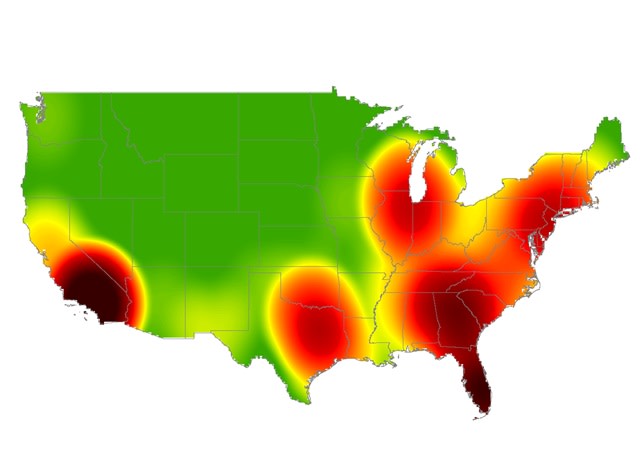
Cargo theft heat map, first quarter 2014.
FreightWatch International
While the average loss value across all incidents was $207,982, the average losses in specific product types varied widely. In this quarter, the clothing/shoes category had the highest loss value, at $943,699.
California once again claimed the top spot with 27% of the total thefts. Florida’s had 20% of all incidents, while Georgia supplanted Texas, which is normally in a battle for second place with Florida, with 11.2% of all thefts. Close behind, Texas logged 10.7% of the total. Illinois, sustaining the elevated numbers seen in 2013, placed fifth with 7.3% of all thefts. The top five states combined accounted for more than 76% of all national cargo thefts.
Unsecured parking, experienced 122 thefts during the first quarter, primarily at truck stops, was the location targeted most often by cargo thieves when a location was recorded.
Warehouse/distribution centers narrowly surpassed secured parking locations, with 12 thefts to secured parking’s 11 incidents.
Following usual trends, incidents involving theft of trailer/container, 176 in all, were most common during the first quarter, accounting for 85% of all thefts. Theft from trailer/container comprised 10 thefts in this quarter and was the second most prevalent theft type. Deceptive pickups, down from last year’s numbers, still came in third with nine incidents, a 57% decrease from the same quarter last year.
"Although there were many more reports of carriers with compromised identity than usual, indicating that this theft type is still on the rise, FreightWatch is committed to the integrity of our data and only records confirmed theft instances,” the company said.
The full report is on the FreightWatch International website.
More Fleet Management

Color Match Smarter: Tools That Restore & Perform
For fleet managers and collision repair professionals keeping heavy-duty trucks on the road, getting the color right the first time isn't just about appearance — it's about efficiency, turnaround time, and bottom-line results. Discover how today's digital color tools are transforming the repair process from guesswork to precision.
Read More →
FMCSA Pauses Biennial-Update Enforcement Amid Motus Transition
Carriers whose updates were due on or after June 1 have more time, while FMCSA works to stabilize its new registration system and warns of phishing sites impersonating its new carrier registration system, Motus.
Read More →
2026 Blueprint for Countering Smarter Supply Chain Theft
Cargo theft is no longer just the cost of doing business. It's a multi-billion-dollar criminal enterprise exploiting vulnerabilities across your fleet, drivers, and supply chain.
Read More →


How Telematics Improves Visibility, Control, and Performance in Refrigerated Fleets
Explore how telematics help refrigerated fleets improve visibility, uptime, efficiency, compliance, and cargo protection across connected cold chain operations.
Read More →
What the U.S.-Canada Trade War Means for Trucking
Escalating U.S.-Canada tariffs could disrupt cross-border freight, reduce truck volumes, raise costs, and create new uncertainty for carriers on both sides of the border.
Read More →
What Are Trucking’s Top Concerns for 2026?
The American Transportation Research Institute wants to know what's worrying trucking fleet managers, drivers, and other stakeholders in its annual Industry Issues survey.
Read More →
American Trucking Associations Looks for a New Leader
ATA President and CEO Chris Spear abruptly left his job at the association on August 21, at a pivotal time for the trucking industry.
Read More →
Public Wi-Fi Cybersecurity Risks: How Truck Drivers and Fleets Can Protect Their Data
Public Wi-Fi can expose truck drivers and fleets to credential theft, malware, and other cyber threats. Here’s how to reduce the risk on the road.
Read More →
For Nicky Cupp, Fleet Innovation Starts With Frustration
HDT Truck Fleet Innovator Nicky Cupp turns everyday pain points at Fraley & Schilling into opportunities for better technology and smarter processes.
Read More →
Adam Buttgenbach’s Approach to Electric Trucks: Start With Where They Fit
HDT Truck Fleet Innovator Adam Buttgenbach helped PepsiCo build one of North America’s largest EV fleets by focusing on where electric trucks make operational sense.
Read More →