




Attract, Grow, and Retain Young Heavy-Duty Truck Technicians
There are more young people interested in working on vehicle maintenance and repair than you might think. But how do you get those teenagers into the pipeline to become successful heavy-duty truck technicians?

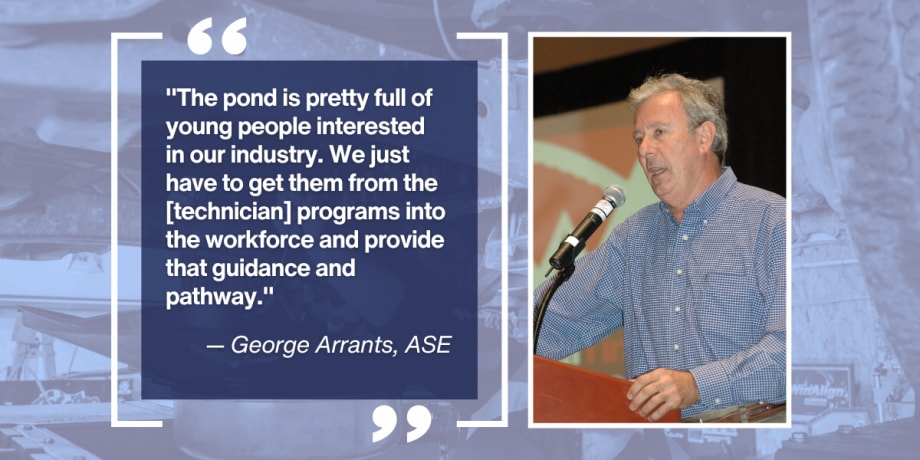
George Arrants of the ASE Education Foundation spoke at the TMC annual meeting about the young truck technician pipeline.
Image: HDT Graphic, Fleetio and Deborah Lockridge photos
There are more young people interested in working on vehicle maintenance and repair than you might think. But how do you get those teenagers into the pipeline to become successful heavy-duty truck technicians?
"Sixteen percent of high school automotive students want to work on trucks or heavy equipment, but it's not offered in their community," said George Arrants, vice president of the National Institute for Automotive Service Excellence (ASE) Education Foundation.
"So they take the next best thing [automotive programs] and those fleets and companies that are involved in those schools are able to recruit their future workforce."
Arrants was speaking to reporters at the American Trucking Associations’ Technology & Maintenance Council meeting in conjunction with an announcement by Fleetio of a new ASE scholarship.
"My belief is we don't have a technician shortage,” he said. “We have a shortage of qualified applicants.In our accredited schools this year, we'll impact over 118,000 students — and we only make up about 45%.
"So the pond is pretty full of young people interested in our industry. We just have to get them from the programs into the workforce and provide that guidance and pathway."
"Over the last three years, since COVID, we've seen a major uptick in the average number of students per our programs," Arrant said. "So things are moving in the right direction."
Managing the Transition of Maintenance Technicians From School to Shop Floor
But even once young technicians get their training, it’s important for trucking fleets to manage the transition from student to successful technician.
"Our biggest concern is that first two years, and it's that onboarding that young technician into the workforce," Arrants said.
“Where we have the biggest disconnect are the ones that graduate on Friday, and all they know is that high school or community college auto or diesel program. Then they come to work for one of the TMC members on Tuesday, and now they're in this [large] shop with a large number of technicians, and they're kind of overwhelmed.”
Students who work in the businesses where they want to work while they are still in school, whether it’s some sort of internship or apprenticeship or work-based learning, are far more likely to become successful.
“They know what the shop environment looks like. They're immersed in the culture. They stay with us for decades.”
If young technicians don't have the certifications they need and they end up sweeping floors or other tasks that aren't a challenge to them, they get discouraged. Arrants said they have discovered that technicians that get certified through ASE courses are more likely to stay at a company and in the career.
In most community colleges offering technician training, and even at the high school level, Arrants said, there’s a semester or year-long practicum class where students get immersed in real technician work.
“You want them to be immersed for a period of time,” Arrants said.
“We are doing some of these new student competitions, which are allowing students to shadow in dealers or fleets for a certain number of weeks before the competition…. And that's growing that future workforce for us also.”
“We have registered apprenticeships through ASE… but more and more we're trying to partner with the employer and the student while they're still in school to foster that loyalty and relationship. So we're already on that,” Arrants said.
"More fleets are doing things to onboard these young people into that culture, with a workplace mentor, which is hopefully carrying it forward."
Retaining Truck Technicians with ASE Certification
At many fleets, when a technician earns an ASE certification, they get a bump in their hourly pay, which can lead to thousands of dollars per year.
“As their earning potential increases, as their fleets are investing in them, then hopefully that will translate into retention, and obviously better quality work.”
ASE has found that the retention rate for ASE-certified technicians is much higher than average.
Those certifications can be part of a career path, and Arrants said it’s important to provide a career path for these young technicians.
“They're not looking 10 years, 20 years down the road,” he said. “This generation is looking for six months, 12 months, 18 months, two years.”
More Maintenance

Color Match Smarter: Tools That Restore & Perform
For fleet managers and collision repair professionals keeping heavy-duty trucks on the road, getting the color right the first time isn't just about appearance — it's about efficiency, turnaround time, and bottom-line results. Discover how today's digital color tools are transforming the repair process from guesswork to precision.
Read More →
Wrong Repair Prompts Recall of Freightliner, Western Star 4x2 Trucks
DTNA is recalling more than 2,400 trucks that received an incompatible software fix instead of the hardware repair required to address brake valve corrosion.
Read More →
Truck Drivers Need More Than Another Alert
Fleets have more visibility into truck health, safety events, and driver activity than ever. The next challenge is turning all that information into useful guidance for the person who has to decide what to do next.
Read More →
The Maintenance Checks Trucking Fleets Should Prioritize Before Fall Freight Picks Up
Making it through August isn’t the same as being ready for the next several months of operation. Find out what systems may have suffered from summer heat and need to be checked out before fall.
Read More →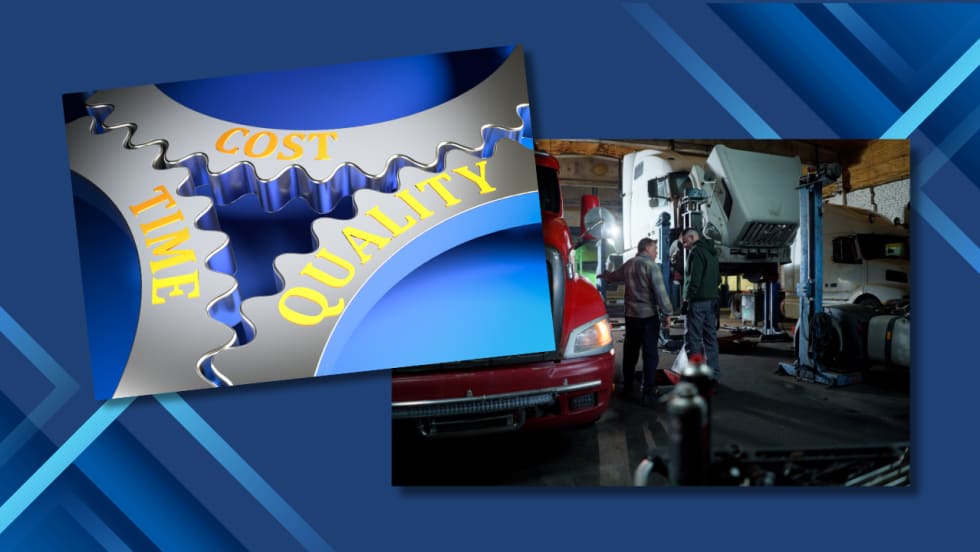
What Three Fleets Are Doing Differently When Buying Truck Parts in 2026
With freight improving but costs still climbing, fleet maintenance executives explain how they're balancing price, quality, and supplier relationships.
Read More →
Paccar Recalls 2027 Trucks Built This Summer for Possible Electrical Problem
The nearly 6,000 Kenworth and Peterbilt trucks in the recall could potentially lose engine power, among other things.
Read More →
Will API PC-12 Oil Change Trucking Fleet Maintenance?
The new API PC-12 heavy-duty engine oil category reflects the changing demands of modern diesel engines. But fleets like Foodliner are looking to getting their own data before making decisions on adopting the new oils and questions such as extending oil drain intervals.
Read More →
Brake Safety Week to Focus on Drums and Rotors
Commercial vehicle inspectors are focusing on truck brakes during CVSA's Brake Safety Week, August 23-29.
Read More →Possible Battery-Cable Fires Prompt Recall of 15,000+ International MV and HV Trucks
On the recalled vehicles, manufacturing variations can cause the battery interconnect cable to contact the auxiliary stud and hold down the bracket.
Read More →
Rush, MCT Team Up to Grow Refrigeration Service Network
The joint venture will operate MCT's network of Carrier Transicold dealerships and mobile service locations, with the companies promising greater service capacity and uptime for refrigerated fleets.
Read More →