





Related: The Economy is Top Concern for Trucking: ATRI Survey
ATRI Study: 30% of Crash-Related Truck Tows are Overcharged
A report by the American Transportation Research Institute found that 30% of tow company invoices resulting from accidents charge excessive hourly or per-pound rates.
November 29, 2023
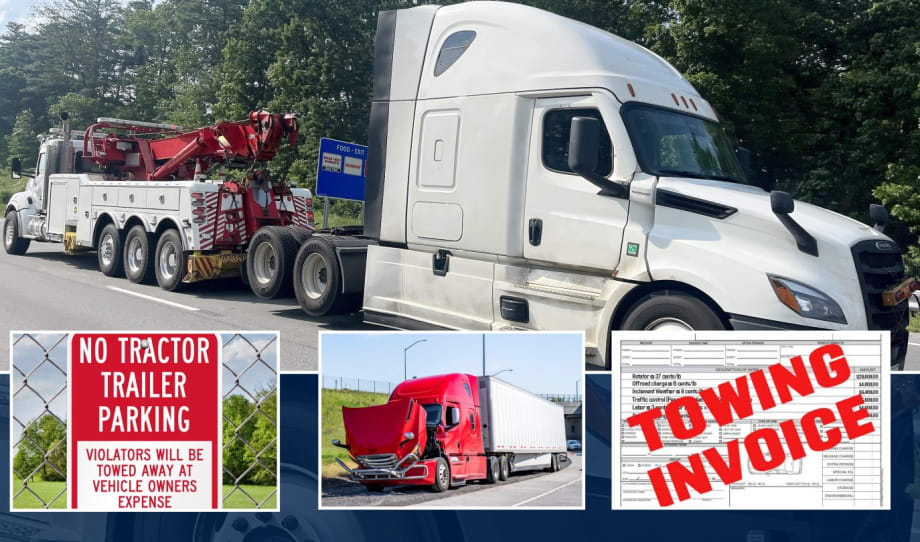
ATRI’s Causes and Countermeasures of Predatory Towing identified key predatory towing practices.
Photo: ATRI
3 min to read
The American Transportation Research Institute released a new report that examines the causes and countermeasures of predatory heavy-duty towing, with the goal of improving the relationship between the towing and trucking industries.
Key Predatory Practices
ATRI’s Causes and Countermeasures of Predatory Towing identified key predatory practices as:
Excessive hourly or per-pound rates (82.7%)
Unwarranted additional equipment or labor charges (81.8%)
Excessive daily storage rates (77.7%)
Vehicle release delays or access issues (71.7%)
Cargo release delays (61.6%)
Vehicle seizure without cause (55.7%)
Tow operators misreporting nonconsensual tows as consensual (53.5%)
Damage due to use of improper towing equipment (59.2%)
Crash-Related Towing Issues
A comprehensive analysis of crash-related towing records found that 29.8 % of invoices include excessive rates or unwarranted additional charges. The leading causes contributing to this total were miscellaneous service charges (found in 8% of invoices), administrative fees (found in 6.5% of invoices), and equipment rates (found in 6.3% of invoices).
Regulatory Authority
The patchwork of municipal, county, and state regulations that currently govern towing are often insufficient to prevent predatory activities, ATRI noted. The report includes an online compendium of state towing regulations and describes key areas to improve the coverage and application of regulations to close existing loopholes.
Strategies
Additional analyses and interviews with legal experts outline strategies that motor carriers can use to avoid, identify, or address predatory towing, such as how to review invoices for predatory billing and how to gather data to dispute towing companies’ incident accounts when necessary.
“Predatory towing is a costly issue for motor carriers as well as compliant towing companies, and it has been overlooked for too long,” said Shawn R. Brown, Cargo Transporters Vice President of Safety. “With reliable data analysis and a thorough regulatory review, ATRI’s report sheds light on the sources of the problem and paths forward for addressing it by both regulators and trucking fleets.”
Research Methodology
ATRI first created a state-by-state compendium of towing regulations to analyze the current legal environment surrounding the issue. Particular focus was given to rate regulations, regulations to prevent predatory practices, and the establishment of official channels for complaints or reparations, the report explained.
Next, ATRI conducted a motor carrier survey with 350 respondents. Of those respondents, 52% of trucks were in the truckload sector, 11% in the less-than-truckload sector, and the remaining 37 % in the specialized sector, according to ATRI. Compared to the industry as a whole, the less-than-truckload sector was underrepresented while the specialized sector was overrepresented, according to the report.
An additional data collection focused on obtaining complete invoices for towing and ATRI said 20 motor carriers supplied these. For all their towaway crash-related incidents in 2021 and 2022.
A copy of this report is available on ATRI’s website.
Watch for an upcoming HDT story taking an in-depth look at predatory towing and what motor carriers can do.
More Fleet Management

Sponsored•September 16, 2026
Color Match Smarter: Tools That Restore & Perform
For fleet managers and collision repair professionals keeping heavy-duty trucks on the road, getting the color right the first time isn't just about appearance — it's about efficiency, turnaround time, and bottom-line results. Discover how today's digital color tools are transforming the repair process from guesswork to precision.
Read More →
FMCSA Pauses Biennial-Update Enforcement Amid Motus Transition
Carriers whose updates were due on or after June 1 have more time, while FMCSA works to stabilize its new registration system and warns of phishing sites impersonating its new carrier registration system, Motus.
Read More →
Sponsored•September 14, 2026
2026 Blueprint for Countering Smarter Supply Chain Theft
Cargo theft is no longer just the cost of doing business. It's a multi-billion-dollar criminal enterprise exploiting vulnerabilities across your fleet, drivers, and supply chain.
Read More →


Sponsored•September 1, 2026
How Telematics Improves Visibility, Control, and Performance in Refrigerated Fleets
Explore how telematics help refrigerated fleets improve visibility, uptime, efficiency, compliance, and cargo protection across connected cold chain operations.
Read More →
What the U.S.-Canada Trade War Means for Trucking
Escalating U.S.-Canada tariffs could disrupt cross-border freight, reduce truck volumes, raise costs, and create new uncertainty for carriers on both sides of the border.
Read More →
What Are Trucking’s Top Concerns for 2026?
The American Transportation Research Institute wants to know what's worrying trucking fleet managers, drivers, and other stakeholders in its annual Industry Issues survey.
Read More →
American Trucking Associations Looks for a New Leader
ATA President and CEO Chris Spear abruptly left his job at the association on August 21, at a pivotal time for the trucking industry.
Read More →
Public Wi-Fi Cybersecurity Risks: How Truck Drivers and Fleets Can Protect Their Data
Public Wi-Fi can expose truck drivers and fleets to credential theft, malware, and other cyber threats. Here’s how to reduce the risk on the road.
Read More →
For Nicky Cupp, Fleet Innovation Starts With Frustration
HDT Truck Fleet Innovator Nicky Cupp turns everyday pain points at Fraley & Schilling into opportunities for better technology and smarter processes.
Read More →
Adam Buttgenbach’s Approach to Electric Trucks: Start With Where They Fit
HDT Truck Fleet Innovator Adam Buttgenbach helped PepsiCo build one of North America’s largest EV fleets by focusing on where electric trucks make operational sense.
Read More →