




How Ready is California to Electrify Transportation?
As California pursues its aggressive timeline to transition to zero-emission vehicles, a new analysis from the American Transportation Research Institute explores challenges, including some of the highest electricity prices in the country.

A new report by the American Transportation Research Institute digs into California's readiness for vehicle electrification.
Source: Canva/ATRI/HDT Illustration
The American Transportation Research Institute, the research arm of the American Trucking Associations, released its analysis of California’s readiness for full vehicle electrification. The report noted challenges to the electric grid infrastructure and that Californians pay the second-highest state average for electricity.
The research expands on ATRI’s 2022 report, Charging Infrastructure Challenges for the U.S. Electric Vehicle Fleet, by providing a more granular analysis of the challenges in one state as it moves toward widespread deployment of electric vehicles.
Following a similar methodology as ATRI’s national analysis, this statewide analysis focuses on grid sufficiency for powering all vehicles, the cost of electricity, the challenges in sourcing materials for batteries, and the expected increase in supply chain costs as the trucking industry experiences significantly increased vehicle costs.
Key findings include:
California’s top three power generators face an uncertain future, further widening the gap between power generation and the demand for electricity.
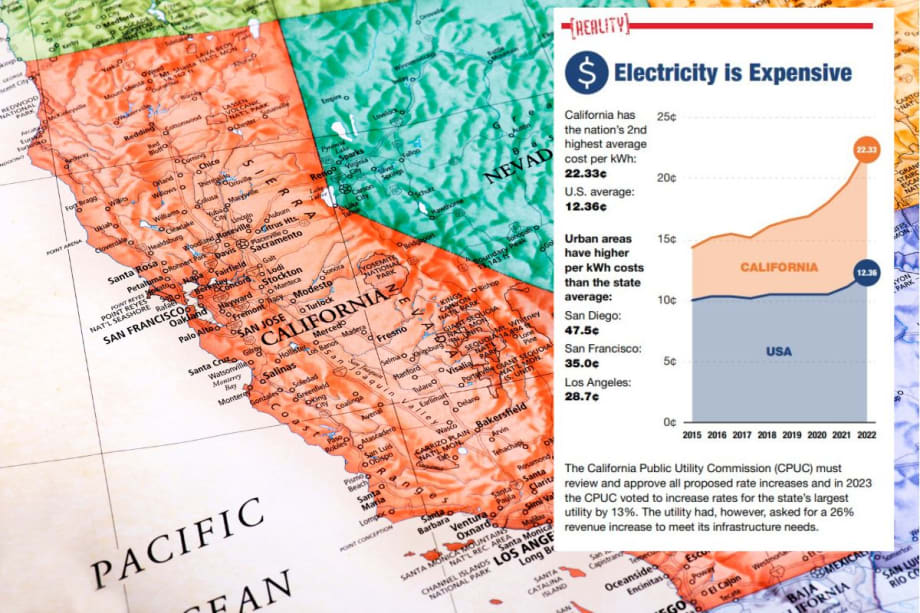
Californians already pay the second highest average rate for electricity at 22.33¢ per kWh, compared to the national average of 12.36¢ per kWh.
Californians will see an increase in the number of trucks on the road as the heavier battery weight will reduce cargo-carrying capacity in each truck. ATRI estimates for every 1,000 trucks currently on the road, an additional 343 trucks will be needed due to battery weight.
A two-page overview of "Is California Ready for an Electric Vehicle Future," along with the full Infrastructure Challenges report, is available from ATRI’s website.
How Much Electricity Does California Use, and How Green is It?
Among the states, California is the largest producer of electricity, 197,000 GWh — yet because of large energy demands it is ranked first in net imports of electricity, 50,000 GWh. The state is also the second largest consumer of electricity, 247,000 GWh.
To put all of that in comparison, California imports more electricity than is consumed by the entire state of Massachusetts.
The question of whether EVs simply push the emissions upstream to power generation is also a factor. Only about one-third of California's energy comes from renewable sources, according to ATRI, such as solar and wind. Two-thirds of it is non-renewable, including power generated from natural gas as well as nuclear power.
Of the portion of the state’s consumption provided through renewable energy, 33.6%, solar accounts for 12.2%, and wind 11.4%.
California's High Cost of Electricity
The cost of electricity in California is nearly double the U.S. average. The state has the second highest average cost per kWh at 22.33 cents. The national average is just 12.36 cents. As recently as 2015, the average electricity rate in California was less than 14 cents per kWh.
Within the state, urban areas with the highest costs are:
San Diego — 47.5 center per kWh
San Francisco — 35 cents per kWh
Los Angeles — 28.7 cents per kWh
The California Public Utility Commission, which must approve proposed rate increases, this year approved a 13% rate increase request from the state’s largest utility. That was only half of the 26% increase that utility had asked to be approved, citing the increase as being needed to pay for infrastructure.
Sourcing Battery Materials for EVs
If California were to convert totally to electric vehicles, a major challenge would be sourcing the batter materials, according to ATRI. The numbers just don’t add up.
The mining requirements to accomplish that, compared to the percentage of annual production of each material, are:
763,001 tons of cobalt, which is 407.2% of the annual global cobalt production
4.18 million tons of graphite, which is 379.5% of the annual global graphite production
543,223 tons of lithium, which is 492.8% of the annual global lithium production
2.65 million tons of nickel, which is 89.3% of the annual global nickel production
More BEV Trucks Needed to Haul Same Amount of Freight
ATRI also reported initially in its 2023 Operational Costs of Trucking report, that if diesel tractors were replaced with heavier electric trucks, more trucks would be needed to handle the same amount of freight.
For every 1,000 trucks, if they were electric, another 343 trucks would be needed to haul the same weight because of the diminished payload weight capacity of electric trucks, according to ATRI.
Consumers Pay More
The higher cost of purchasing battery-electric trucks, sometimes costing more than $425,000 and more than double the cost of buying a diesel truck – would mean the added costs would be passed along to consumers.
There is another challenge with the cost of providing charging resources. ATRI reported that installing a charger at each of California’s more than 13,000 truck parking spaces would cost between $1.4 and $2.8 billion.
More Fuel Smarts

New California Law Could Shed Light on Electric Truck Prices
Why do battery-electric Class 8 trucks remain so expensive? A California bill signed by Gov. Gavin Newsom would give fleets and state agencies more visibility into what manufacturers charge.
Read More →
How Volvo Updated Its D13 for EPA 2027 [Watch]
Volvo’s updated D13 promises lower emissions without sacrificing performance or fuel economy. Take a closer look at what changed inside the engine in this HDT Spotlight video.
Read More →
Diesel Price Spike Shortens Payback for Natural Gas Trucks, Report Says
Energy Vision estimates fleets could recover the higher purchase price of an RNG-fueled Class 8 tractor in 1.3 to 2.8 years under current fuel-price scenarios.
Read More →

Calstart Becomes Catalyst Mobility, Reflecting Broader Focus
Calstart is now Catalyst Mobility, reflecting the nonprofit’s growing national role in clean transportation, including zero-emission trucks, infrastructure and incentive programs.
Read More →
Record Diesel Prices Squeeze Trucking Fleets
Average U.S. diesel prices have climbed to nearly $6 a gallon, surpassing the 2022 record as tight refinery capacity and Middle East disruptions keep fuel costs elevated.
Read More →
How Fuel Delivery Shapes Engine Performance
Fuel delivery depends on more than what happens at the injector. For fleet, maintenance and technical professionals, looking at the full path from pump to injector can provide useful context for understanding engine performance.
Read More →
East Coast Port Launches $45M Electric Truck Push
The Port Authority of New York and New Jersey announced millions in incentives for zero-emission drayage trucks, yard tractors, and new charging hubs near the port.
Read More →
Detroit Opens Orders for EPA 2027 Engines
Detroit isn’t starting from scratch to meet EPA 2027 diesel emissions standards. Its Gen 6 DD13 and DD15 engines keep much of today’s platform while updating the fuel and aftertreatment systems.
Read More →
Zero-Emission Truck Corridor Planned for West Coast
California, Oregon, Washington, British Columbia and Baja California are coordinating plans for truck charging and hydrogen fueling from Canada to Mexico.
Read More →
A Closer Look at Kenworth’s Electric T880E Vocational Truck [Video]
Learn more about Kenworth's T880E battery-electric vocational truck at the Paccar Technical Center, including its range, applications, upfitting considerations, and PTO options, in this HDT Spotlight video.
Read More →