




ATA Mounts Assault on HOS Proposal
American Trucking Associations is gearing up a multi-front campaign to stop the Federal Motor Carrier Safety Administration's proposal to change the hours of service rules
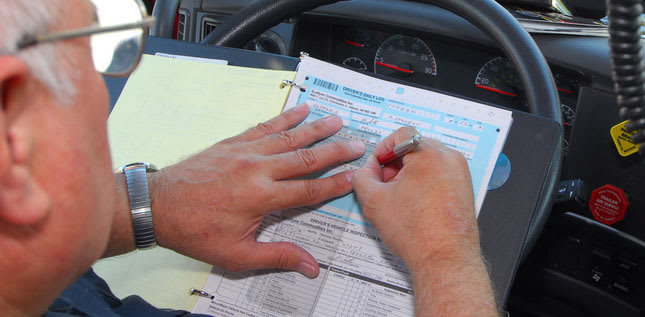
American Trucking Associations is gearing up a multi-front campaign to stop the Federal Motor Carrier Safety Administration's proposal to change the hours of service rules.
Last week ATA President and CEO Bill Graves told President Obama in a letter that the proposal fits Obama's own description of the type of federal rule that should be eliminated.
"FMCSA's Dec. 29, 2010, proposed changes to the HOS rule are, using your words, 'just plain dumb,' and 'not worth the cost' of making 'our economy less competitive,'" Graves wrote.
He was responding to Obama's Jan. 18 executive order calling on federal agencies to cull through their regulations and get rid of those that are outdated, stifle job creation or make the economy less competitive.
Coalition Asks for Hearing
ATA also has assembled a coalition of 36 shippers and other transportation groups that are asking the leaders of the House Transportation and Infrastructure Committee to schedule a hearing on the proposal.
"A hearing before the (committee) would help bring attention to the real impact of FMCSA's proposed regulations and give members of the committee the opportunity to question both the agency and the business community about the hours of service," the coalition says in a Jan. 19 letter to the committee.
The coalition is looking for a hearing before the end of the comment period on the proposal, Feb. 28. The committee is following the issue but does not yet have a response, a spokesman said over the weekend.
The letter went to Rep. John Mica, R-Fla., the chairman of the committee, and Rep. John Duncan, R-Tenn., the chairman of the Highway Subcommittee, as well as Ranking Member Nick Rahall, D-W.Va., and Ranking Member of the Highway Subcommittee, Peter DeFazio, D-Ore.
Among the members of the coalition are the National Industrial Transportation League, the Transportation Intermediaries Association and the Truck Renting and Leasing Association, as well as the National Private Truck Council and the National Tank Truck Carriers.
Criticism of the Proposal
ATA says the proposed changes would hurt industry productivity and the economy, are too complex to enforce and would not improve safety.
The major changes in the proposal include reducing daily driving from 11 hours to 10, requiring drivers to take two nights of rest during their 34-hour restart, requiring completion of all on-duty work-related activities within 13 hours to allow for at least a one-hour break, extending a driver's daily shift to 16 hours twice a week to accommodate for circumstances such as loading and unloading, and allowing drivers to count some time spent parked in their trucks toward off-duty hours. (See "HOS Proposal Seems Likely to Lead to More Litigation," 12/30/2010.)
ATA also says that FMCSA put together the proposal for political rather than safety reasons.
"We very much perceive that these changes are politically motivated," said Rob Abbott, vice president of Safety Policy at ATA, in a presentation to the NIT League last week. "That's because the substantial improvements in highway safety have not really called for a change in the rules."
In another presentation last week to industry analysts hosted by Jeffries and Co., Abbott speculated that Obama administration sympathy for organized labor may be behind the proposed changes. "There might be some motivation there to change the rules and level the playing field between unionized and non-unionized carriers," he said.
Why the Revision
Procedurally, the revision process was triggered by an agreement between the Department of Transportation and safety advocacy groups that have been suing the agency over the rule ever since it came out in 2003.
The groups, led by Public Citizen, twice won court decisions that required the agency to rework the rule and each time the agency came back with a defense of the rule. After they sued for the third time, DOT agreed to revise the rule if Public Citizen would hold its suit in abeyance. Under the agreement, the agency has until July 26 of this year to come up with a new rule. Public Citizen reserves the right to return to court if it does not like the new rule.
ATA does not believe that the revision is simply DOT's attempt to respond to its losses in court. "If you look at the court decisions, they don't speak to the merits of the rule, they speak to procedural issues," he said.
And in any event, he does not believe that the changes the agency is proposing make the rule any more likely to hold up in court. "In fact we think the proposal would be less likely to do so because of the tenuous basis of the justification in the cost-benefit analysis," he said.
The Driver Health Angle
This is how the agency describes the benefits of the rule in its Regulatory Impact Analysis:
"The benefits consist of safety benefits from the reduction in fatigue-related crashes and health benefits from drivers working long hours potentially getting more sleep and reducing their mortality risk."
Abbott's take: "In plain English, what they're saying is that while we won't necessarily see enough reduced crashes to justify the tremendous economic impact, drivers who get more rest, work shorter shifts and have longer breaks will get more sleep and over their lifetimes that means they'll be healthier and live longer lives."
The agency calculates this health-related benefit to be worth $690 million.
"Quite frankly," Abbott said, "we think this is really a stretch. The agency had to be very, very creative in finding a way to get the costs and benefits to balance, and this is how they did that."
Drop in Productivity
ATA's message to shippers is that the proposal as it is written will reduce productivity and capacity, and force carriers to put more trucks and drivers on the road.
One of the changes the agency is considering, shortening daily driving time from 11 to 10 hours, will in effect force carriers to move to a shorter length of haul, Abbott said.
This would lead to less competition in rural markets that carriers cannot reliably get to and return from in 10 hours, and it would affect distribution networks that carriers have set up under the 11-hour rule, Abbott said. "We may have to look at moving brick and mortar."
Another major change, requiring drivers to get two rest periods between midnight and 6 a.m. in their restart breaks, will lead to more congested pickup and delivery windows, he said. "Many drivers who formerly could pick up at night would be forced into daytime traffic and onto overcrowded docks."
It is a misnomer to refer to the restart provision in the proposal as a 34-hour rule, Abbott said. The two-night requirement in effect creates a 53-hour restart for drivers in certain types of operations. "It's only 34 hours in ideal circumstances, and for many drivers it will result in them being stuck in rest areas for much longer than 34 hours."
Another ATA contention is that the proposal introduces a layer of complexity that will make the rule hard to comply with and to enforce. Abbott cited the calculation of the restart provision as an example: "For a roadside inspector to determine if a driver has already used his restart in the past seven days, he would have to consider whether the prior restart had not begun less than 168 hours before the current time."
The Final Rule
Abbott told the shippers that if the rule goes through the way it is proposed, it is likely that ATA members will decide to file suit. "We think this proposal lacks justification," he said. "But if the current rules a
More Drivers
Platform Science Adds Dispatch and Safety Tools
Four additions to PS Fleet help fleets monitor loads, manage driver coaching, share truck locations and adjust video system settings.
Read More →
When Language Stops the Truck: The Return of ELP Out-of-Service Orders
English language proficiency rules for commercial drivers aren’t new, but renewed out-of-service enforcement has raised the stakes. Here’s what carriers need to know before a driver reaches a roadside inspection.
Read More →
Samsara Launches Custom AI Agent Builder
Agent Studio lets fleets create AI tools for hours-of-service monitoring, reporting and driver support, including agents that communicate by phone.
Read More →
Trucker Path Expands Reserved Parking Network
Trucker Path has added close to 6,000 more truck parking spaces to its Trucker Path Reserved Parking Network with the addition of Safe Truck Parking.
Read More →
EEOC Sues Texas Trucking Company Over Driver Age Limits
The agency says Trancasa USA rejected applicants over 65 and applied tougher driving-record standards to those over 60.
Read More →
Nussbaum, Roehl Announce Second Driver Pay Increase This Year
This year has seen a swath of major truck driver pay increases as freight capacity has tightened.
Read More →
From One Generation to the Next: How Mentorship Builds Safer Truck Drivers
After three decades in trucking, Harold Perry shares what he's learned about driver safety, mentorship, and helping the next generation build confidence behind the wheel.
Read More →
Truck Drivers Need More Than Another Alert
Fleets have more visibility into truck health, safety events, and driver activity than ever. The next challenge is turning all that information into useful guidance for the person who has to decide what to do next.
Read More →
FMCSA Removes 110 Truck Driver Training Schools from Certified ELDT List
Federal regulators also are targeting more than 160 additional training providers and launching a nationwide audit of third-party CDL skills testers as part of a broader crackdown on trucking fraud.
Read More →
Hours of Service Pilot Programs: FMCSA Readies for 2027 Rollout
Two pilot programs could eventually reshape hours-of-service rules, giving truck drivers options to pause their 14-hour clock or use longer split sleeper rest periods.
Read More →