




ATA Lauds House OK of Pension Protection Law
The American Trucking Associations has hailed House passage of comprehensive pension-reform legislation designed to improve the solvency of single, multi-employer and so-called hybrid pension plans.
The American Trucking Associations has hailed House passage of comprehensive pension-reform legislation designed to improve the solvency of single, multi-employer and so-called hybrid pension plans.
"This was a bipartisan effort reflecting compromises between labor and management," ATA President and CEO Bill Graves said. "Many industries, including trucking, have been concerned with the pension issue for some time and its passage provides a measure of certainty that is greatly appreciated by the business community."
The Pension Protection Act of 2005 was designed to revamp traditional pension plans and prevent a taxpayer bailout of the Pension Benefit Guaranty Corp. The House bill must be reconciled with the Senate pension-reform legislation that passed in November.
PBGC, the self-financed federal agency that insures pension plans for 44 million workers, reportedly has deficits of $22.8 billion. Single-employer participants have dropped to less than 30,000 from 95,000 in 1980 as companies drop or replace defined-benefit plans.
The legislation provides for an early warning system to identify pension plans that are facing financial problems. Additional tools are also provided for that will allow plan trustees to address financial problems before they become unmanageable. It also requires additional disclosure information to plan participants and contributing employers to help improve the funding performance of the plans.
The House pension bill will help companies fund their pension liabilities and includes more than two dozen proposals involving IRAs, defined pension benefits and 401K retirement plans.
Graves credited Education and Workforce Chairman John Boehner (R-Ohio) and Ways and Means Chairman Bill Thomas (R-Calif.) for their leadership in passing H.R. 2830. "This particular bill has traveled a difficult road in reaching final passage and would not have done that without Chairman Boehner and Chairman Thomas. They responded to a pressing need and helped push this vital legislation across the finish line.”
More Drivers

From One Generation to the Next: How Mentorship Builds Safer Truck Drivers
After three decades in trucking, Harold Perry shares what he's learned about driver safety, mentorship, and helping the next generation build confidence behind the wheel.
Read More →
Truck Drivers Need More Than Another Alert
Fleets have more visibility into truck health, safety events, and driver activity than ever. The next challenge is turning all that information into useful guidance for the person who has to decide what to do next.
Read More →
FMCSA Removes 110 Truck Driver Training Schools from Certified ELDT List
Federal regulators also are targeting more than 160 additional training providers and launching a nationwide audit of third-party CDL skills testers as part of a broader crackdown on trucking fraud.
Read More →
Hours of Service Pilot Programs: FMCSA Readies for 2027 Rollout
Two pilot programs could eventually reshape hours-of-service rules, giving truck drivers options to pause their 14-hour clock or use longer split sleeper rest periods.
Read More →
Medical Cards, English Proficiency Reshape Roadcheck Violations
Medical-card violations jumped to the top of the driver out-of-service list during CVSA’s 2026 International Roadcheck, while English-language proficiency violations appeared among the leading violations for the first time.
Read More →
Driver Trust Can Make or Break the Success of Fleet Safety Technology
New Teletrac Navman research suggests that onboarding, transparency about driver data, and positive feedback can play a significant role in how commercial drivers respond to safety and coaching technology.
Read More →
EEOC Sues KLLM Over Alleged Sex Discrimination in Driver Training
KLLM is facing a federal sex-discrimination lawsuit over policies the EEOC alleges put female truck driver trainees at a disadvantage.
Read More →
FMCSA Moves to Codify English Language Requirements for Commercial Drivers
By changing regulations on English-language proficiency requirements for commercial drivers, rather than relying on a guidance memo, the FMCSA said future administrations won't be able to walk back the Trump administration's stricter enforcement with just a memo.
Read More →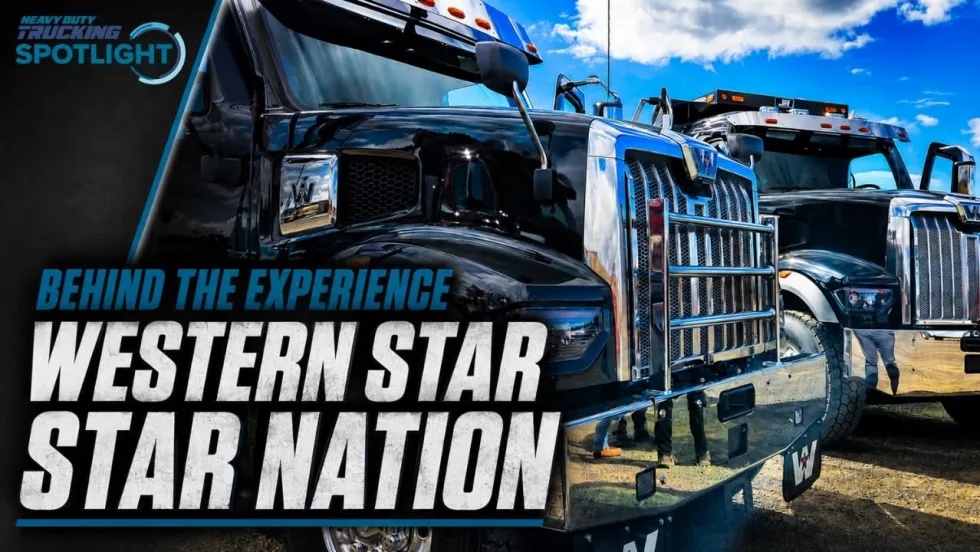
Drivers Put Western Star Trucks to the Test at Star Nation Experience
Watch to get an inside look at the Western Star trucks, technology, and community behind the Star Nation Experience 2026!
Read More →
Trump Administration Looks to Put More Veterans Behind the Wheel
The Freedom Haulers program pulls together existing and expanded programs at several federal agencies to recruit veterans to drive commercial heavy-duty trucks and cut the red tape for them to get a CDL, training, and employment.
Read More →