




ATA: Behavior Changes Key to Fighting Distracted Driving
In a testimony to the House of Representatives on behalf of the American Trucking Associations, Randy Mullett stressed the importance of behavioral changes as key to combating distracted driving in the trucking industry
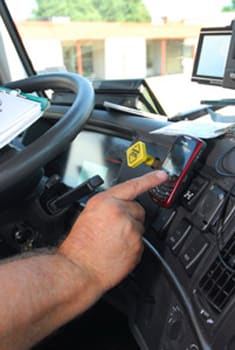
In a testimony to the House of Representatives on behalf of the American Trucking Associations, Randy Mullett stressed the importance of behavioral changes as key to combating distracted driving in the trucking industry.
"Unfortunately, texting while driving has become socially acceptable and we need strong laws and a systematic approach in order to make it socially unacceptable," Mullett said in his testimony.
In addition, Mullett addressed issues with in-cab communications, which he said should not be confused with hand-held devices. While the ATA does recommend that appropriate restrictions on in-cab communications be addressed, the issue should be addressed in a rulemaking process by the Federal Carrier Safety Administration, rather than by legislation. "Because of the special characteristics of in-cab communications and how these technologies are used in the trucking industry today, detailed analysis and public comment is required if restrictions are being considered," he said.
"ATA believes that Congress can help reduce distracted driving," he said. "However, legislation alone will not solve the problem. Public attitudes and perceptions will need to change and any legislation will have to apply to all drivers on the highway. Furthermore, the laws that are enacted will need to be accompanied by effective enforcement and tough penalties for violations."
In order to change the behaviors that lead to distracted driving, Mullett recommended:
* Supporting research, data collection and analysis that reveals the degree and extent of the problem, which will aid policy makers in making decisions;
* Aiding efforts to communicate the need for change;
* Promoting public education and awareness efforts;
* Sponsoring ways to use technology to reduce distractions caused by technology;
* Developing policy and, as necessary, legislation to drive change;
* Supporting tough penalties and providing means to assure strong, effective enforcement; and
* Properly funding the above initiatives.
Earlier this month, the ATA announced its support of the Avoiding Life-Endangering and Reckless Texting by Drivers Act, or "ALERT Drivers" Act, which would ban texting for all drivers. The bill, which is being sponsored by U.S. Sens. Charles E. Schumer (D-N.Y.), Robert Menendez (D-N.J.), Mary Landrieu (D-L.A.) and Kay Hagan (D-N.C.), would mandate that states enforce the texting ban within the next two years or lose 25 percent of their federal highway funds per year.
Meanwhile, the Senate introduced a separate bill Wednesday, which would ban cell phone use for all drivers 18 and younger, according to The Hill. The news service reported that while the bill did receive some support, others believe it should be left up to the states.
To read Randy Mullett's entire testimony, click here.
More Drivers

From One Generation to the Next: How Mentorship Builds Safer Truck Drivers
After three decades in trucking, Harold Perry shares what he's learned about driver safety, mentorship, and helping the next generation build confidence behind the wheel.
Read More →
Truck Drivers Need More Than Another Alert
Fleets have more visibility into truck health, safety events, and driver activity than ever. The next challenge is turning all that information into useful guidance for the person who has to decide what to do next.
Read More →
FMCSA Removes 110 Truck Driver Training Schools from Certified ELDT List
Federal regulators also are targeting more than 160 additional training providers and launching a nationwide audit of third-party CDL skills testers as part of a broader crackdown on trucking fraud.
Read More →
Hours of Service Pilot Programs: FMCSA Readies for 2027 Rollout
Two pilot programs could eventually reshape hours-of-service rules, giving truck drivers options to pause their 14-hour clock or use longer split sleeper rest periods.
Read More →
Medical Cards, English Proficiency Reshape Roadcheck Violations
Medical-card violations jumped to the top of the driver out-of-service list during CVSA’s 2026 International Roadcheck, while English-language proficiency violations appeared among the leading violations for the first time.
Read More →
Driver Trust Can Make or Break the Success of Fleet Safety Technology
New Teletrac Navman research suggests that onboarding, transparency about driver data, and positive feedback can play a significant role in how commercial drivers respond to safety and coaching technology.
Read More →
EEOC Sues KLLM Over Alleged Sex Discrimination in Driver Training
KLLM is facing a federal sex-discrimination lawsuit over policies the EEOC alleges put female truck driver trainees at a disadvantage.
Read More →
FMCSA Moves to Codify English Language Requirements for Commercial Drivers
By changing regulations on English-language proficiency requirements for commercial drivers, rather than relying on a guidance memo, the FMCSA said future administrations won't be able to walk back the Trump administration's stricter enforcement with just a memo.
Read More →
Drivers Put Western Star Trucks to the Test at Star Nation Experience
Watch to get an inside look at the Western Star trucks, technology, and community behind the Star Nation Experience 2026!
Read More →
Trump Administration Looks to Put More Veterans Behind the Wheel
The Freedom Haulers program pulls together existing and expanded programs at several federal agencies to recruit veterans to drive commercial heavy-duty trucks and cut the red tape for them to get a CDL, training, and employment.
Read More →