




ATA and NATSO Blast Interstate Toll Study
Two trucking organizations have slammed a new study that calls for placing tolls on the nation’s Interstate system as a way to pay for improvements and repairs, calling tolling "a wildly unpopular concept" and just another name for a tax.
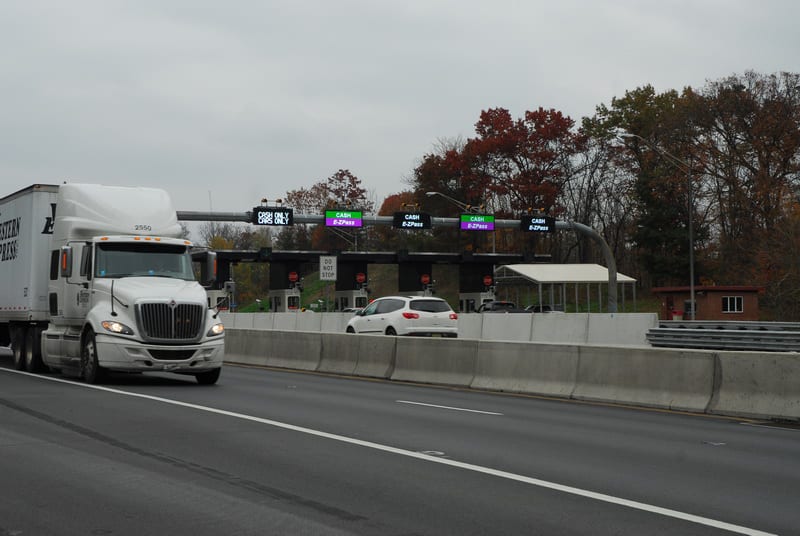
ATA and NATSO say the public dislikes tolls, and for good reason. (Photo by Jim Park)
ATA and NATSO say the public dislikes tolls, and for good reason. (Photo by Jim Park)
Two trucking organizations have slammed a new study released last week that calls for placing tolls on the nation’s Interstate system as a way to pay for improvements and repairs.
The American Trucking Associations says the report from the libertarian/right leaning think-tank the Reason Foundation makes several false assumption on how useful tolls could be to funding infrastructure investments, understates public opposition to tolling and plays down safety and other risks of increased tolling,
“Despite what toll advocates and financiers try and tell the public, tolling existing interstates is a wildly unpopular concept,” says ATA President and CEO Bill Graves. “Voters and lawmakers in Virginia and North Carolina have demonstrated this vividly in recent months. The public continues to see tolls as an intrusive and inefficient tax.”
The group representing truckstops and travel plazas, NATSO, also issued a strong rebuke of the study. The group said the study claims motorists prefer tolls to higher fuel taxes, but it notes this is based on surveys asking about tolls only on newly built lanes, not on existing interstates.
"The public detests interstate tolls and with good reason," said NATSO president and CEO Lisa Mullings. "Tolls divert motorists and truck drivers to non-interstates, leading to more traffic deaths. Additionally, it costs the government more money to collect tolls than to collect fuel taxes."
The Reason Foundation study says over the next two decades most of the aging Interstate highway system will need to be reconstructed and will cost approximately $1 trillion -- nearly $600 billion in rebuilding costs plus $400 billion to add capacity. It says the price tag could be covered almost entirely by toll revenues generated by charging drivers and truckers via all-electronic toll collection on the rebuilt Interstates.
ATA says despite having the authority to toll existing Interstates since 1991, no state has done so (other than HOV lanes) due to public opposition.
“It’s preposterous to assume that the public would ever accept tolls on the entire system when states can’t get them to go along with tolling even a single highway,” the group said in a statement.
“We know our infrastructure needs are great, but we can’t be wooed by the siren song of alleged ‘tax-free’ funding,” said ATA first vice chairman Phil Byrd, president of the motor carrier Bulldog Hiway Express, Charleston, S.C.
“Tolls are just another name for a tax, one that provides quite a lot of money for government bureaucrats and Wall Street financiers, and is an extremely expensive way to fund highway improvements,” he says. “We should instead focus on the reliable, traditional financing methods, such as the fuel tax, that built our great Interstate system to improve and maintain that system. Our leaders simply need to have the political will to do the right thing regarding these methods.”
NATSO says The Reason Foundation's report mischaracterizes why three states that have been granted conditional approval to implement interstate tolling under a federal pilot program have not moved forward.
“The report claims Virginia, North Carolina and Missouri have not ‘solved the political problem of getting legislative approval to go forward.’ The fact is the legislature in each of the states killed the tolling initiatives, citing overwhelming public opposition to it,” says NATSO.
"It is not a 'political problem' when citizens urge their elected officials to reject a proposal that would, if enacted, effectively tax them twice," Mullings says.
More Drivers

Truck Drivers Need More Than Another Alert
Fleets have more visibility into truck health, safety events, and driver activity than ever. The next challenge is turning all that information into useful guidance for the person who has to decide what to do next.
Read More →
FMCSA Removes 110 Truck Driver Training Schools from Certified ELDT List
Federal regulators also are targeting more than 160 additional training providers and launching a nationwide audit of third-party CDL skills testers as part of a broader crackdown on trucking fraud.
Read More →
Hours of Service Pilot Programs: FMCSA Readies for 2027 Rollout
Two pilot programs could eventually reshape hours-of-service rules, giving truck drivers options to pause their 14-hour clock or use longer split sleeper rest periods.
Read More →
Medical Cards, English Proficiency Reshape Roadcheck Violations
Medical-card violations jumped to the top of the driver out-of-service list during CVSA’s 2026 International Roadcheck, while English-language proficiency violations appeared among the leading violations for the first time.
Read More →
Driver Trust Can Make or Break the Success of Fleet Safety Technology
New Teletrac Navman research suggests that onboarding, transparency about driver data, and positive feedback can play a significant role in how commercial drivers respond to safety and coaching technology.
Read More →
EEOC Sues KLLM Over Alleged Sex Discrimination in Driver Training
KLLM is facing a federal sex-discrimination lawsuit over policies the EEOC alleges put female truck driver trainees at a disadvantage.
Read More →
FMCSA Moves to Codify English Language Requirements for Commercial Drivers
By changing regulations on English-language proficiency requirements for commercial drivers, rather than relying on a guidance memo, the FMCSA said future administrations won't be able to walk back the Trump administration's stricter enforcement with just a memo.
Read More →
Drivers Put Western Star Trucks to the Test at Star Nation Experience
Watch to get an inside look at the Western Star trucks, technology, and community behind the Star Nation Experience 2026!
Read More →
Trump Administration Looks to Put More Veterans Behind the Wheel
The Freedom Haulers program pulls together existing and expanded programs at several federal agencies to recruit veterans to drive commercial heavy-duty trucks and cut the red tape for them to get a CDL, training, and employment.
Read More →
Putting Mack’s Command Steer to the Test
A test drive of Mack’s Command Steer active steering system evaluates how it can make truck driving easier and less tiring.
Read More →